
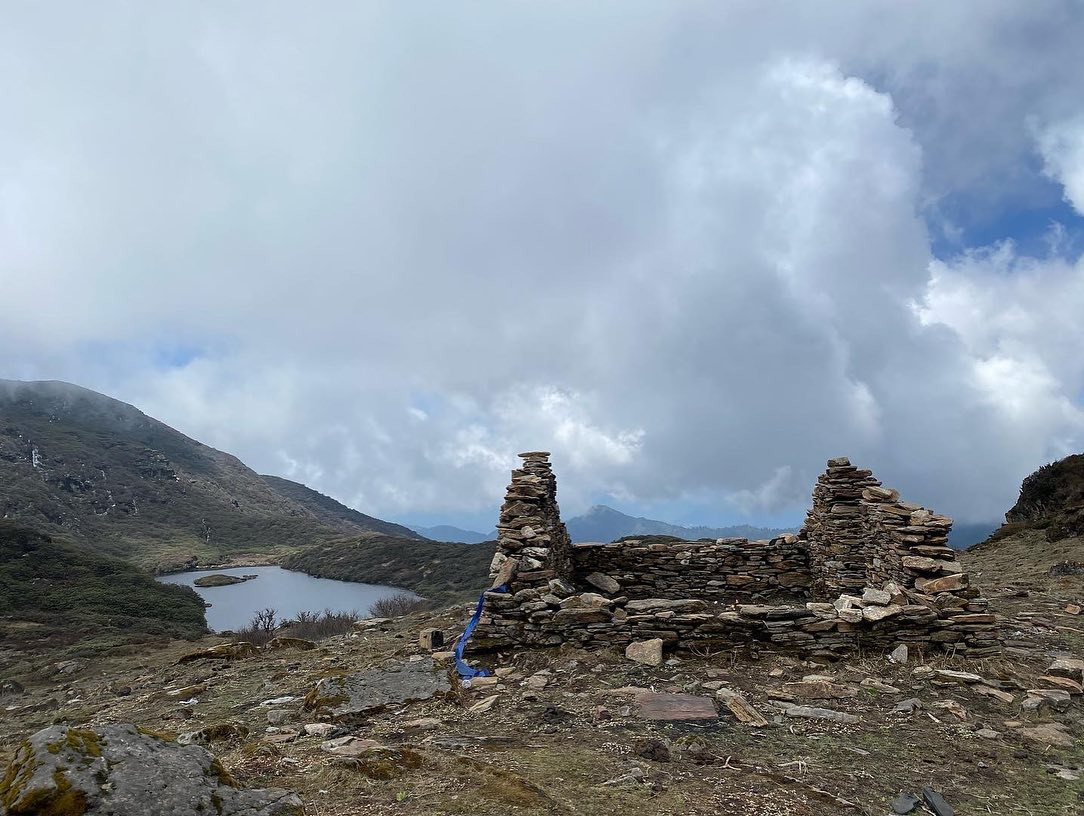











Experience a journey of a lifetime on this 10 day trek through Bhutan. We begin the trek in Paro and head north away from roads and villages. This hike follows an ancient trading route through the high Himalaya linking Paro and Thimphu valleys.
You’ll hike through thick pine and rhododendron forests, over high mountain ridges and passes, and camp by beautiful alpine lakes during Druk Path Trek hiking trail Bhutan. Every day brings fresh air, silent herder camps, and grand mountain vistas, albeit there’s always the chance to catch sight of Bhutan’s highest peak as well as a tripwire for the senses with bustling cultural rhythms of local Bhutanese life.
Here’s a snippet of the places you will be visiting during Famous Bhutan trek Druk Path: Paro, with its landmark Taktsang (“Tiger’s Nest”) monastery, and the start of the trek at Jele Dzong. You will camp on ridges at Jangchulakha, at alpine lakes at Jimilangtso and Simkotra Tsho, and cross over to the Thimphu valley through Phajoding. Your journey continues to Punakha, where you’ll take in the sights of Dochula pass, spot traditional Bhutanese houses, and cross a hanging bridge. The return journey will take you via Thimphu and adjacent valleys back to Paro for your departure.
The Druk Path Trek Costs anywhere between $2,300 – $4,500 per person based on group size and type of lodgings. In this 10‑day program, the trek experience goes far beyond just hiking across the countryside; it’s an opportunity to see rural Bhutan, its traditions, and its stunning landscapes. The walk on Druk Path Trek adventure Bhutan 10 days Trip is moderate, and it can be taken by any moderately fit travel enthusiast who wants to enjoy the journey.
With this Bhutan trekking 10 days Druk Path Tip, you receive a professional guide, camping equipment for the trek portion of the trip, transportation around Bhutan hotels at the start and end, meals, and permits. Ideally suited to those who want a straightforward, well‑supported journey through the wild, cultural, and beautiful side of Bhutan.
Trek to the popular Taktsang Monastery (Tiger’s Nest), located on a cliff overlooking Paro Valley.
Start a hike to Trongsa from Paro and Thimphu on ancient forested ridges and mountain meadows.
Overnight in charming historical lodgings, including Jele Dzong, a hilltop fortress with commanding views of the valley.
Climb higher through rhododendron and blue pine forest to peaceful alpine terrain and pastures of yak herders.
Visit isolated glacial lakes like Jimilang Tsho ( Sand Ox Lake ), far above the surrounding hills.
Reach classic high mountain passes and views of the peaks on the border between Bhutan and Tibet, including an opportunity to see Mount Gangkhar Puensum.
Descend to the capital, Thimphu, where you arrive from out of the wilderness into city sights, local culture, and modern Bhutan.
Drive to the Punakha valley and discover its ancient dzongs and low-altitude river‑junction views.
The Druk Path Trek adventure Bhutan 10 days journey is through varied terrain: You start in apple orchards and blue pine forests, you cross ridges and high mountain passes, and you camp by glacial lakes with the Himalayas towering over you.
This variety provides you with a taste of what Bhutan’s mountains and wilderness provide without making it an expedition that is done over several weeks.
It traces an ancient high‑level route between Paro and Thimphu, across which traders and pilgrims historically travelled.
In between, you pass old dzongs (fortresses/monasteries), yak‑herder camps, and sacred lakes so there’s wilderness while also culture.
Unlike these ultra‑long Himalayan treks, however, this Druk Path Trek ten days is relatively short – 50‑60km – and requires moderate fitness. You can add that to a 10‑day Bhutan trip, since it’s shorter, so in that sense it’s accessible.
You will see numerous Bhutan’s great peaks from the high ridges, and look down to the border with Tibet.
When the weather is clear, it treats you to the panorama as a reward for your climbs and makes your journey feel special.
Despite all its notoriety, the Druk Path walk trekking Bhutan route never feels crowded. A tranquil path amid grazing yaks, flapping prayer flags, and isolated campsites. That calm helps you feel what it’s like to be out walking somewhere special and pristine.
For the lover of amazing vistas, cultural experiences, and not too much sweat, Bhutan Druk Path Walk and Trek is the one for you.
Considered one of Bhutan’s top treks for casual hikers, it will lead you through forested ridges, alpine meadows, and high passes around 4,000 meters for 4–6 days. This trip is ideal for anyone who enjoys walking a little bit each day, camping, and waking up to fresh air and beautiful views.
Druk Path walk trekking Bhutan Trip not very difficult, but you do need to be in a bit of shape. Some parts of the hike can be challenging if you tend to go on shorter hikes from lodges or opulent hotels. Classic Vacations Nepal can help you decide whether this trek fits your fitness and experience levels.
We can customize your Druk Path trek and walk, including itinerary, pace, and style of trekking and camping, and make the Druk Path Trek a lifetime adventure.
|
Trek Package |
Route |
Duration |
Max. Altitude |
Difficulty Level |
|
Day 01 |
Arrival Paro (2150m) – Afternoon Tour |
1 day |
2150m |
Easy |
|
Day 02 |
Hike to Tiger's Nest Monastery (3180m) |
5-6 Hours Hike |
3180m |
Moderate |
|
Day 03 |
Trek to Jele Dzong (3436m) |
4-5 Hours Walk (8 Km) |
3436m |
Moderate |
|
Day 04 |
Jele Dzong to Jangchulakha (3780m) |
5-6 Hours Walk (11 Km) |
3780m |
Moderate |
|
Day 05 |
Jangchulakha to Jimelangtsho (3880m) |
5-6 Hours Walk (11 Km) |
3880m |
Moderate |
|
Day 06 |
Jimelangtsho to Phajoding (3870m) |
7-8 Hours Walk (16 Km) |
3870m |
Challenging |
|
Day 07 |
Phajoding to Thimphu (2300m) |
3 Hours Walk (4 Km) |
2300m |
Easy |
|
Day 08 |
Thimphu to Punakha (1350m) |
2 Hours 30 Min Drive |
1350m |
Easy |
|
Day 09 |
Punakha to Paro (2150m) |
4 Hours Drive (125 Km) |
2150m |
Easy |
|
Day 10 |
Departure from Paro |
1 day |
2150m |
Easy |
Mixed blue pine fir forest zones are usual in the lower elevations of the trek.
You also start to see the pockets of silver birch and broadleaf scattered around as you climb into cooler zones.
Rhododendron groves (including alpine dwarf rhodos) provide impressive hues, particularly in spring.
The trail starts through the dense wooded valleys of Bhutan, where pine and soft undergrowth give a lush feeling of being well sheltered.
Higher up, the trees become more stunted and the rhododendron explodes into blossom, lining our path with a floral corridor.
These forested stages also serve as an easy warm-up to the more alpine zones above, and provide sneak peeks of how the ecosystem changes at higher elevations.
Jimilang Tsho (3,870m) is a pristine lake that lies on the trail.
Simkotra Tsho (4110m) is further along the ridge with a full viewpoint of reflections.
The ridge and the alpine meadows have several smaller lakes and tarns.
These are crystal‑clear lakes that provide natural high altitude rest spots, shimmering in the still waters of peaks and sky. Up in the thin air above 3,800m, the lakes are immense and unspoilt-feeling, generally surrounded by yak pastures and roaming herders. They are the Galapagos of the Hindu‑Kush, and they provide a real reward for your ascent as you pause to contemplate under Himalayan light.
You’ll catch sight of Gangkhar Puensum (Bhutan’s tallest unclimbed peak) from high ridges.
Jomolhari similarly looms from some perspectives, craggy, white‑topped.
Climbing above the tree line, you start catching glimpses of sweeping Himalayan silhouettes along your horizon. The juxtaposition of green ridges and white peaks on the horizon is a constant visual reminder that I am climbing up, up, away from it all. On clear mornings, the sharp silhouettes of the giants loom over valley fog, providing some of the most iconic vistas along the trek.
The 10 Day Druk Path Trek package begins at USD2,399 (PPT) for the 2026/27 season. This price usually includes everything you need for the trek – guiding, camping and/or lodge stays on the trail, meals while walking, transportation within Bhutan, and permits to hike in Bhutan.
Pricing of Druk Path walk trekking Bhutan can increase depending on the size of your group, an upgrade to a higher category of lodging, peak‑season charges, and any add‑ons you choose The group cost for the 10 Day Druk Path Trek tour in 2025/26 are as follows:
|
Group Size |
Price pp |
|
2‑3 Pax |
US$ 2,650 |
|
4‑8 Pax |
US$ 2,399 |
|
9‑15 Pax +1 |
US$ 2,350 |
Preparation regarding Fitness and Acclimatisation
Develop cardio and leg strength beforehand: set yourself to do uphill hikes, stair climbs, and 2–3 hours’ walking with a light rucksack.
Incorporate a brief hike in the early days (eg, to Taktsang Monastery) to acclimatize your body to altitude.
Although the daily distances are manageable, you’ll be hitting about 3,800-4,000m, so it’s important to start acclimatizing.
Take clothes in layers: thermal first‑layer, mid‑fleece layer, waterproof outer, and warm hat & gloves.
Solid hiking boots to prevent injuries, long trousers with ankle supports, and trekking poles if it’s ok. Sunglasses and sunblock just in case. Nights can drop below freezing.
Check on what the operator provides (tents, sleeping bags) and pack what you would need beyond that.
Be prepared for ever-changing terrain: wooded trails become alpine ridges and meadows, which then descend to the valley below.
Make sure you’re down with camping operations (if applicable) such as: hot water, communal meals, and your hut or remote campsite.
Trekking in Bhutan is as much a cultural experience as a physical walk embrace yak herders, distant lakes, and visits to monasteries.
Take it slow, adhere to altitude limitations, and expect gradual climbs rather than trying to break speed records every day.
Daily Druk Path Trek departs every day of the year; you choose on date.
It’s your trek, and we will work with you to make it special. Please feel free to contact us if you have any particular requests or changes to this itinerary.
Enjoy the Trek on Fixed Departure and Private Group Departure to fit your group size.
If the departure dates that we have don’t suit your plans, no problem! Call us at or contact us personally at [email protected] +977 9851040806. You can also message us through WhatsApp at +977 9851040806, and we will arrange a private trip on your preferred date as per your requirements.
Our small group treks also make it perfect for like-minded trekkers wanting to join a trip with new friends.

Take on the Druk Path Trek (10 Days): An incredible journey through some of Bhutan’s most impressive natural scenery and cultural treasures.
This trip provides an in-depth exploration of the Kingdom of Bhutan: from mountain trails, through lush valleys and local villages, to spiritual monasteries.
You will be walking through high-altitude, sometimes remote, regions of the world where a sudden change in your plans (weather, health, natural event) may cause you to deviate bsomewhat from this itinerary.
Thank you for your understanding & cooperation as we continue to adjust, in the pursuit of a great experience, even under these circumstances.
We place your comfort and safety during the trip first. We strive to serve our clients with professionalism and attention to the smallest detail by our friendly staff and experienced guides. In case of emergencies or bad weather, the trek leader may modify the route as deemed fit for a safer alternative.
Classic Tours and Travels Nepal are committed to responsible tourism. In addition, we are concerned with keeping our environmental footprint as low as possible and helping local communities in their development.
Your travels help us to continue developing our sustainability efforts, and 5% of the total trip cost goes towards funding rural development projects by Pioneer Foundation Nepal.
While this may be true, you are, as a matter of fact, contributing to the preservation of Bhutan's natural splendor and cultural heritage.
 2150m
2150m
 Minimal trekking/walking
 (2‑3 hours)
On Day 1, you will arrive at Paro International Airport, from where you are directly transported into the heart of the Himalayas.
You are welcomed by our staff, which is a perfect complement to the classic Bhutanese hospitality, and we embark on the short drive to your hotel, which takes you through numerous scattered farmhouses and the vast terraced fields. Your Druk Path Trek Ten days Trip officially begins now.
A popular choice for lunch in Bhutan is Bhutanese spicy rice, a blend of veggies, and homemade cheese, which is a perfect representation of the region’s culinary simplicity and authenticity.
After your meal, you will have some time to rest before we explore some of the Paro Valley. This will be a chance for you to visit the National Museum, where a significant collection of weapons, masks, and textiles from the collection is rich in ritual use and recounts remarkable stories of Bhutan from centuries past.
We then walk down to Paro Dzong, a magnificent fortress-monastery, where monks and civil servants still collaborate. You cross a heritage wooden bridge painted with traditional motifs and prayer flags.
You encounter local families returning from their fields. In the afternoon, the valley is filled with a golden hue and the distant sound of temple bells from across the river.
After all, you will go back to the hotel for a more leisurely dinner and overnight rest.

Hotel in Paro (pre‑trek lodging)

Full Board of Meals (B, L, D), Tea/Coffee & Snacks
3180m
Approx. 5–6 km
5‑6 hours walking
 3 hours climbing
 1.5‑2.5 hours descent
We start our 2nd day of Druk Path 10 day trek walk early in the morning, before everything comes alive in the valley and dapples of sunlight begin to poke through into the pine woods. Following breakfast, we will drive to the Tiger’s Nest Monastery trailhead. The trail ascends steadily, and you feel the cool forest air as prayer flags flutter overhead. Local pilgrims quietly pass by, some bearing incense, and it hits you just how much their lives are woven into this trail by faith.
As you climb, the forest gives way to panoramic views of Paro Valley. Halfway through, we pause at the cafeteria viewpoint where Tiger’s Nest looms on the opposite face of the cliff, suspended like a miracle over the chasm. You sip tea amid one of Bhutan’s most well-known images — white walls, golden roofs and sheer forest-clad mountains cast in cloud.
We proceed the final ascent with stone steps and meandering paths. You arrive at the monastery late morning and spend some time exploring its shrines, courtyards and meditation rooms. Monks whisper in soft chant inside the temples, and the scent of butter lamps clogs the air. You hear the legend of Guru Rinpoche, who rode in on a tigress.
Once you are back in Paro, enjoy a warm meal and relax for the evening.
Hotel in Paro
Full Board of Meals (B, L, D), Tea/Coffee & Snacks
3436m
Approx. 8 km
4‑5 hours walking
700‑900 m climb
Minor descent (100‑200 m)
The 1st day of the trek, you wake up to a delightful smell of forest dew, and the fresh, chilly air will refresh you in no time. We will meet our trekking crew and the pack animals that will join us on this adventure after breakfast.
Leaving Paro, the track climbs as it heads towards blue pine woods and gently undulating hills of patchwork farmland where the villagers’ morning chores have just begun: milking cows, feeding yaks, and making up a batch of butter tea. Children often wave from their wooden houses, where the balconies are fitted with intricately carved railings.
The trail continues to the left, and the tree line shrinks as we gain elevation, revealing a more complete view of the Paro Valley. Rhododendron trees, some standing tall and some fallen over and rotten, line the path, and we should be lucky enough to see them flowering in deep red, pink, and white colours if we are trekking in spring.
By the middle of the day, we should be arriving at a grassy, cloud-obstructed view where we will be lying to rest for a hot lunch prepared by the cook team. You can relax on grass meadows below a prayer-flag-mantled ridge.
We will be arriving at Jele Dzong for our campsite by the afternoon. If the weather is nice, the ancient fortress on a ridge of the valley will be glowing with the sun's golden light behind the distant snow-capped peaks. The relics that the monks of this dzong are keeping in a small chapel are sacred, and we must take care not to disturb them as we explore the ancient fortress Jele Dzong.
You will savour a warm dinner while conversing with the crew and relishing the tranquil mountain environment.
Campsite / tea‑house near Jele Dzong
Full Board of Meals (B, L, D), Tea/Coffee
3962m
Approx. 11 km
5‑6 hours walking
550‑800 m climb
Minor descent or leveling out
Today, we will wake to the gentle shush of wind in the pines. After breakfast, we will begin hiking along the ridgeline. The hills are painted gold by the morning light, and the trail opens up to wide views of Paro far below.
You might encounter yak herders guiding their shaggy animals across open fields. The lines of their weathered faces and the calmness of their demeanour reflect the ruggedness yet tranquillity of highland life.
Heading further up, the forest turns into fir, spruce and dwarf rhododendron. The air is thin and cool, but not uncomfortable. The mountains go on in all directions, and they provide a sense of openness that only the Himalayas can.
In the afternoon, we head to Jangchulakha or Tshokam. The path passes over ridges where you might see Himalayan monal or blood pheasants. You'll find yak herding huts along the way, and might even see herders making cheese or drying bits of yak dung to use as fuel.
It's late afternoon when we arrive in camp. The crew will cook a hot dinner, and you can take in the hush of high mountain living. The night is clear and peaceful with stars brighter than anywhere in the valleys below.
Campsite / tea‑house at Jangchulakha or Tshokam
Full Board of Meals (B, L, D), Tea/Coffee
3880m
Approx. 11 km
5‑6 hours walking
430‑600 m climb
200‑300 m descent
On day 5, the morning climb begins with magnificent views, like the distant mountains, including Jomolhari, on clear days. You will pass through yak pastures, where the herder is collecting, calf feeding, preparing butter tea, milk, and salted feeding, starting her morning routine. Their stone huts, blending with the landscape, show how generations have lived in harmony with the hills that are so beautiful yet harsh.
The trail rises and falls on the rocky terrain, displaying more of the valleys each time. Among the stones, small alpine flowers can be seen, and above the cliffs, vultures are circling. Near a serene meadow with the wind and distant yak bells, where only the sounds of the wind and bells can be heard, we stop for lunch.
You can explore Jimelangtsho in the afternoon, a sacred alpine lake with clear blue water. With the calm and spiritual feel surrounding the lake, guardian deities are believed by the locals to protect the water. You have the perfect view of the lake bordered by tall ridges, with our campsite sitting right on the shore.
Following your tea, you may traverse around the lake or simply sit and take in the peacefulness. The lake reflects the shifting hues of the sky, and the clouds move seamlessly above. Dinner time brings a cozy feel to the kitchen tent, and the calm and cool mountain air at Jimelangtsho gives the location a magical feeling.
Campsite / tea‑house by Jimelang Tsho Lake
Full Board of Meals (B, L, D), Tea/Coffee
3870m
Approx. 16 km
7‑8 hours walking
200‑400 m climb
~500‑800 m descent
Today is the longest day of this journey, so we begin early. The morning path ascends gently, then crosses a high ridge showing another pretty lake, Janetsho. You come along the path, which is steep in places, with yaks grazing serenely alongside. The landscape is epic — alpine valleys and bare slopes, snow-capped peaks in the distance shimmering beneath the sun.
We go by these little herder shelters and sometimes come across families travelling with their animals. Their style of life, one built on weather and tradition, testifies to the heartiness of mountain communities. Closer to the lakes, you might see blue sheep perched on cliffs or hear pika whistling among rocks.
The views reach clear down to the Thimphu Valley, which is still some distance below. After lunch, we hike across more ridges, gradually losing altitude until we reach Phajoding. Rising in the distance are ancient monasteries poised on hillsides like silent sentinels.
In the late afternoon, we will arrive at Phajoding Monastery, one of Bhutan’s most important meditation centers. Young monks wander around the courtyards, lugging water or murmuring their evening prayers. Our camp is nestled just below the main temples and offers a peaceful setting with a fantastic panoramic view of Thimphu’s lights.
The valley lights up as the sun goes down and the mountains slip into darkness. The day concludes with a hot meal and an ecstatic sense of accomplishment.
Campsite / tea‑house
Full Board of Meals (B, L, D), Tea/Coffee
3870m
Approx. 4 km walk
3 hours walking
Minimal (mostly descent)
2‑3 hours descent
Today's journey is set from Phajoding to Thimpu. As you wake up at the Phajoding hotel, the morning is peaceful. You can hear monks practicing chants and sweeping the courtyards.
After enjoying breakfast, we will start the last descent towards Thimphu. All the while, the forests will be changing to blue pines, oaks, and rhododendrons. The temperature will increase with the drop in altitude. In the upper canopy, birds will be singing, and you might be able to spot some villagers gathering firewood or herding cattle.
By late morning, you should reach the outskirts of Thimphu. The voice of the mountains will be replaced with the sounds of the capital (Thimphu): kids arriving at school, monks walking to the temple, and families out to start their day. Once we have checked into our hotel, we will be able to have hot showers and lunch.
We will then visit the Memorial Chorten, where elderly Bhutanese walk clockwise and periodically stop to spin their prayer wheels. After, we will walk to the massive statue of Buddha Dordenma, which is over the entire valley. The traditional arts school of Bhutan, where young students learn to paint, wood carve, and weave, is also on our list.
Finally, you will have to go to the town or hotel for dinner, and for the day you have completed a beautiful blend of cultural and nature activities, the perfect close to your trek.
Hotel in Thimphu
Full Board of Meals (B, L, D), Tea/Coffee
1350m
No trekking distance (drive day)
2 h 30 m drive + afternoon tour (~2‑3 hrs)
None (descent by road)
None (road travel)
We will leave Thimphu right after breakfast for this breathtaking drive to Punakha. The road ascends to Dochula Pass, where 108 chortens sit against a backdrop of sweeping mountains. On clear days, the Himalayan range glows white and sharp on the horizon. Locals come here to pray, photograph or sip tea in the mountain café.
We drop below the pass into warmer, greener terrain. The flora becomes subtropical, and bamboo, banana trees and orange groves are abundant. Rice fields are worked by villages, and traditional houses rise from shallow hillsides.
We stop off at the impressive Punakha Dzong, Bhutan’s most beautiful dzong, in Punakha. It lies at the confluence of two rivers, blanketed in brilliant purple jacaranda trees in the spring. Monks in crimson robes glide silently through the courtyards, and the inner temples shimmer with golden statues and detailed paintings.
We walk later to the suspension bridge, one of Bhutan’s longest, spearheaded by prayer flags fluttering in the winds above a river that flows with fury. If there’s time, we’ll also stop at Chimi Lhakhang, the fertility temple, as we drive past farm villages where locals lay chillies to dry on rooftops and children play in dusty paths.
The night is warm and easy in Punakha. You arrive at the hotel and have a quiet dinner with a view over the valley.
Hotel in Punakha
Full Board of Meals (B, L, D), Tea/Coffee
2150m
N/A
4 hours drive + remainder free
Minor via road climb
Minor via road descent
This hotel has a lovely breakfast, a good way to start a trip back to Paro. Luckily, it's a good ride. The views from every angle are amazing, and the mountain views are some of the best. Pilgrims will walk to the downward-facing chorten; the crisp mountain air can be a refreshing change from the warm valley of Penakha.
On the way to Thimphu, see the valley, it's a once again busy capital. Thimphu has its markets, schools, and prayer halls. The valley also has a good selection of apple orchards and terraced fields.
After the long drive back to Paro, you will check into the hotel and get some food. The rest of the afternoon and evening are completely free to explore. You may walk around the mountain town and see all the handicrafts, food, and watercolour houses. You can explore the temple Kyichu Lhakhang, the oldest temple in the area, where many elders sit and spin prayer wheels.
After you get some food, you will probably want to unwind and reflect on all the amazing things you did around Paro, all the friendly locals and their culture. After a long trip like this, a long drive, Paro will help make this a wonderful trip to Bhutan.
Hotel in Paro
Full Board of Meals (B, L, D), Tea/Coffee
2150m
Transfer to airport
N/A
Your last morning in Bhutan seems serene. And then after breakfast, you take a little walk around outside of the hotel or something, enjoying the nice valley air. Villagers head to work in their fields, shopkeepers open their doors and monks from the area's ancient temples prepare for morning rituals. The slow and serene life in Paro makes a deep impact on the mind.
We will drop you at the Paro International Airport after we pass by traditional houses, an archery ground and farmers working in the field with simple farm tools. The valley seems peaceful now, the kind of place you're supposed to go back to someday. At the airport, you bid farewell to your guide and crew, who've guided you through mountains, villages, monasteries and forests.
None
Breakfast
During your DrukPathTrek, you will usually have a full day of walking with a light lunch during the day and breakfast and dinner at camp.
The trekking staff prepares breakfast and dinner on the spot, whereas lunch is pre‑packed for longer trails.
For breakfast, we serve tea/coffee/hot chocolate, porridge or cereals, eggs (cooked to your preference), toast/pastries/pancakes, and seasonal or canned fruit.
Lunches are typically hot food such as fried rice, noodles/pasta, a sandwich, or momo (dumpling) served with tea/juice. When the trail is long, a picnic‐
They usually start with soup to warm the body. Bhutanese red rice or steamed breads (such as tingmo), vegetable curries, stir-fries, lentils, and fresh veggies, affectionately referred to in Druk Yul as what grows more than anything, dessert is typically fruit or pudding.
A dedicated camp cook and kitchen staff travel with the group and set up kitchen and dining tents at each night's campsite.
In the hotels on either side of the trek, you will eat in a restaurant, while during camping legs, there are tented dining areas.
The operators of the trek note that they’re capable of catering to vegetarian, vegan, gluten-free, and other dietary requirements if given advance notice, though supplies of specialty ingredients may be scarce in remote places.
So far as hygiene goes, all drinking water is boiled, the dishes are washed in hot water, and where necessary, the tea is served with a light meal in the afternoon.
Meals Our meal setup on the DrukPathTrek is planned to serve you healthy and hygienic meals at high altitude locations – we will do all we can to keep you in good health.
Accommodation during the Druk Path Trek. The accommodation is in tented campsites beside the trails. Your trekking crew prepares the campsite, pitches tents and takes care of all organization so that you can enjoy a comfortable journey.
You will sleep in roomy trekking tents, which come fitted with mats, and the team sometimes provides sleeping bags, so having your own liner adds a layer of warmth and hygiene.
A camp chef cooks all meals, and tasty, hot food is provided to keep you going. The facilities are basic, but camping beneath clear Himalayan skies and waking up to breathtaking mountain views adds character and authenticity to the trek.
We are team of professionals who share a common devotion to the outdoors and are commited to world travel.
Mr. Lok Bhatta is one of our best and professional guide in the company. He has been guiding with us from last 12 years. He have trekked over to our major trekking region of- Everest Region, Annapurna Region, Mustang Region, Manalsu Region, Langtang Region etc. He is...

Originally from Khumjung- 3, Everest Region, Mr. Pema Chhosang Sherpa is our key climbing guide for major peaks in Everest region, including Island Peak, Lobuche Peak, Kyajo- Ri Peaks and other 7000er climbing in the region.
Mr. Pema is 15 + years...


Trekking the Druk Path in Spring is most beautiful, as the whole landscape is alive and bursting with new life after the winter season. As you hike through the trail, the pathways are collaged with the hues of red, pink, and white blooming Rhododendrons, and the decorating, trail brightening, and walking flowers gather to entice the blooming foot.
The soft mountain breeze, over the wild blossoms, carries the settled, pine woodland, and the breeze is freshly wild. You can see the distant peak of Jomolhari in the most sought-after, open, and unobstructed view of the Himalayas as you walk higher towards the endless and clear blue of the sky.
The ideal and most important variable in the spring season is most definitely the weather. The calm and mild comfort, setting the tone, during walking, and the nights are cool.
You can enjoy the scenery and the pace by keeping the walking hours of the day bright and long because the daylight is stable. The trail is clear, safe, and easier to walk after the winter melt. The campsites, with warmth in the afternoon, are pleasant.
The road conditions are favourable as well. Mountain passes such as Dochula are open and clear, enabling unimpeded travel and transit from one destination to the next between Paro, Thimphu, and Punakha. Rural villages get to be active and alive as farmers prepare for and begin their Spring season field work.
This allows you a chance to see and experience the rural lifestyle of Bhutan. All in all, spring is one of the most beautiful, comfortable, and cultured of all the seasons, so it is no surprise that it is one of the best seasons for the Druk Path Trek.
Autumn season, from September to November, is recommended as another best season for this trek, especially if you are seeking clear mountain views and stable weather.
As the monsoon season comes to an end, the sky gets crisp and blue, and some of the most dramatic views of the Himalayan range are visible. Beyond every ridge you climb, vast panoramas unveil snow peaks, deep valleys, and never-ending lines of rolling hills.
Photographers adore this time; the air is clean, and colours pop with excitement.
The weather is still fairly consistent in the fall. Days remain cool and dry, ideal for long walks without having to worry about heat or humidity.
Nights at higher camps are chilly, but the air remains clear and starlight pales in comparison to the spots in valleys below. On ridges like Jele Dzong and Phajoding, you can watch glorious sunrises and sunsets, as golden light paints the mountains in warm tones.
Trail conditions are also at their peak. The monsoon rains completely dry off the paths, so the walk is nice and firm underfoot. Alpine lakes like Jimelangtsho mirror the sky like a pane of glass, and yak herders move across high pastures before the winter sets in.
Access to Paro and Thimphu is by road, which remains remarkably well-maintained – ideal in terms of easy access to your points of arrival, either prior to departure or after completion.
Autumn also overlaps with Bhutan’s lively festival season. You may observe cultural traditions, temple celebrations and traditional dances that will enrich your travel experience with a more cultural context.
Why it’s special: With a great climate, beautiful landscape, and lively autumn festivals, autumn is the best season to do the Druk Path Trek.
Some consider the Druk Path Trek a moderately challenging trek, and while this is true, it is always a subjective topic. Depending on fitness abilities, trekking experience, and comfort level with altitude, the trek can become easier or more difficult.
There are no technical climbing skills needed on this trek; however, one must be prepared for the climbs, as the trek is not flat, and high stamina is required.
One of the main challenges of a high-altitude trek is also the altitude. At close to 4000 m, the body must adjust to a high altitude. In the steep climbs, one of which is the ascent to Jele Dzong, many trekkers can feel the added difficulty.
As the trail goes steeply upwards, the effort needed is great. However, the pace of the itinerary is slow and steady to give trekkers time to adjust.
The second aspect is the landscape. The path goes through woodlands, rocky ridges, and alpine meadows. In spring and autumn, the route is fairly easy to navigate, but early spring might have some drifting snow in the higher areas.
The mountain weather is temperamental, and clear mornings can turn overcast in the afternoon. Because of this, staying prepared with good-quality gear is really important.
Nevertheless, the Druk Path Trek is easy enough for anyone with a good fitness level and some determination. The usual four to six-hour walks, while daily, are easy enough to do for anyone with some determination.
Our well-experienced crew takes care of the organizing, food, camp, and safety. The treks bring some really incredible sites, such as tranquil lakes and expansive views of the Himalayas from the peaceful camp sites, and there is also the opportunity for significant cultural immersion.
The Druk Path Trek becomes a unique and memorable experience with the right level of guidance and planning.
The Druk Path Trek for 8 Days goes beyond scenic mountains and clear mountain lakes, it grants you an insight into the living culture of Bhutan.
You'll pass through forests, over ridges and highland villages where much of Bhutanese life has remained unchanged for centuries. Grasping these nuances adds colour to your sojourn and brings you closer to the essence of Bhutan.
Buddhism is the essence of Bhutan, and it can be seen and felt throughout the Druk Path. You'll pass monasteries, ancient temples, meditation caves and myriad prayer flags fluttering in the breeze.
The trail is popular enough that many trekkers encounter monks and nuns on it; both are especially common near Jele Dzong and Phajoding Monastery. These interactions provide moments to contemplate the depth of spirituality in Bhutan quietly.
Bhutanese people wear their national dress – the Gho for men and the Kira for women. When walking, you may also encounter local farmers, herders and villagers wearing these awesome dresses while working in their fields or milking cows next to the local temple. Their clothing symbolizes identity, culture and adherence to custom.
The vibrant Tsechus in Bhutan are among the best known of the country's annual religious festivals.
If your visit coincides with festival time, then you can watch masked dances, classical music and other spiritual rituals which demonstrate Bhutan's culture, folklore and religious faith.
Distinct Architecture:
The route also takes you closer to the traditional Bhutanese-style architecture. Monasteries, dzongs, and traditional houses with hand-carved windows, colourful paintings, and paw shaped roofs. What they do is add color and character to the landscape.
Unique Bhutanese Cuisine:
Food is also a huge part of the trip. And you may have an opportunity to savour traditional Bhutanese favourites, including Ema Datshi (chillies cooked in cheese), Momos (steamed dumplings), red rice and the very much desired butter tea. These dishes offer a flavour of Bhutan's straightforward, tasty mountain cuisine.
It is highly recommended to be courteous to local customs during your journey. Dress respectfully, take photos only if permission is given and approach cuisines with an open mind and a respectful understanding of tradition.
Don't expect hot showers or running water along the 8-day-long Druk Path Trek! The majority of campsites are rudimentary and situated in the desolate highlands, which have scarce water resources. Most trekkers depend upon wet wipes or a bucket wash by the support team.
A little towel is handy for patting yourself dry and only takes a few minutes, which can be a real blessing on cold nights. It's also a good idea to bring wet wipes that you can use throughout the trek for easier and more comfortable cleaning.
A small biodegradable soap can also be used to clean your hands or wash out your face when water is accessible.
The conditions of the toilet facilities vary from camp to camp, so trekkers may need to lower their expectations. Some sites may have simple pit toilets; some may have no facilities at all.
So don't forget to bring toilet paper, hand sanitizer and a small trowel. Nature calls when you're in locations lacking facilities, and that's where Leave No Trace principles come in: dig a small hole, use biodegradable materials and cover your spot as intended.
Good hygiene matters at high altitudes, too, so wash your hands rigorously and do not contaminate water sources. With a little bit of prep work, toilet needs can become easy and less harmful to the environment.
Any good company organises all the necessary Bhutanese permits and entry fees, as well as route approvals in advance, so you can concentrate purely on your trek without any bureaucratic headaches. They work with local authorities and make sure you’re following national trekking laws.
Yes – the 10‑day itinerary usually comprises rest or acclimatisation days or slow walking days for your body to adjust and take in its surroundings. These days are included in the schedule as a way to prevent fatigue and create an enjoyable experience instead of it being rushed.
Most full‑service trek companies offer porters or pack animals to carry shared gear and sometimes each trekker’s bag (to a maximum weight). This support allows you to hike easy and not huff and puff under heavy loads.
Reasonable fitness is acceptable; the 10‑day version usually has shorter daily walking distances and more moderate activity profiles than hardcore treks. But you should be able to walk for 4‑6 hours on mountain footpaths and in reasonable comfort when going up and down.
The better companies use local Bhutanese guides who know the DrukPath route, terrain, nature, and changes in weather that can occur. They’re familiar with first aid, altitude, and group management, so you’ll be in safe hands.
The itinerary stages the ascension in altitude, involves rest or short-walk days, and allows time for your body to acclimatize, mitigating the risk of altitude issues. The guide will look after u guys during the trek and if necessary will change the pace or route accordingly.
Trekking companies have contingency plans and can modify the itinerary if changes are needed for weather, closures, or other reasons. They have local contacts and drivers to make sure you still get that fundamental experience with as little interruption as possible.
Both the guide and company have procedures for evacuating you or getting you back to civilization safely, be it by road or another means, and you will be assisted. And you really want to give the company a heads-up if you have health problems, so they know and can be ready.
This varies from company to company, based on their company policy and the location of the trek in question. There is no legal age limit for trekking how ever companies can have their own policies regarding ages that most will require a person to be over 16 or 18, some treks do carry an upper age limit and further still there are people over this age who are extremely fit and experienced trekkers who would argue that it is more accurate representations of an individual's fitness than their actual date of birth. Each person should be able to do daily walks and some altitude change with ease.
The support crew carries and sets up the common gear at each camp, which means that dining tents, chairs, tableware, kitchen tents, and sleeping tents are on hand every day. That way, hopping out in the morning is a bit more of a pleasure.




 Google
 Tripadvisor