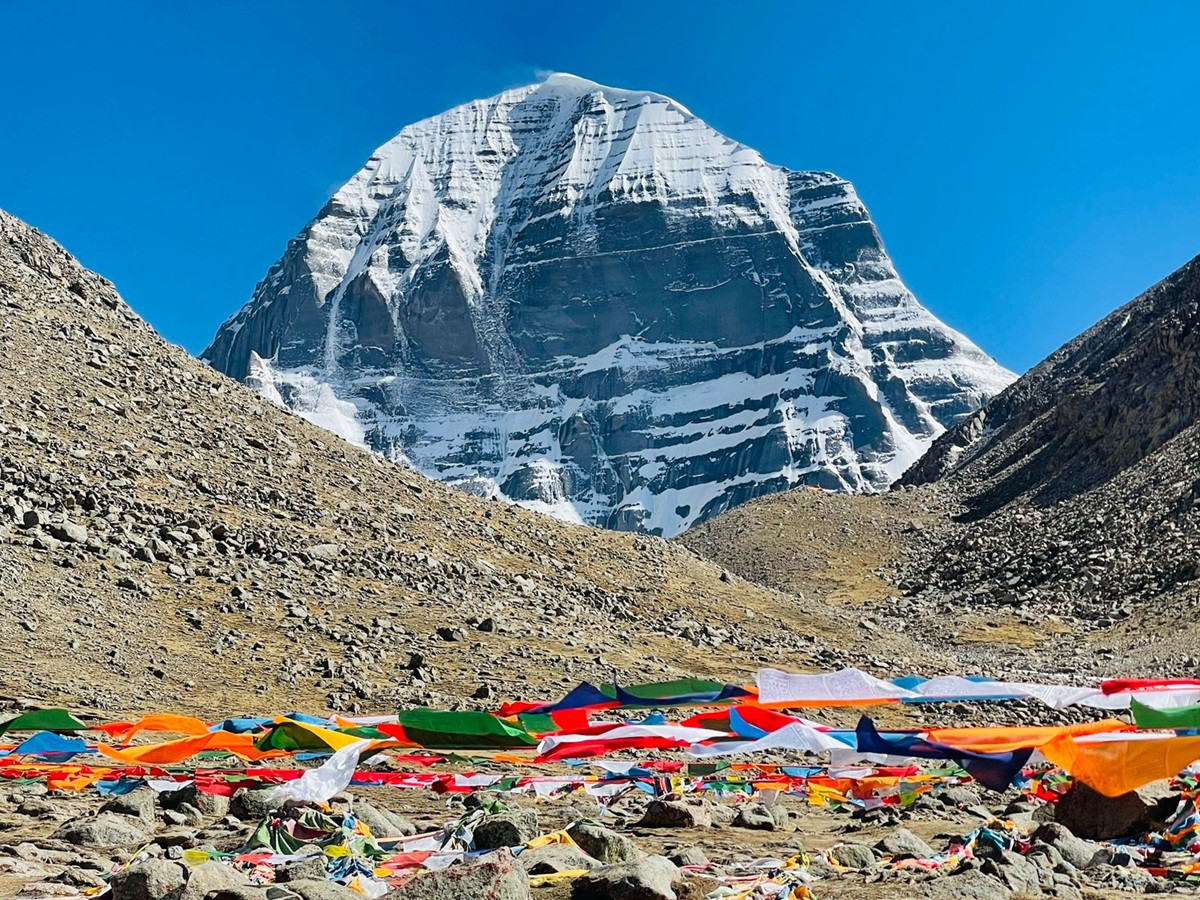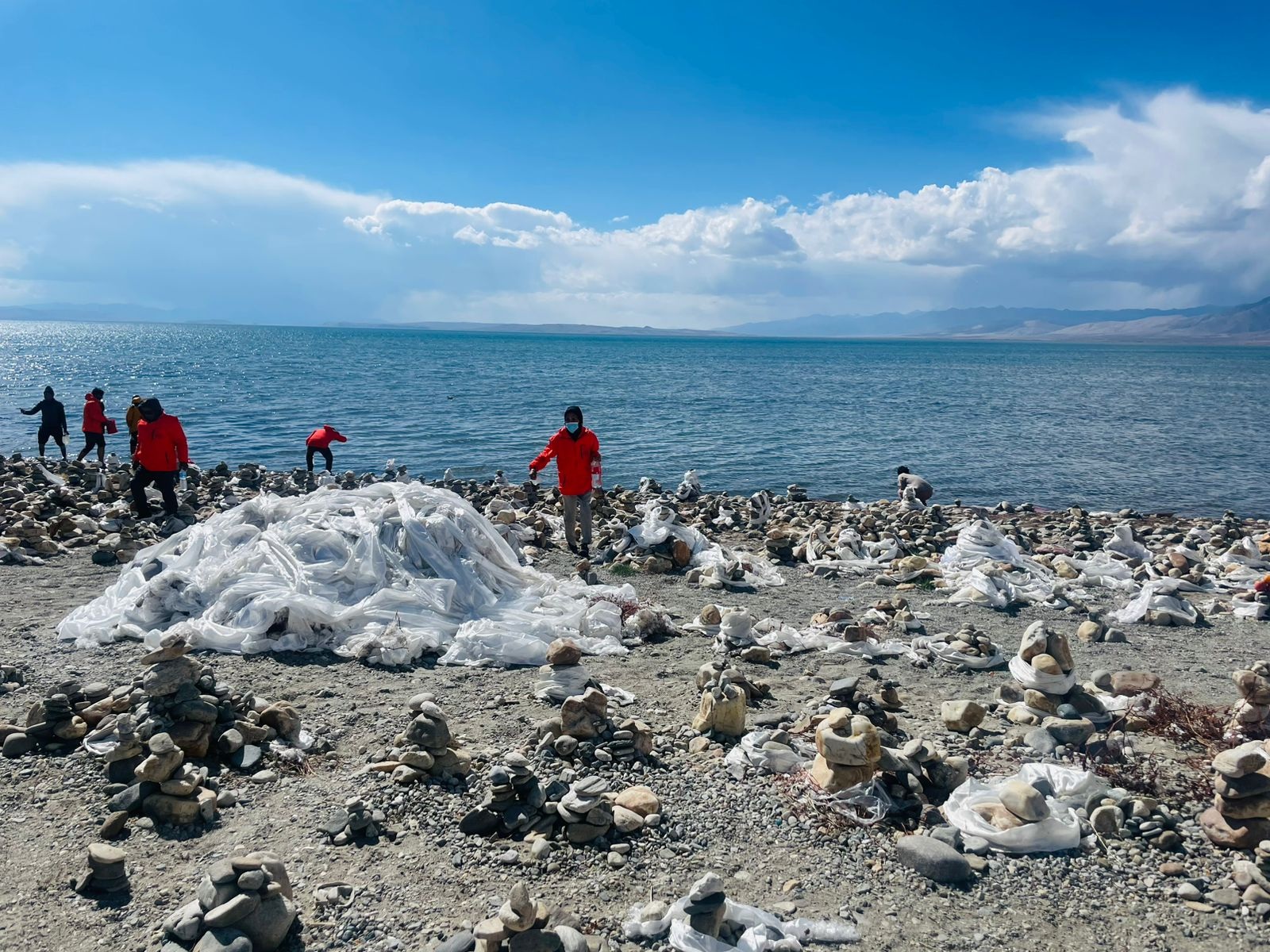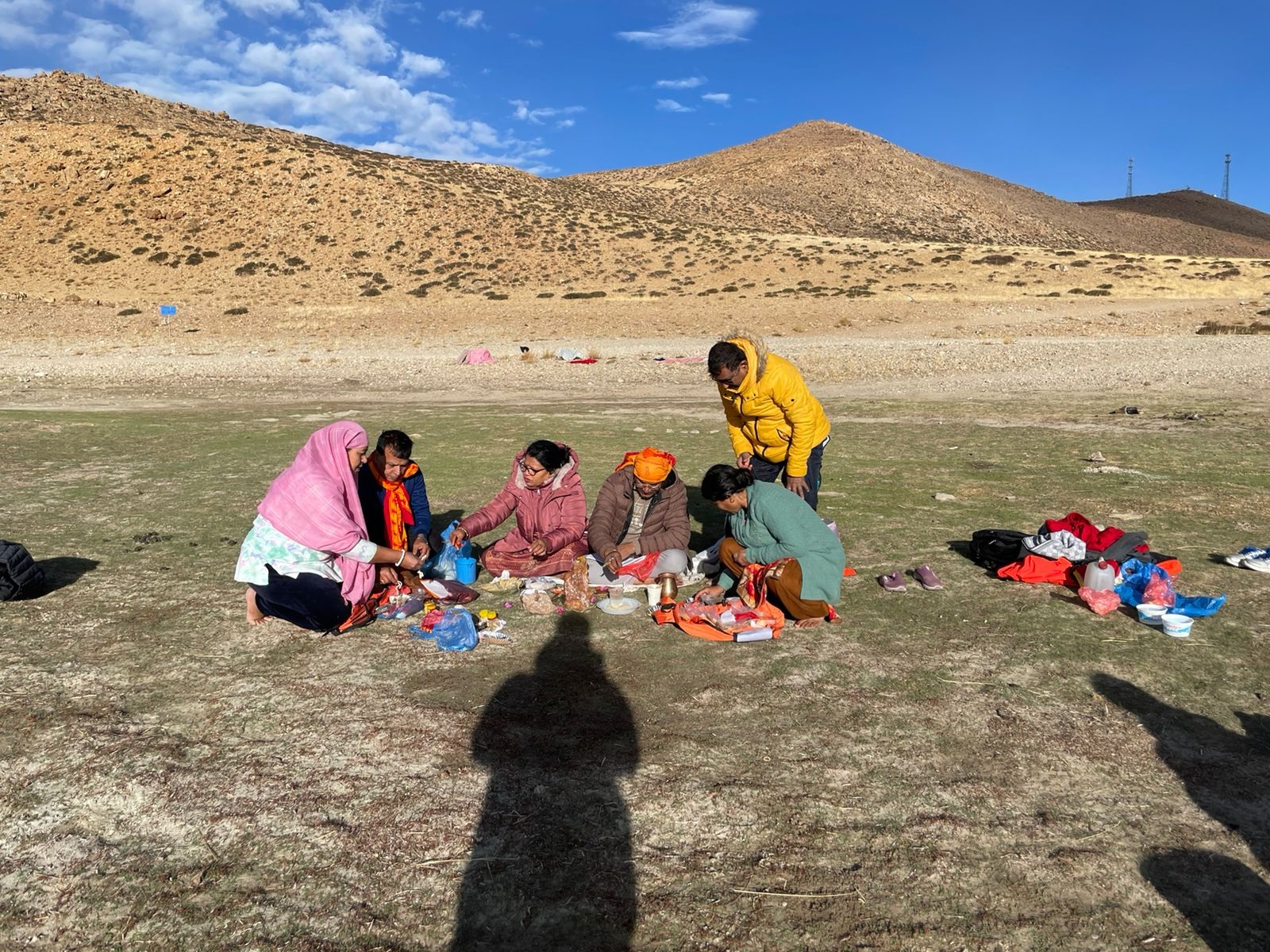
The Kailash Charan Sparsh Yatra 2026 will pilgrimage spiritually from Kathmandu, Nepal's capital city, to the Tibetan Holy Ground of Mt. Kailash and Lake Manasarovar (Tibet); the traveler will perform circumambulation to the feet of Mt. Kailash, completing the sacred Charan Sparsh ritual touching the feet of the holy mountain as an expression of devotion, purification and receiving Lord Shiva's blessing.
The Yatra includes conducting the rituals, performing holy dips and trekking through the breathtakingly beautiful Himalayan mountain range at an elevation of 4500 to 5700 meters. The cost for the trip is $2590 per person, which includes transportation, required permits, accommodation, meals and guidance, so each traveller will have the most memorable spiritual journey.









Kailash Charan Sparsh Yatra 2026 is a special and spiritually elevated pilgrimage route that is designed for those devotees who want to touch Mount Kailash and Lord shiva's feet at a higher level, rather than just taking a regular Parikrama.
This pilgrimage route is centered around the attainment of Charan Sparsh, which is believed to be the divine feet of Lord Shiva. This pilgrimage route is special because, unlike regular Kailash Mansarovar Yatra routes, this route involves a lot of spiritual practice.
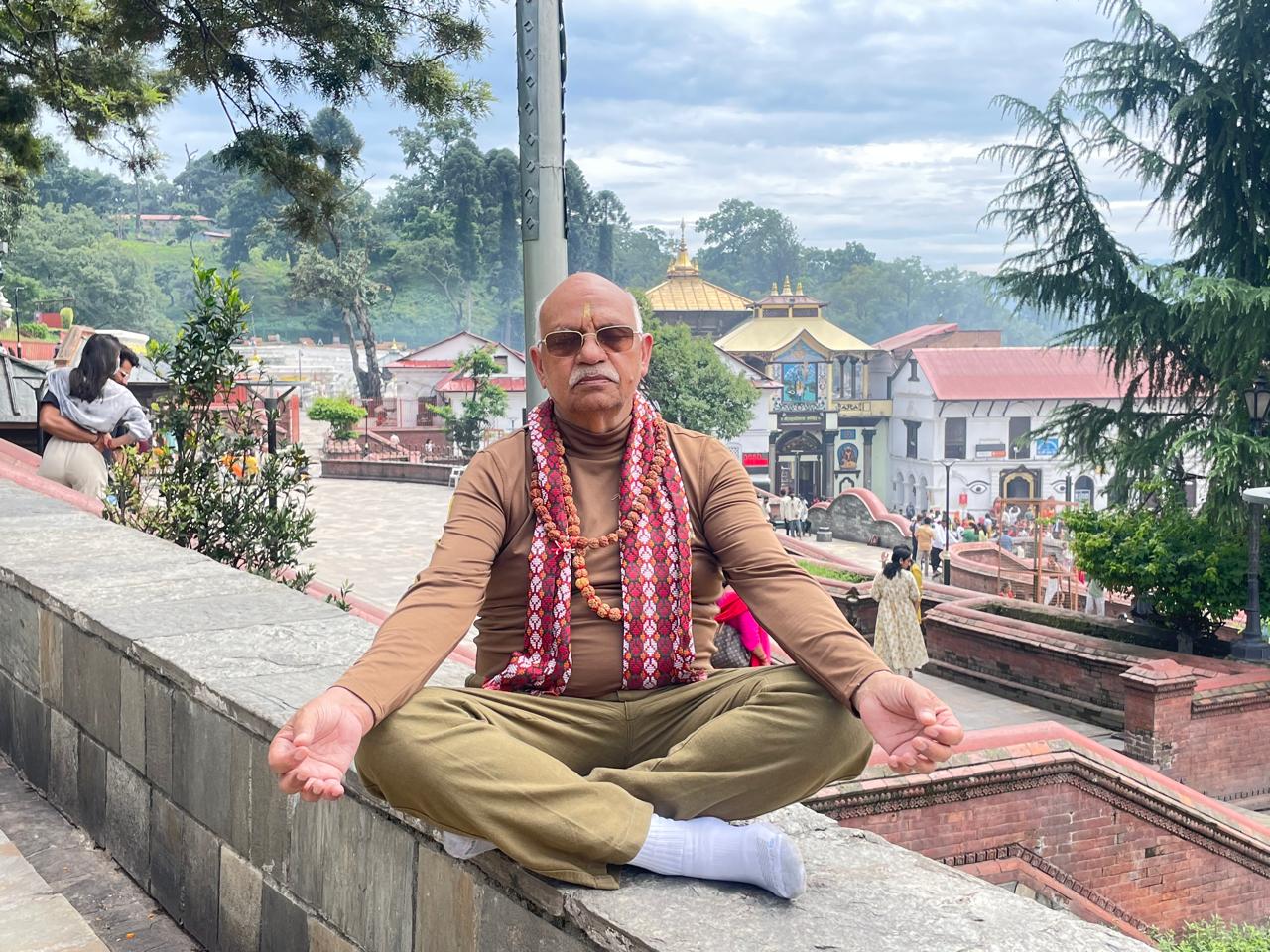
The Kailash Charan Sparsh Yatra through Nepal commences with powerful Hindu rituals. In Kathmandu, you'll perform Rudrabhisek Puja at Pashupatinath Temple.
You'll also visit Boudhanath Stupa, Budhanilkantha, Swasthani Temple, and Doleshwar Mahadev, which is said to be the head part of Kedarnath. Gentle treks to Nagarkot and Changu Narayan come early in this journey. These are essential for acclimatizing your body and mind. At the Kyirong border, you'll cross into Tibet, but you'll be glad you took the time to adjust first.
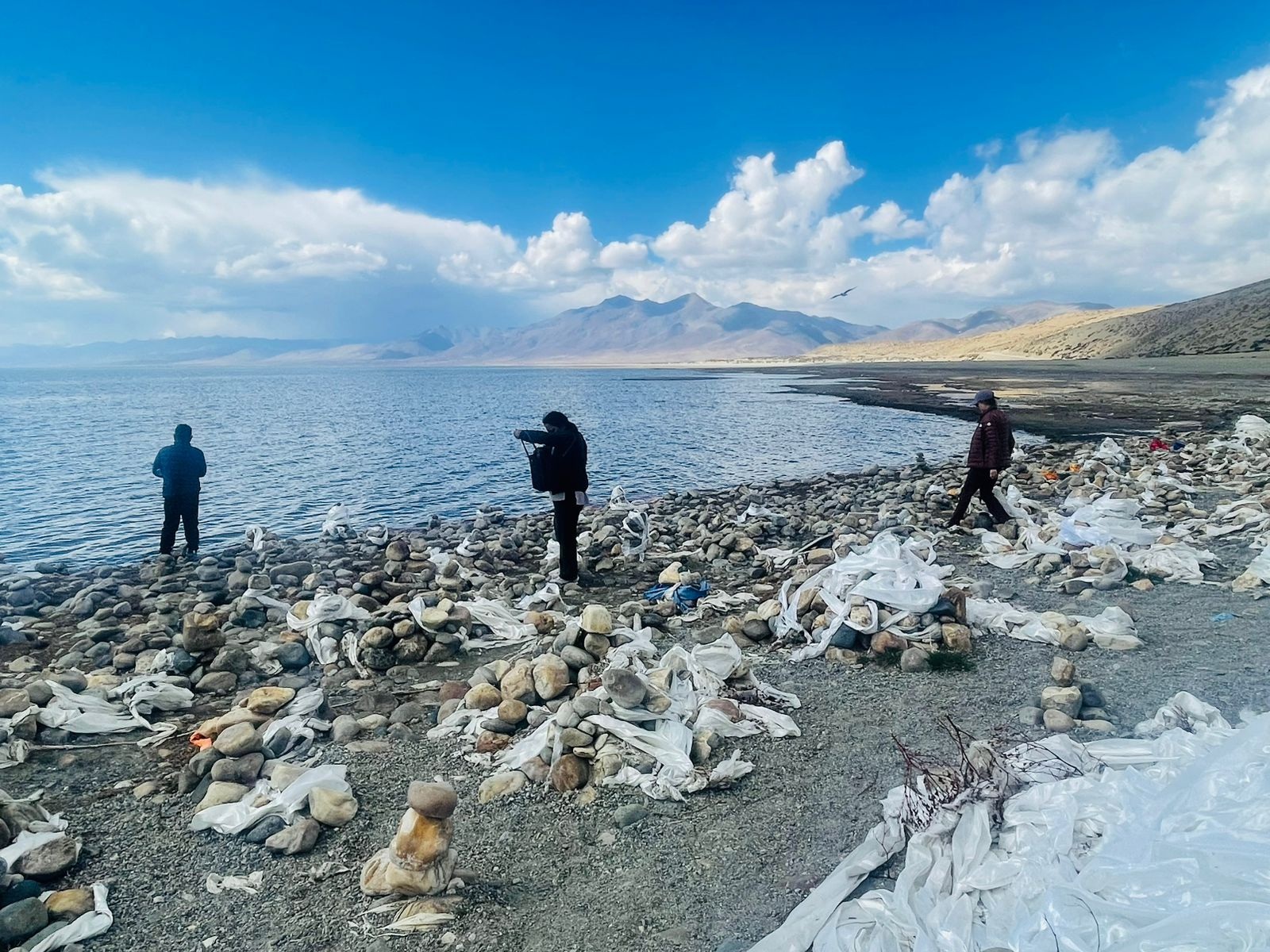
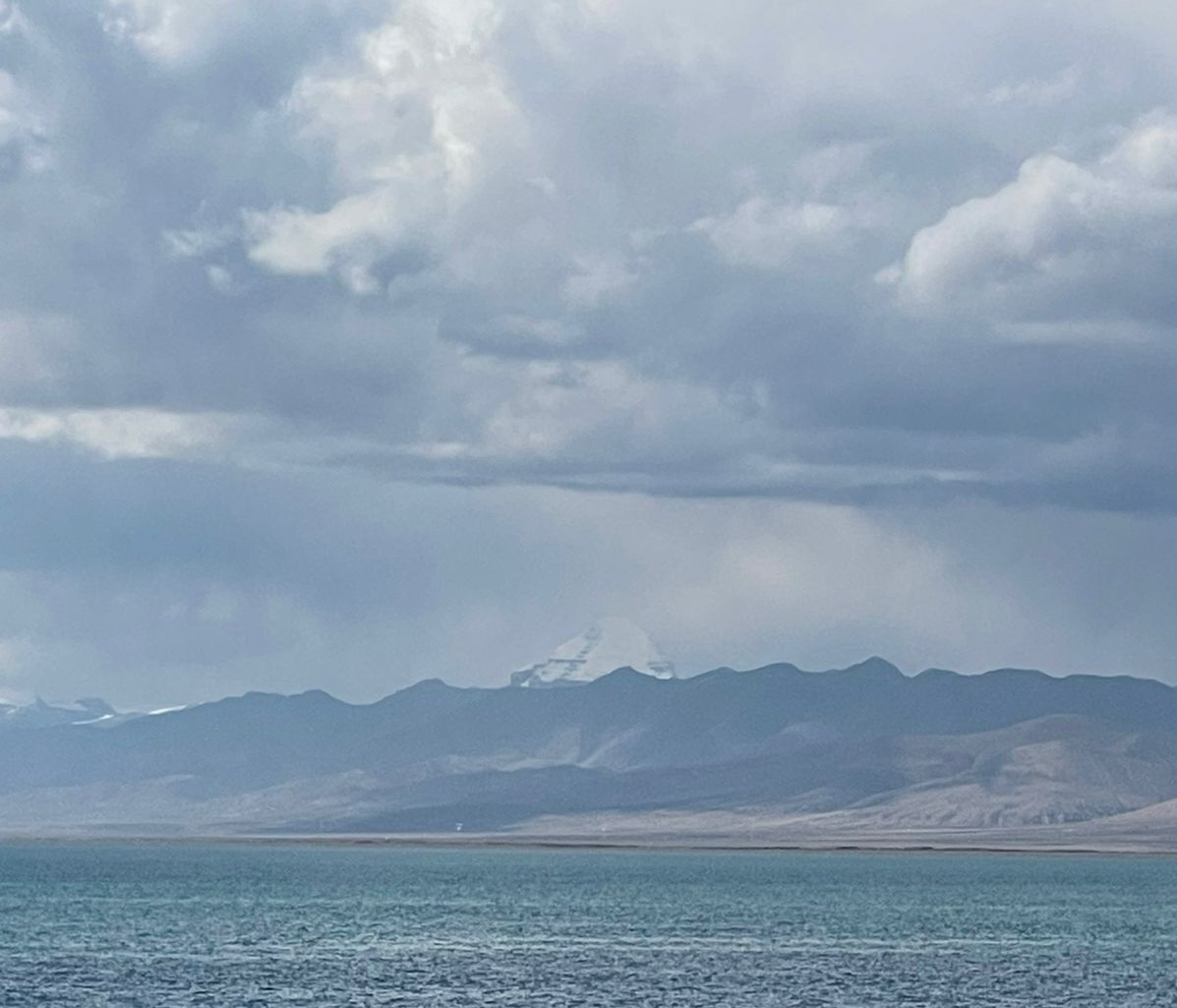
Lake Mansarovar is one of the most important aspects of this yatra. At this sacred lake, pilgrims perform puja, havan, and other holy rituals. It's one of the most sacred lakes in the world.
The spiritual high point comes during Kailash Kora. You'll take a day trek to Charan Sparsh. After a tough climb, you'll physically touch Mount Kailasha for a moment you won't forget. Plus, the Dolma La Pass trek symbolizes spiritual rebirth and marks the completion of the sacred Kailash trek. If you prefer travelling by helicopter instead of by road, then check out our Mount Kailash Tour Package from Nepal by helicopter.
The Kailash Charan Sparsh Yatra 2026 is an excellent option if you're searching for devotion, discipline, and divine grace. You'll experience ancient spirituality. Plus, you'll witness the natural beauty of the Himalayas. And don't worry about logistics this is a well-organized tour with expert support every step of the way. The cost is US$ 4580 per person. For everything you'll receive, it's a spiritually rich investment in your journey.
|
Duration |
10 Nights 11 Days Total (Kathmandu to Kathmandu) |
|
2026 Significance |
Year of the Fire Horse (Occurs once every 60 years) |
|
Spiritual Merit |
13x Multiplier (1 Kora in 2026 = 13 Koras in any other year) |
|
Trek Distance |
6–8 km (Round trip from Dirapuk to the North Face base) |
|
Highest Point |
5,200m (At the actual 'Charan Sparsh' touch-point) |
|
Age Limit |
18 to 70 years (Medical certificate required for seniors) |
|
Permit Requirements |
Chinese Group Visa, Tibet Travel Permit, Military Permit |
|
Booking Window |
Recommended 120 days in advance due to Horse Year demand |
|
Best Time |
May to September (Saga Dawa Festival is May 31, 2026) |
|
Typical Cost |
$3,000 – $3,500 |
Many Indian pilgrims have a strong desire to participate in the Charan Sparsh and Kailash Mansarovar Yatra 2026 from India because it provides a spiritually uplifting and enlightening experience. Pilgrims are beginning to build infrastructure along the direct Indian route from India, using either the Lipulekh or Nathu La Passes. However, a large number of pilgrims express a preference for using the Nepal route from Kathmandu and Kerung as a much easier, more flexible, and more manageable way of completing their pilgrimage to Charan Sparsh and the Kailash Mansarovar Yatra via the Nepal route than the Indian route.
The Nepal route is more advantageous for you as an individual pilgrim, as you would not have to worry about complex government lotteries and slot constraints that may be present while taking the direct Indian route to the Kailash Mansarovar Yatra. In addition to that, the tour operators in Nepal would take care of all your necessary permits and visa requirements for Tibet travel as well as your acclimatization needs while traveling to the higher altitudes.
Charan Sparsh is ideal for your needs, as this is the best route through Nepal for visiting Charan Sparsh. This route starts from Nepal, which allows you to adapt to your trip every day slowly at high altitude until you finally arrive at the sacred location (Mansarovar Lake and Mount Kailash).
This route has many beautiful sites along the way with majestic views of the Himalaya. Throughout your journey, you will experience a cultural and spiritual route.
The meaning of Charan Sparsh is derived from two Sanskrit words: charan, which stands for feet, and sparsh, which stands for touch. Charan Sparsh literally means touching the feet. In Indian culture, Charan Sparsh is a tradition that is held in the highest esteem and involves humbly bowing down to your parents, teachers, elders, or other people you look up to as a sign of respect, gratitude, and humility for the knowledge and experiences they have gained in life.
In a more religious or cultural framework, Charan Sparsh is a very meaningful act. In a Hindu framework, it is a basic act that is a part of showing respect and is an essential act for receiving blessings. In the framework of Kailash Mansarovar, Charan Sparsh is a very meaningful act that is a part of a pilgrimage like you trying to touch the base of Mount Kailash, which is believed to be the abode of Lord Shiva, as a form of devotion.
While the basic concept is similar, it is different in many ways:
With the latest updates, the Kailash Mansarovar Yatra itself is set to be open for pilgrims from April 15 to October 31, 2026. Bookings and travel permits for the Yatra have already been organized for this year's season.
When it specifically concerns Charan Sparsh, the sacred tradition of touching the feet of Mount Kailash, you will find that the situation remains the same for the year 2026/27. According to a number of travel updates for the area, the Charan Sparsh walk has been officially banned by the authorities in Tibet due to a number of concerns regarding the environment and the safety of the pilgrims. It is not currently permitted as part of the Yatra.
This means that while you can definitely take up the Kailash Mansarovar Yatra 2026/27 and engage in the other sacred traditions like the Kailash Kora and the Puja at the sacred Lake Mansarovar, the Charan Sparsh is not currently open under the general travel regulations.
The Kailash Mansarovar Yatra with Charan Sparsh 10 nights 11 Days 2026 trip is a sacred and a once-in-a-lifetime pilgrimage trip that has been specially crafted for you if you are looking for a spiritually enriching experience by visiting the holy Mount Kailash and Lake Mansarovar in Tibet. There are several tour operators that offer the 11 day trip to the holy sites of Mount Kailash and Lake Mansarovar starting from Kathmandu, Nepal. The trip includes sightseeing in Nepal, a drive over the Tibetan plateau, holy rituals at Lake Mansarovar, and the Parikrama of the holy Mount Kailash.
If you are a citizen of the United States of America holding a passport of the USA or an NRI settled in the USA, you can certainly take the trip. As a citizen of the USA, you must first fly to Kathmandu, Nepal, and obtain a Nepal Tourist Visa upon arrival. Then you can obtain a China/Tibet Group Visa and travel permits through a licensed Tour Operator.
Direct entry to Tibet from the USA without a visa is not possible; hence the route through Nepal is the standard and safest route for the trip. The Kailash Mansarovar Yatra takes place during the May to September season; hence the Charan Sparsh can be included as an optional feature of the 11 day trip.
Notes:
The maximum height will be reached at the Dolma La Pass, which is around 5,630 m. This is the most challenging part of the climb.
The total height gain from Kathmandu to the maximum height is around +4,280 m.
Significant height gain as well as loss will be involved, so proper acclimatization is required to avoid altitude sickness.
The spiritual sites, such as the Charan Sparsh region, are above 5,000 m, so proper acclimatization is required on your part.
Altitudes above 4,500 m are common, and you might encounter acute mountain sickness while approaching Mansarovar or Darchen.
The 11 days Days Kailash Charan Sparsh Yatra is not an ordinary tour, as the tour will be a deeply transformative journey for you. "Charan Sparsh" is touching the sacred ground near Mount Kailash, which will allow you, as a devotee, to attain a unique spiritual connection with Lord Shiva beyond the general Kailash Parikrama. Many pilgrims believe that this is the ultimate blessing on a spiritual tour.
The 11 day tour is a well-planned itinerary that includes rituals, proper acclimatization, as well as cultural experiences such as pujas in Kathmandu, rituals on the Mansarovar Lake, and the high-altitude trek to Charan Sparsh.
By booking the pilgrimage through an experienced tour operator, you will get the best visa and permit services, as well as the best support on the high-altitude trekking routes you will take, especially given the complexities involved in the Tibet visa and entry procedures.
The pilgrimage you are about to take has been scheduled for the best time of the year, between May and September. This is the best time to take the pilgrimage as the weather is conducive for travel and trekking on the high-altitude routes you will take. Early booking of the pilgrimage is important as the demand for the sacred 2026 Yatra is extremely high.
As you take the Kailash Mansarovar pilgrimage, you will also take the sacred journey from Dirapuk Monastery to Charan Sparsh, touching the feet of Mount Kailash as the spiritual pilgrim that you are. This is an important and sacred journey that you, as the pilgrim, will take as you trek the Kailash Parikrama.
Dirapuk to Charan Sparsh is approximately 7 kilometers/1 way (round trip up to 14 km depending upon the route selected). The trekking distance takes you from the base of the north face of Mount Kailash at Dirapuk Monastery (5200-5800m elevation) to Charan Sparsh; however, for experienced hikers like yourself, it can be extremely rewarding.
Charan Sparsh is part of the trekking route of many buds and requires special permits and permissions from local authorities. In addition to Parakesh, this trek also combines both physical exertion and love, resulting in a unique culture along with awe-inspiring beauty.
In terms of the Kailash Charan Sparsh pilgrimage in 2026, 2027, and 2028, a number of tour operators have quoted a package price of around US $2590 per person. This package price generally covers your Tibet permit, group visa, accommodation, transportation between key points, meals, and the services of experienced guides who make your Kailash pilgrimage a smooth and enjoyable experience. There may be a small variation in prices over these years, depending on fuel prices, guide charges, and permit charges, but this amount gives you a good idea of what to expect in terms of costs over these three years.
Cost of Kailash Charan Sparsh Tour from India: ₹2.3 lakh to ₹2.6 lakh
Kailash Charan Sparsh is inclusive of the base cost of around ₹2.3 lakh to ₹2.6 lakh. Additional costs include your return flight to Nepal, travel insurance and any additional expenses incurred while you are in the area, such as pony charges during the Charan Sparsh trek. As such, you should factor in these additional expenses when calculating the total cost of your trip. Refer below for the group cost:
| Group Size | Cost Per Person (USD) |
|---|---|
| 2-4 Pax | $2,850 |
| 5-11 Pax | $2,700 |
| 12-20 Pax | $2,590 |

This year, you have been selected to be part of this incredible and spiritual journey. The Kailash Charan Sparsh Yatra 2026 will be conducted in extreme heights and remote areas, located in the Himalayan Region.
The weather, altitude, and areas may be challenging, impacting air availability, health, and even delays.
We would like to extend our sincere appreciation for your patience and understanding as we do our level best to adhere to the above-mentioned itinerary.
We consider your safety as our top priority. You can be sure that you will be comfortable during this journey due to our experienced guide.Our guide can alter routes as required, ensuring your safety while still maintaining spirituality.
Classic Vacations Nepal has partnered with Pioneer Foundation Nepal, who will provide 5% of your tour cost, which will be utilized for education, health, and development activities in remote areas.
 1400m
1400m
 6 km (Tribhuvan International Airport to hotel)
 20 to 30 minutes
When you arrive at Tribhuvan International Airport, you will be warmly greeted by a member of our staff. You will then be escorted through all airport procedures, such as immigration and baggage reclaim, and finally transported to your accommodation in Kathmandu. Once checked into your ii/ai accommodation, you not only have the rest of that day to enjoy whatever you like, but you can also enjoy some traditional Nepalese food at a welcome dinner before retiring back to your room for a restful night.
In the late afternoon, you will have a short stroll around the local neighbourhood. This walk will acquaint you with the rhythm of daily life in Nepal’s capital. In the evening, our guide will brief you about the trip , cultural traditions and the importance of yatra.

Hotel Shanker or Ramada Encore Kathmandu or Barahi Kathmandu (4 star)

Welcome Dinner
1400m
15 km (local sightseeing by vehicle)
6 to 7 hours
On the morning of Day 2, you will visit Pashupatinath, the most sacred of all temples in Nepal. The specially arranged Rudrabhisek ceremony will be officiated by Vedic priests who will recite sacred mantras while performing puja rituals involving the use of holy water, milk and bel patras. You will be amazed by the illumination of divine energy as participants gather on the banks of the Bagmati River. In addition, you will observe cremation ceremonies as part of the Hindu belief in life, death and rebirth.
Following the conclusion of this morning's ceremony, you will be returned to your accommodation for breakfast. In the afternoon, you will visit Boudhanath Stupa, one of the largest stupas in Nepal. You'll circle the stupa clockwise, spinning prayer wheels and seeing maroon-robed monks. Tibetan shops, rooftop cafés and monasteries will enclose the site. Later, you will visit the Budhanilkantha Temple to check out where a reclining statue of Lord Vishnu lies in a pond. You will be back in the hotel by evening.
Hotel Shanker or Ramada Encore Kathmandu or Barahi Kathmandu (4 star)
Breakfast
2195m
18 km (drive plus trek)
6 to 7 hours
 3 to 4 hours
After breakfast, you will drive to the historical town of Sankhu, a popular traditional Newari village located to the east of Kathmandu. You'll take a walk along the stone-paved streets with old houses, temples, and water spouts. You will visit the Swasthani Temple, the temple of Goddess Swasthani, with beautiful idols, where local women worship with a hope for the well-being of their families. The tranquility of the environment will provide an opportunity to see life in a rural religious setting.
Here, you can start your trek to Nagarkot Hill from Sankhu. The trek will wind through terraced farmlands, pine forests, and tiny hamlets. You will arrive at Nagarkot, a popular hill station, by late afternoon. Before dinner, you'll be rewarded with views of a rolling hillside during sunset. Nagarkot will be the place for an overnight stay.
Hotel at Nagarkot
Breakfast
2195m
20 km (trek plus drive)
6 to 7 hours
1 hour
 2 to 3 hours
Today, you will hike for sunrise over the Himalaya ranges from the camping site early in the morning. On a clear day, the golden light will strike peaks like Langtang and Ganesh Himal. After breakfast, you commence your downhill walk to Changu Narayan Temple, the oldest Hindu temple of Nepal. The route will go from villages to the jungle and up onto the open ridges.
You will visit the ancient stone carvings and the pagoda style of the architecture, as you learn about the worship of Lord Vishnu at Changu Narayan. From there, you will be driven to Doleshwar Mahadev, which is said to be the head of Kedarnath.
Nepali and Indian worshippers can be observed praying while ringing temple bells. Return to Kathmandu in the late afternoon. You can enjoy the remaining part of the day resting, packing, and planning for the journey tomorrow.
Hotel Shanker or Ramada Encore Kathmandu or Barahi Kathmandu (4 star)
Breakfast
2700m
170 km
6 to 7 hours
You will start your day with an early breakfast and hit the road, driving through some of the best mountain scenery to the Nepal-Tibet border. The road traverses past rivers, green hills, and rural towns. You will also see roadside tea shops, suspension bridges, and terraced fields along the way. You’ll then enter Tibet and drive to Kyirong (Kerung).
You can observe a significant difference in the continent as you pass into Tibet. Valleys will open up, mountains will spike, and Tibetan prayer flags will border the road. You will see traditional stone houses, yaks grazing, and residents dressed in woolens. Upon your arrival in Kyirong, you can check into a hotel and take a break. The night will continue to support altitude acclimatization. Your Tibetan-style dinner will be served tonight in Kyirong, and you’ll rest here overnight.
Standard hotel with attached bathroom in Kyirong
Breakfast, Lunch, Dinner, Tea/Coffee, Hot Water/Mineral Water (Veg. Meals by Nepali Sherpa Team)
2700m
3 to 5 km (leisure walk)
2 to 3 hours
1 hour
1 hour
The emphasis for the day will be on getting properly acclimatized. After breakfast, take a relaxing walk in and around Kyirong town. Here you can see how local Tibetan life goes on, with prayers being performed by Tibetans, herds of yak, and daily business in the market. Hills, rivers, and snow-capped mountains are all around you, making it a beautiful and serene environment.
You might drop in at a nearby monastery where monks intone prayers in sonorous bass notes. You’ll experience Tibetan Buddhism, prayer wheels, and mani stones inscribed with sacred mantras. The afternoon will be spent resting and drinking liquids as your body acclimatizes. Our guide will keep an eye on your health and tell you how to take precautions at this high altitude. Dinner and the night will be quiet, with little dining and an early bedtime, to get ready for still higher regions in the days to come.
Standard hotel with attached bathroom in Kyirong
Breakfast, Lunch, Dinner, Tea/Coffee, Hot Water/Mineral Water (Veg. Meals by Nepali Sherpa Team)
4448m
320 km
7 to 8 hours
Today, you will drive towards Saga along the Tibetan Plateau after breakfast. The road traverses snow-capped mountains, vast grasslands, and deep river valleys, offering the best views during the journey. Along the way, you can see nomadic tents, yak herds, and wind-whipping prayer flags.
You will have a few short breaks along the way to stretch and take in the views. In order to maintain energy & warmth throughout the day, each of the many local teahouses offers traditional Tibetan food to their customers. At about mid-afternoon, you will arrive in Saga, a small place along the main route for all those people who travel to Mount Kailash.
You will register at the hotel you will also stay overnight. You will be greeted by a variety of religious travelers on your slow-paced walking tour of a town at night, making this a congenial experience for all participants.
Standard hotel with attached bathroom in Saga
Breakfast, Lunch, Dinner, Tea/Coffee, Hot Water/Mineral Water (Veg. Meals by Nepali Sherpa Team)
4590m
507 km
7 to 8 hours
Today is about getting to the sacred Lake Mansarovar (4,590m), an enormous high-altitude freshwater body, via some of Tibet's most breathtaking landscapes. Vast areas without human settlement, breathtaking scenery, including Mount Gurla Mandhata, will also be available to see. You will hike through vast grasslands where antelope and wild yak have been seen.
You will arrive at Mansarovar Lake in the afternoon. The serene blue water against the snow-capped peaks will set an extremely spiritual scene. You will stroll along the shores of the lake, pray, and take holy water. It will be a calm sunset over the lake in the evening, which will be a very fantastic experience. You will camp at night near Mansarovar, experiencing the strong positive vibes of the holy place.
Tented camp or standard guesthouse near Lake Mansarovar
Breakfast, Lunch, Dinner, Tea/Coffee, Hot Water/Mineral Water (Veg. Meals by Nepali Sherpa Team)
4589m
30 km (drive)
3 to 4 hours including puja ceremony
Morning , you will take a bath for puja and Havan at Lake Mansarovar. Vedic hymns will be chanted by priests, who will conduct a fire ritual. The reflection of mountains in Lake Mansarovar takes your spiritual experience to the fullest. After breakfast, you will drive to Darchen (base camp of Mount Kailash).
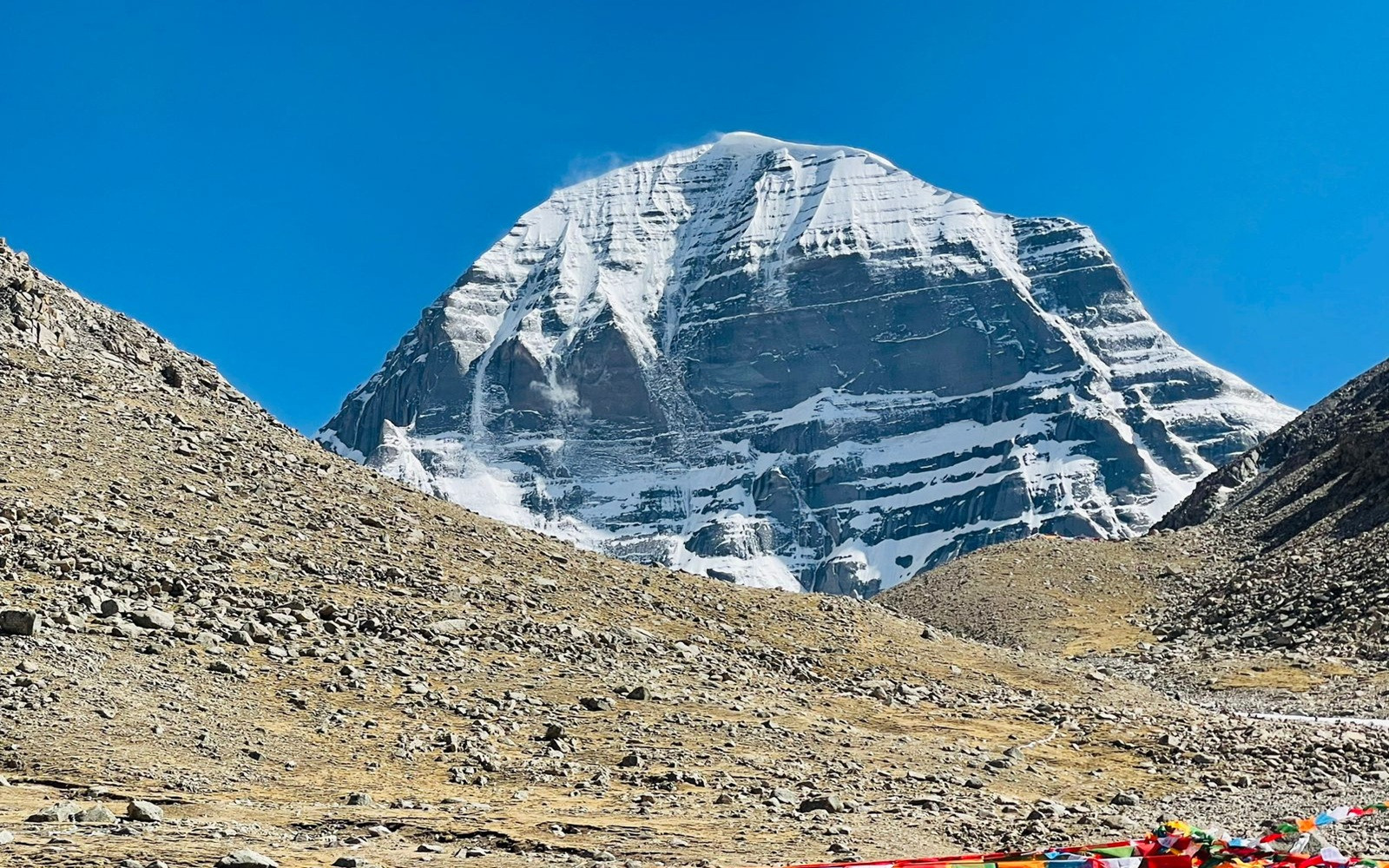
There will be the first clear view of Mount Kailash’s south face. Pilgrims are often quite moved to see the mountain. Upon arrival at Darchen, you will check into the guest house and rest. The afternoon will be at leisure to relax and prepare for departure. You will sort out trekking equipment and receive a refresher briefing on the Kailash Kora. We’ll have dinner and stay overnight there in Darchen.
Standard guesthouse with attached bathroom in Darchen
Breakfast, Lunch, Dinner, Tea/Coffee, Hot Water/Mineral Water (Veg. Meals by Nepali Sherpa Team)
5210m
14 km
5 to 6 hours
4 to 5 hours
On the tenth day of the Pashupatinath & Kailash Yatra, you will drive to Yam Dwar in the morning, the gateway to Mount Kailash. Pilgrims say this is where salvation begins, and you will perform morning prayers before the trek begins. The path is a gentle climb, rocky at times, with a led trail.
You will cross the Lha Chu River and trek alongside prayer flags and mani walls. The north face of Mt. Kailash will gradually come into view, and you'll have the most amazing visual experience. You will then reach Dirapuk Monastery in the afternoon, where you can experience Tibetan Buddhism and its practice at its peak. You'll have dinner and stay overnight at Dirapuk.
Guesthouse or tented camp at Dirapuk
Breakfast, Lunch, Dinner, Tea/Coffee, Hot Water/Mineral Water (Veg. Meals by Nepali Sherpa Team)
5630m
8 km (round trip)
4 to 5 hours
2 to 3 hours
1 to 2 hours
This is the holiest day of your entire Pashupatinath & Kailash Yatra. There will be an early morning trek to Charan Sparsh, which means “Feet of Lord Shiva”. The path winds through difficult terrain, but it is as rewarding in spiritual terms. You can also have the magnificent view of the north face of Mount Kailash.
On reaching Charan Sparsh, you will land to touch the foothills and pay your homage. For many of the pilgrims, this is a moment that is filled with deep emotion and life-altering significance. After exploration and quiet time for prayer, you will descend to Dirapuk. The evening will bring the opportunity for rest and introspection. Overnight stay will be at Dirapuk.
Guesthouse or tented camp at Dirapuk
Breakfast, Lunch, Dinner, Tea/Coffee, Hot Water/Mineral Water (Veg. Meals by Nepali Sherpa Team)
5630m
22 km
8 to 9 hours
4 to 5 hours
3 to 4 hours
Today, you will wake up before dawn and get ready for your most difficult day, as well as the most sacred, to complete Kailash Parikrama. The path ascends up rocks and iced-over streams, and along the way, you can see prayer flags, cairns, and offerings left by pilgrims, which mark the way and set the tone for a profoundly spiritual experience.
It will become harder to breathe as you climb closer to Dolma La Pass, and each footstep will depend on patience and focus. From the top, look down, and you’ll see stunning views of snow-capped mountains and enormous Tibetan vistas. The descent will take you to Gauri Kund, a turquoise lake dedicated to Goddess Parvati.
By afternoon, you’ll keep up the pace hiking across broad valleys and rocky paths before eventually arriving at Zuthul Puk Monastery, which was once the resting place where Milarepa meditated. You will have some rest and a hot meal, and you will spend the night there.
Guesthouse or tented camp at Zuthul Puk
Breakfast, Lunch, Dinner, Tea/Coffee, Hot Water/Mineral Water (Veg. Meals by Nepali Sherpa Team)
4790m
10 km trek plus 430 km drive
9 to 10 hours
2 to 3 hours
You will make your start for the last part of the Kailash Kora after breakfast. The descent to Darchen from Zuthul Puk should be fairly easy, and it will traverse a picturesque river valley.
You will pass prayer flags flapping in the breeze and mani walls engraved with sacred Tibetan mantras. Pilgrims from all over the world will walk beside you, trading smiles, songs, and silent contemplation.
Reaching Darchen, you will take a little rest and have lunch. The drive back towards Saga in the afternoon reveals broad plateaus, grazing yaks, and snow peaks in the distance. The vast Tibetan vistas will offer time for silent reflection.
You will then arrive in Saga by evening and check into your hotel. You will have dinner and sleep, physically exhausted and spiritually richer.
Standard hotel with attached bathroom in Saga
Breakfast, Lunch, Dinner, Tea/Coffee, Hot Water/Mineral Water (Veg. Meals by Nepali Sherpa Team)
4450m
320 km
7 to 8 hours
Today, you will begin your return journey to Kyirong. The return will be just as rewarding, on a breathtakingly scenic drive back across the Tibetan highlands; twisting and turning with grassland plains stretching out like oceans, river valleys below and over mountain passes.The vegetation and climate will change along the way as the elevation lowers. The air will seem warmer, and everything will look greener compared to the high plateau.
You will also pass by nomadic families taking care of their yaks and sheep. There will be tiny roadside villages with a glimpse into traditional Tibetan countryside life. You can take a break at tea houses where locals congregate to drink yak butter tea and chat. In the afternoon, you will reach Kyirong and check into the hotel.
The rest of the day will be at leisure to relax and recover after the long journey. This evening, you will have the opportunity to take a short walk through the town, witness prayer rituals at some of the local monasteries, and have a quiet dinner before retiring for the night.
Standard hotel with attached bathroom in Kyirong
Breakfast, Lunch, Dinner, Tea/Coffee, Hot Water/Mineral Water (Veg. Meals by Nepali Sherpa Team)
2700m
170 km (border to Kathmandu)
6 to 7 hours
As your return journey continues, you will drive to the Nepal-Tibet border today. The highway traverses scenic mountain valleys, rivers, and forested canyons.
Your re-entry, after passing immigration procedures, is to Nepal. Green hills, terraced farms, and sleepy villages will materialize quickly along the way.
You will see farmers in the villages busy in their fields, a local market on the highway, and some colorful temples during the drive.
After days on the high Tibetan plateau, the warmer environment and more familiar Nepali life will feel welcoming.
You will reach Kathmandu by late afternoon or evening and will be transferred to your hotel. You may have the opportunity to rest, change, or walk locally.
You can have your farewell dinner here, discussing all the experiences of the sacred journey. You will spend the night in Kathmandu.
Hotel Shanker or Ramada Encore Kathmandu or Barahi Kathmandu (4 star)
Breakfast, Farewell Dinner
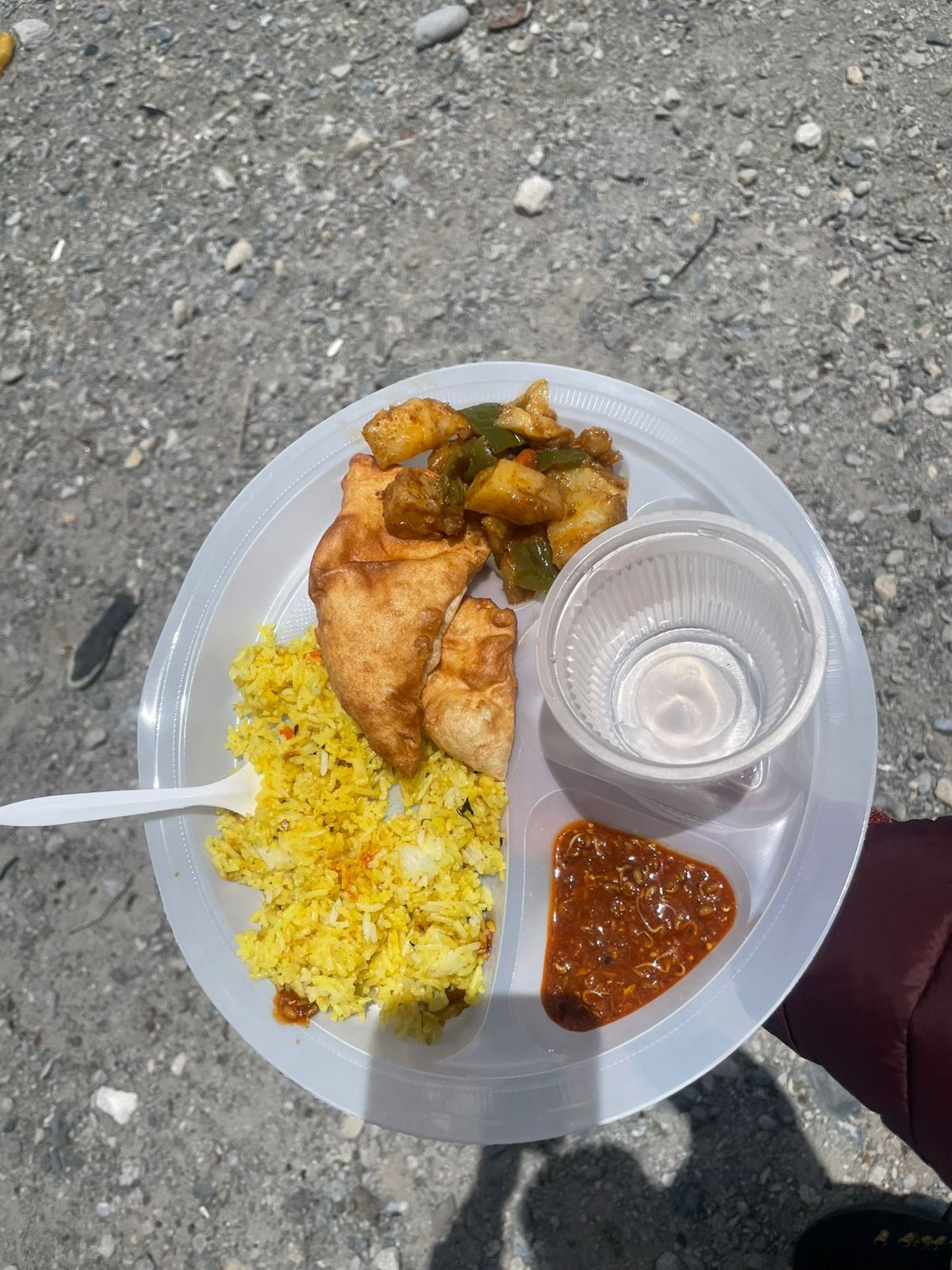
Mels Served Enroute to Mount Kailash
Meals during your Kailash Mansarovar Yatra tour are carefully planned to ensure that you get the best and stay comfortable and energized during your tour.
During your travel through Tibet and during your Kailash Kora tour, your meals are completely taken care of by your tour crew and are included in your tour packages (for private group departures).
There is a special Nepali cook who accompanies your tour group and serves you with daily breakfast, lunch, and dinner, along with tea/coffee, snacks, and hot drinking water. The food is plain and vegetarian and is best suited to high-altitude conditions.
The food is also very hygienic and Indian-style, which is perfect for Indian pilgrims like you. The availability of mineral water is also taken care of during your tour.
When you stay in Kathmandu and Nagarkot, your hotel is on a MAP basis, which means that your breakfast and dinner are included in the tour cost.
Apart from that, your special welcome dinner at a traditional Nepali restaurant is included in the tour cost. Also included in your tour cost is your farewell dinner in Thamel with multi-cuisine facilities.
The cost of your lunch in Kathmandu is excluded from your tour cost. Any extra personal orders, beverages, or food ordered from outside your tour itinerary are to be paid separately.
Accommodation on Kailash
The accommodations during your tour to Tibet are included as per the itinerary and are a part of your Kailash Yatra tour package.
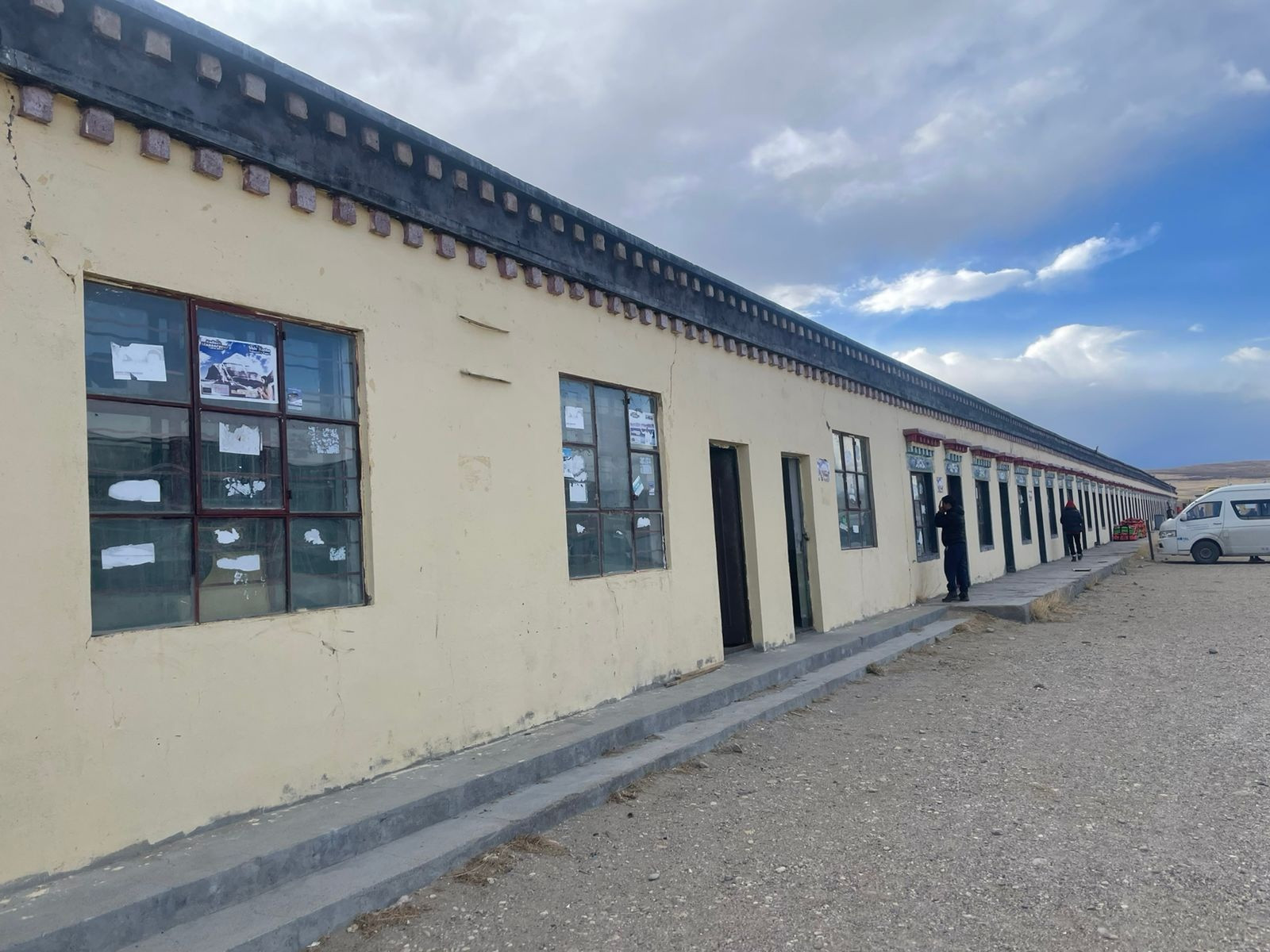
During your stay in towns like Kyirong, Saga, and Darchen, you can be sure of staying in the best hotels available. They are normally on a twin-sharing basis with attached bathrooms.
However, during your Kailash Kora tour, accommodations are simple due to the remote location of the high-altitude places you visit.
During your stay at places like Dirapuk and Zuthulpuk, you can be sure of staying in simple lodging facilities like basic guesthouses with very simple amenities and common facilities like washrooms.
Although luxury is very simple during your stay during the tour, you can be sure of staying in very clean and safe accommodations that help pilgrims like you undertake your sacred tour of the highest mountain in the world.
Your stay during your tour to Nepal is far more relaxed and luxurious. During your tour to Nepal, your tour package includes 4-star hotel accommodations like Hotel Shanker, Ramada Encore, and Barahi in Kathmandu.
Your tour package also includes a resort stay, like Hotel Country Villa, located in Nagarkot.
We are team of professionals who share a common devotion to the outdoors and are commited to world travel.
Mr. Pem Chhotar Sherpa was born in Solukhumbu. He lived in his village for 16 years and studied under a Lama called Tawa in local language. He used to work as a porter while in Solukhumbu. His maternal uncle has a trekking company and he w...

Originally from Manaslu, Gorkha, and with 23 years of experience, Mr. Chet Prasad Bhatta now serves as the Managing Director at Classic Vacations Nepal. He is a young, energetic, and dynamic leader in mountain tourism in N...

Mr. Lok Bhatta is one of our best and professional guide in the company. He has been guiding with us from last 12 years. He have trekked over to our major trekking region of- Everest Region, Annapurna Region, Mustang Region, Manalsu Region, Langtang Region etc. He is...


Things to explore more..

The best time for you to undertake Kailash Charan Sparsh Yatra is from May to September, with May-June and September being particularly good for pleasant weather conditions.
This is widely regarded as one of the very best seasons for your Kailash trekking adventure. The snow is completely gone from many high-altitude passes, and the routes are more accessible for pilgrims like you. The pleasant weather conditions with clear views around Mount Kailash and Mansarovar Lake make your Charan Sparsh as well as Kailash trekking adventure a more comfortable and spiritually uplifting experience for you.
July and August are also good for Kailash trekking for pilgrims like you, despite being part of the summer monsoon season, as this rain shadow effect keeps rainfalls light and intermittent for you.
Early autumn is another good time for Kailash trekking for pilgrims like you, as after the end of the summer rains, the sky is usually crystal clear, and this makes for a peaceful and picturesque Kailash trekking adventure for pilgrims like you.
When considering your trip during the winter months of November through April, this is when winter is at its height. You are advised against making the journey to Kailash (the Kailash trekking site) because of the extremely cold temperatures, the potential for snow in the area and the likelihood of being unable to cross any passes during this period.
Yes, the Charan Sparsh Yatra is a difficult trek. While the difficulty level of the trek can be calculated on the basis of a scale of 1 to 10, it will be around 7 to 8, considering the high altitude (~5,000 meters), the rocky and steep terrain, and the thin atmosphere, which will require high physical strength from you.
While the distance to be covered is not very long, the high altitude and the harsh weather conditions will turn the trek much more challenging and difficult for you to handle. The trek from Dirapuk to the base of Mount Kailash is steep, requiring you to trek through the high-altitude terrain for several hours.
It is important to get the required fitness training and to get the required acclimatization to the high-altitude terrain, as it will help you to trek the Charan Sparsh Yatra in a comfortable manner.
This is the first permit you need to acquire for entry into the region of Tibet, where you are a foreign traveler like yourself. This entry permit is issued to you by the Tibet Tourism Bureau and allows you to enter the region for a cost of about US$ 50-80 per person.
This is the permit you need to acquire for entry into restricted areas in the region, such as Mount Kailash and Lake Mansarovar. This permit is a must for the entire trip for you, and it comes for a cost of about US$ 30-50 per person.
This is the permit you need to acquire for entry into the restricted areas in the region, such as Mount Kailash, which are located in the border areas. This special permit allows you to safely pass through the military areas for a cost of about US$ 20-30 per person.
This special permit is exclusively required for your Charan Sparsh trek. This permit will allow you as a pilgrim to touch the base of Mount Kailash. This is a rare opportunity for you, and the cost of the permit is about US $ 100-150 per person.
As a foreign national, you will also require a special Chinese Group Visa for entry into Tibet. This visa is required collectively. The cost of the visa will be about US $ 90-120 per person, depending on your nationality.
The cost of the permit will be about US $ 290-430 per person. Classic Vacations Nepal will arrange all the permits for you.
To begin the process of registering for the Kailash Mansarovar Yatra with Charan Sparsh (Touching Mount Kailash), take the following steps:
Contact Classic Vacations Nepal via email (e.g., [email protected] / WhatsApp +977 9851040806) and explain your desire to participate in the Kailash Mansarovar Yatra with the Charan Sparsh Package and that you would like to have more information about the set departure dates as well as availability of both requirements.
When you make up your mind to join, the company sends you a booking/registration form for the yatra. This form will require your personal information such as full name, passport information, contact number and date of planning to visit.
Prepare and submit those documents: • Scanned copy of your passport (valid for at least 6 months) • Your photo in passport size • Any other ID document needed when applying for Tibet travel permits and visa.
Classic Vacations Nepal will confirm your seat when you pay your deposit/booking advance, per the instructions provided by Classic Vacations Nepal. You will be informed of your payment method (bank transfer, online payment, etc.) and deposit information.
Upon receipt of your booking form, documents and deposit (50% of the invoice), Classic Vacations Nepal will make all necessary arrangements for any required Tibet permits and process your Chinese group visa, amongst others.
After your permit and visa are ready, we will send you the final confirmation with itinerary, briefing details, and instructions on meeting up in Kathmandu prior to flying to Yatra.
Classic Vacations Nepal organizes all the major logistics, helping you get into the right physical and mental state of mind for this spiritual odyssey.
The term charan sparsh translates to "touching the feet." With Mount Kailash as the backdrop, it’s a sacred 7km (round trip) hike from Dirapuk Monastery to the foot of Mt. Kailash North Face. You are a pilgrim and can touch the very mountain, which is deemed as the holiest of them all for being blessed by Lord Shiva.
Because of high altitude risks and environmental concerns, the Chinese authorities and local Tibetan Bureau sometimes restrict access. Right now, it’s safe only if you’re someone like you who is at the top of your physical shape. Note: Access may be closed by the local army if snow conditions are unsafe, and it is always subject to on-ground permission.
Not Allowed. It is not allowed to travel on Mount Kailash or Charan Sparsh. You need to be in a group that travels with a tour operator who processed your Tibet Travel Permit, Alien Travel Permit and Military Permit.
It's a one-day excursion. The vast majority of trips spend an extra night at Dirapuk. You leave early in the morning from the monastery, spend “feet” of the mountain [flat on the ground] and come back to Dirapuk overnight; after lunch, continue from Kora to Dolma La Pass the next day.
The trek is considered high difficulty. Short though it may be, you are stepping across anizingly icy moraines and loose rubble with patches of slick snow at an altitude of around 5.6 km (18,370 feet). It will need you to be in top physical shape and have successfully acclimatized.
Both get you closer to the mountain, but they are separate routes.
Charan Sparsh is an "entry level" holy circuit in contrast to the Inner Kora, which is extremely challenging.
No. You can rent a pony for the regular 52km Outer Kora, but the route from Dirapuk to Charan Sparsh is too rocky, steep and narrow for horses. You will have to do this entire section the hard way, on foot. If you can’t walk on the rocky moraine, it’s also safer for you to get your best view of the North Face from Dirapuk Monastery.
You need to add one additional day to your regular Kailash Yatra. On an ordinary trek, pilgrims like to walk from Darchen to Dirapuk and cross Dolma La Pass the following day. One more day for Charan Sparsh—one more night at Dirapuk, the middle day, just for this walk till down the mountain.
There is no permanent health medical center or oxygen point on the trek route of Charan Sparsh. We also recommend that you have portable oxygen cylinders and a pulse oximeter with your group. Given that you’ll be at nearly 5,600m of elevation, keeping track of your blood oxygen saturation is a must.
At some point during your journey as a pilgrim en route to Charan Sparsh, you come across what is known as the stream Akash Ganga emanating from its melting glaciers in the North Face. The water is “milky” as it contains mineral deposits from the sacred mountain. A lot of people carry this water in bottles to get it as Prasad for their homes.
Safety is the priority. If there is a lot of snow or the trail is obscure, authorities and local guides will probably shut it down. The route is the kind where you must step across loose boulders or slide on slippery ice, and too many people have died there after falling into a crevasse or a rockfall.
No. You can rent a pony for the regular 52km Outer Kora, but the route from Dirapuk to Charan Sparsh is too rocky, steep and narrow for horses. You will have to do this entire section the hard way, on foot. If you can’t walk on the rocky moraine, it’s also safer for you to get your best view of the North Face from Dirapuk Monastery.





 82 Reviews
  110 Reviews
  210 Trips Reviews