- A luxurious Himalayan experience of 14-days comprising both the Everest Base Camp trek, as well as a special trip to Ama Dablam Base Camp.
- A private helicopter ride from Kathmandu to Lukla, enabling us to start our adventure in the Khumbu in a more comfortable and quicker way.
- Hike through the famous Sherpa habitats like Phakding, Namche Bazaar, Tengboche, Pangboche, Dingboche, Lobuche, and Gorakshep.
- Get to Namche Bazaar at 3,440m, with an acclimatization day dedicated and a hike in the Everest View area.
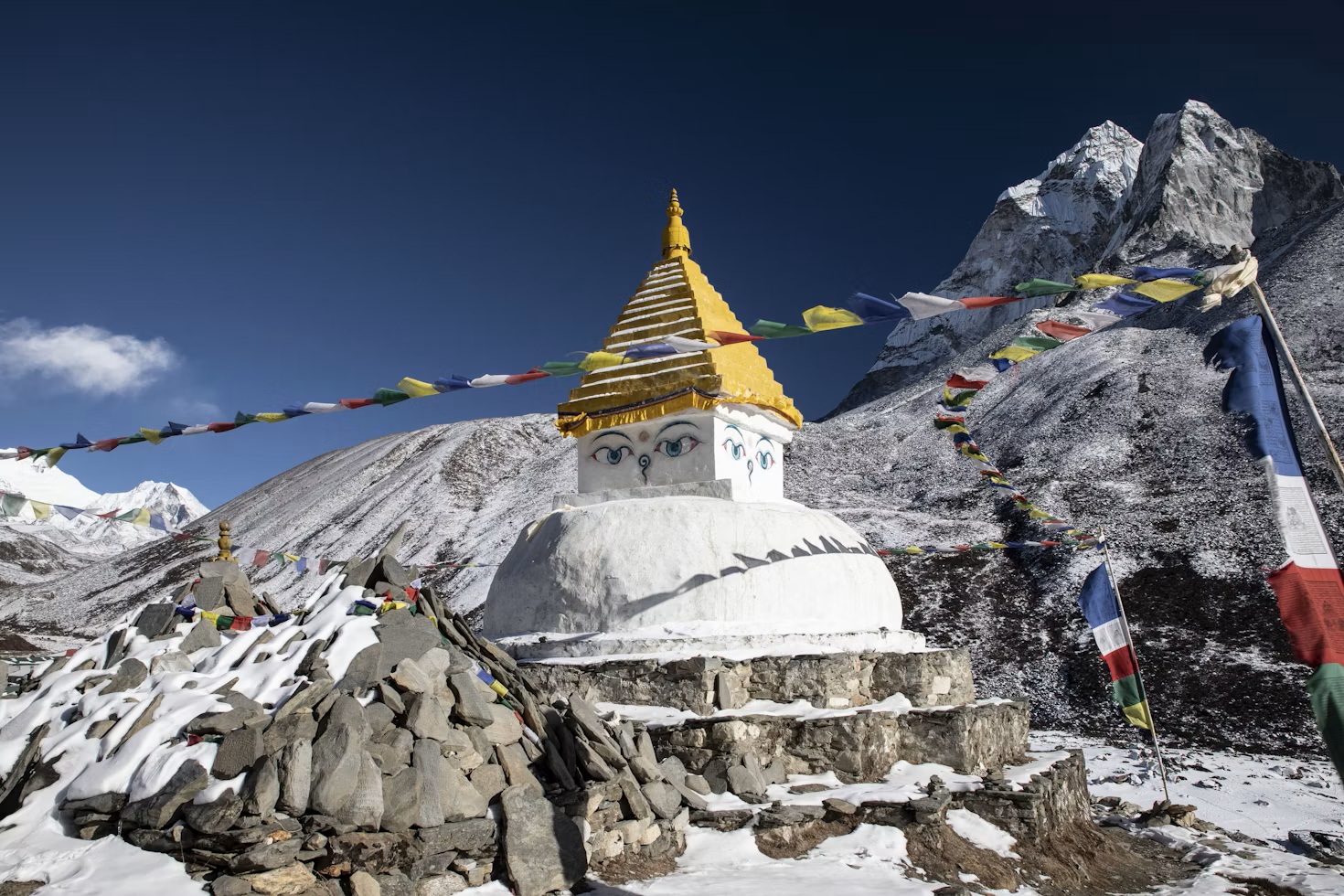
- Visit Tengboche Monastery at 3,870m, with some of the most iconic mountains of Khumbu in proximity.
- Spend some time in Pangboche before heading to the Ama Dablam Base Camp at around 4,570m, thereby going beyond the planned itinerary on Everest Base Camp trek.
- Trek the impressive Imja Valley until Dingboche (4,410m) where we will have another acclimatization day before setting off to touch 4,500m.
- Reaching Lobuche (4,940m), we continue passing through the huge glacial surroundings toward Gorakshep (5,160m).
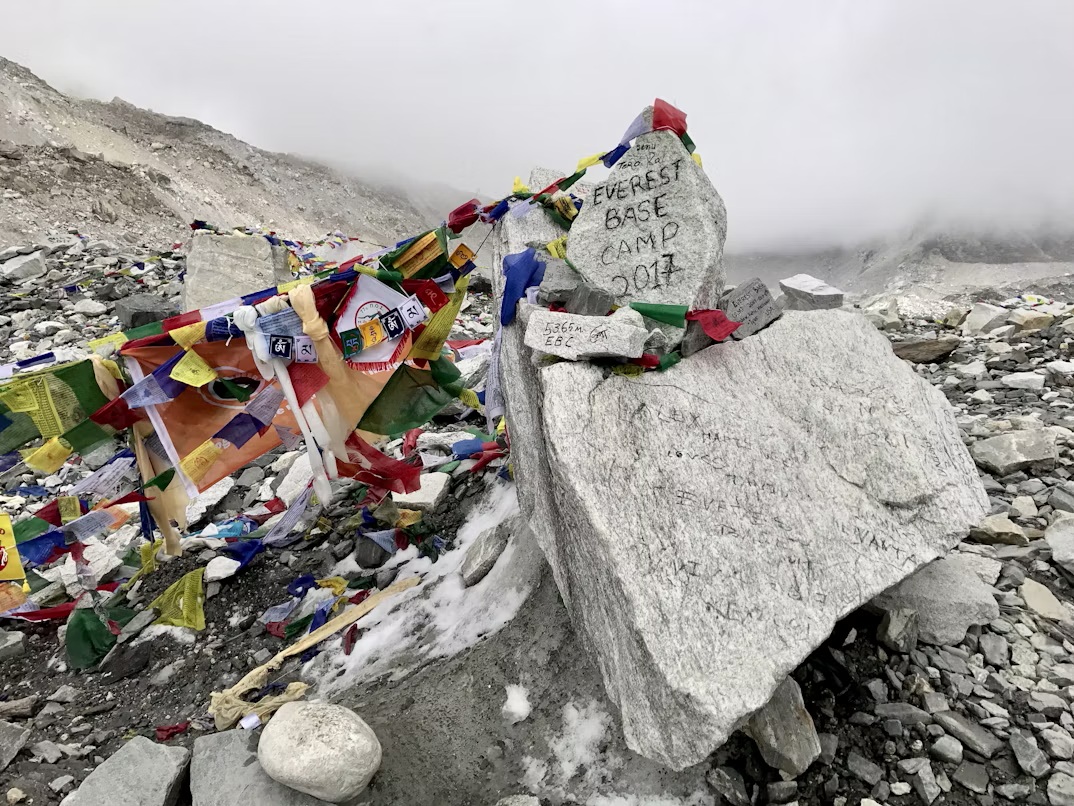
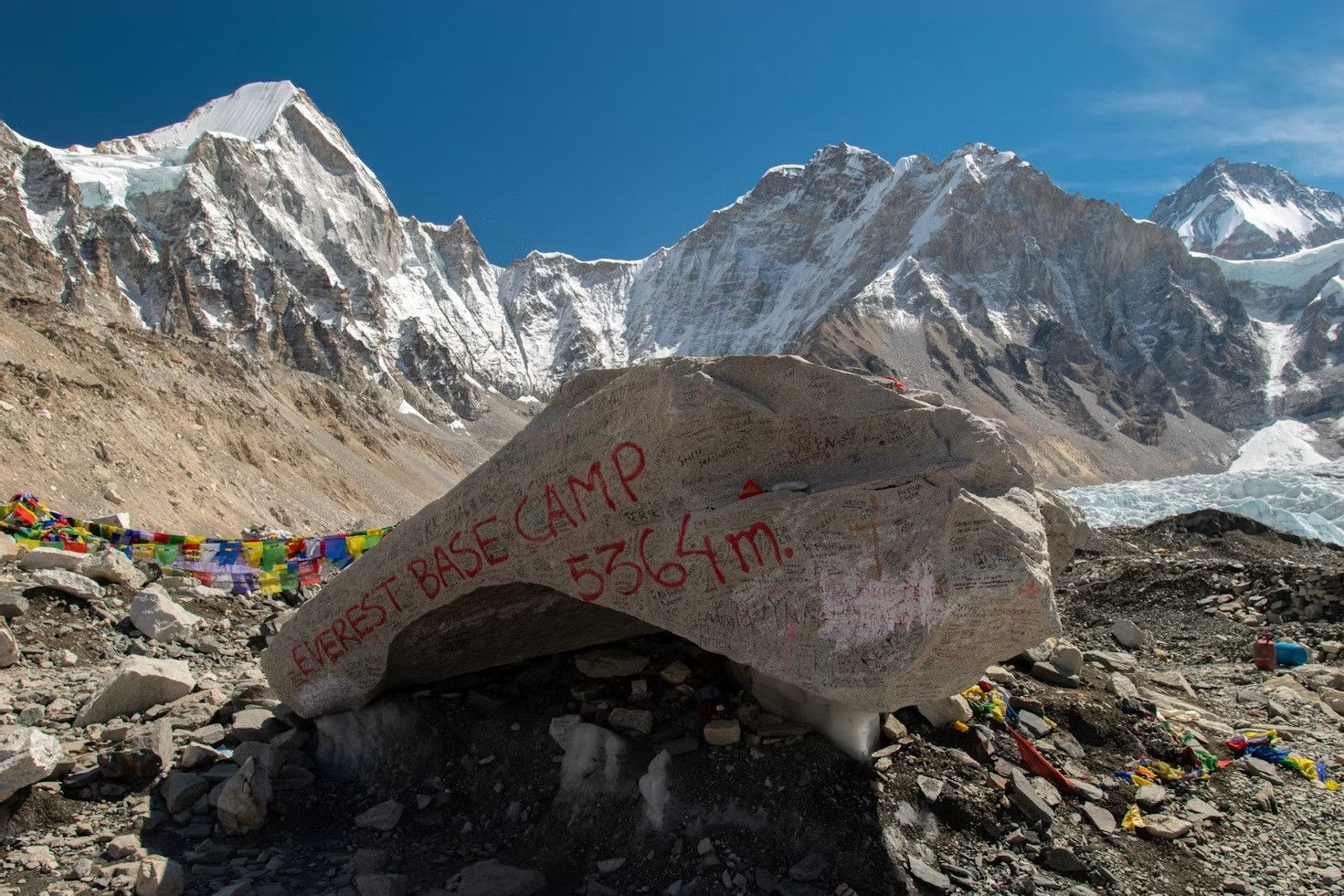
- Arrive at the Everest Base Camp (5,364m), next to the Khumbu Glacier and at the foot of the Everest mountain.
- Go on for climbing Kala Patthar (5,545), which is one of the nearest places for panoramic scenery around Everest, and return to Kathmandu via a helicopter.
- Travel with the team led by Chet Prasad Bhatta, Managing Director and Mountain Guide of Classic Vacations Nepal, having a 23-year experience in adventure travels.
- Leverage Pema Chhosang Sherpa's climbing experience in the Everest region, namely, reaching the summit of Everest three times and having tremendous experience on Ama Dablam, Cho Oyu, Island Peak, Lobuche Peak, and Kyajo-Ri.
- Savor breakfast, lunch, and dinner with tea or coffee and seasonal fruit throughout trekking days. Local chefs prepare these meals from products sourced from the guesthouses.
- Tourists stay in a combination of five-star hotel accommodation in Kathmandu along with staying in the locally owned lodges in the mountains having both city and comfort of the communities close to the trails and trekking places.
- Visit with a company that has more than 24 years of traveling experience, 8,000+ clients, and 99% success rate
- While spring and autumn are the seasons, the conditions are more suitable for high-altitude trekking and helicopter trips than the monsoon or severe winter months.









We designed the 14-day trek package for those trekkers who wanted to explore Everest Base Camp on a route other than the standard one. Classic Vacations Nepal have more than 24 years of experience and have served more than 8,000 trekkers world-wide and Mr. Chet Prasad Bhatta, the Managing director is a Mountain Guide having over 23 years of experience in adventure travel in Nepal, Tibet & Bhutan.
We spend two relaxed nights at The Soaltee Kathmandu prior to taking off by helicopter for Lukla and trek along Phakding, Namche Bazaar (3,440m), Tengboche (3,870m), Pangboche to the Ama Dablam Base Camp and then make way towards Dingboche, Lobuche, to Gorakshep (5,160m) for our ultimate trek to Everest Base Camp. We ascend Kala Patthar (5,545m) before returning to Kathmandu by helicopter.
This journey is worth noting for its demanding nature in comparison to typical sightseeing tours associated with Everest. Care has been taken to ensure acclimatizing is strategically woven into our itinerary, via Namche and Dingboche.
Besides, the Ama Dablam Base Camp trip will lead us away from the standard flow of EBC Trekking to provide us with an exclusive experience of mountaineering.
As for the section regarding Ama Dablam, Pema Chhosang Sherpa is of relevance here. According to Classic Vacations Nepal, he is listed as a major climbing guide in the Everest region, with more than fifteen years of experience.
We keep logistics simple: our stay in Kathmandu is at a hotel, while we will be accommodated in Sherpa hotels and guesthouses in the mountains. During trekking days, breakfast, lunch, dinner, and tea/coffee with seasonal fruit will be provided; the food will be brought to us from the guesthouses and cooked by local chefs.
Spring and autumn are the best seasons for trekking since they usually guarantee optimal trekking conditions. In contrast, the risk of rain is unpredictable during the monsoon, and winter increases the possibility of harsh conditions due to coldness and snow at high altitudes.
We evaluate your capabilities, previous experience, and altitude adaptation ability before agreeing to a booking. We prefer to customize the itinerary to fit your profile rather than send you into the trek at 5,000 meters just because it seems attractive at first glance.
We strongly oppose the idea of “customization” being limited to simple rescheduling of hotel nights or pledging to take a milder version of the Himalayas. Our firm stance is that the mountain must remain the same, meaning that acclimatization, walking at high altitude over 5,000m, and accepting the fact that the weather may ruin the original plans are all unavoidable.
In terms of this 14-day itinerary, we can shift your departure date, travel group or accommodation but leave other things in place. Namely, it is still the standard acclimatization days in Namche and Dingboche, the hike from Pangboche to Ama Dablam, and then a helicopter ride.
Your package includes The Soaltee Kathmandu, Mountain Lodges of Nepal, The Himalayan at Tengboche, Everest Summit Lodge in Pangboche, Dingboche Inn and places to stay near Lobuche/Gorakshep, which is not simply called an “opulent lodge.”
Trekking meals are also included, where Classic Vacations Nepal has included breakfast, lunch, dinner, tea/coffee and seasonal fruit on trekking days.
We don’t only make changes in our brochure but also for actual clients—Ruwan K. and his partner travelled on a custom-made EBC route in November.
Due to bad weather, their Lukla flight was cancelled, and Chet arranged a helicopter. According to another client, Luc Degrace, Chet combined two different trips in one itinerary to fulfill all clients’ wishes.
This is fine for us as we customize the travel only according to clients’ priorities, taking into account the need for preparations, patience and respect for the maximum 5,364 meters-high Everest Base Camp.
All companies may sell you an Everest Base Camp itinerary. The difference will appear when the mountain decides to depart from the itinerary. Classic Vacations Nepal will deliver two decades of experience with Everest and the Himalayas, with a team on the ground to make decisions in Nepal when conditions, altitude and logistics change.
Chet Prasad Bhatta, the Director and trekker, has twenty-three years of experience in mountain tourism. He began his career as a porter and moved up through the ranks to be the head of Classic Vacations Nepal. He can be contacted directly via the company, not through general-purpose booking desks.
Pema Chhosang Sherpa originates from Khumjung in the Everest region. He has over fifteen years of climbing experience. Classic Vacations Nepal considers him an important climbing guide for Island Peak, Lobuche Peak, Kyajo-Ri, and other summit objectives in the Everest region. He has summited Everest three times, which is very useful in the current situation, as on the trek we are including the Ama Dablam Base Camp into the standard EBC trek.
Indeed, we cannot guarantee that all customers will reach Base Camp in spite of weather and health conditions. No serious company can make such a promise. We ensure only the quality of our services: experienced guides, an appropriate acclimatization process, logistical support and safety as the main principle of company decisions. Our guides have training programs in first aid and rescue in the wilderness; safety is the main part of our company goals.
Classic Vacations Nepal states its trip-success rate is 99%. It is reliable information according to the company’s surveys but doesn’t provide any independent confirmations of that. Thus, we cannot state “99% of our travelers reach Base Camp”. We can only provide numbers from our database.
We will never claim “zero incidents” or “100% safe” rates. We have not been able to verify any public data on Classic Vacations Nepal’s independently audited incident rates, and so we won’t invent something. We also could not verify a specific past operational fault we could mention responsibly as our own achievement. Rather, we start our accountable communications with what we cannot control: Himalayan weather, altitude sickness and air travel disturbances can always affect a plan.
What we can predict is that if you prepare in a proper way, follow the acclimatization schedule and keep pace with your guide, you will have the best possible conditions we are able to prepare for you for attaining Ama Dablam Base Camp, Everest Base Camp, and Kala Patthar.
As this journey goes up to an altitude of over 5,000m, it is better to assess your preparedness and experience rather than accept a booking from you just because of the wish to travel.
In our team, we have committed guest relations officers and accounting staff. Laxmi Pathak Bhatta oversees reservations and bookings and arranges training for employees, including first aid and altitude awareness.
We change plans if needed by the mountain. We will tell you if more preparation is needed. If you want to talk to us prior to booking a trek, please get in touch with Chet directly.
To speak frankly about trekking on your own terms: you have much more power over your itinerary and traveling companions than you do over Himalayan elements. There's a real difference in the Everest area.
In October, a group of 4 travelers aged between 67–78 years did a 24-day trip to Khumbu including EBC, Gokyo, Cho La and Island Peak with Chet Bhatta and head guide Iswor. The group reached the summit of the island peak and took a helicopter flight from Namche back to Kathmandu.
Instead, that to us is what's more indicative of the private-trip advantage than just using that phrase "customizable itineraries." Because the itinerary was tailor-made around both acclimation and what the actual goal of the trip was.
Our small group option is a great alternative for someone who doesn't want to be stuck on the trail alone to buy their way onto a privately booked trip. We sell our tours in 2-3-person, 4-6 person and 8-10-person groups to make the pricing transparent, not nebulously labeled "Join A Group."
Parag Patel and his group were stuck at Lukla as flights were cancelled due to unpredictable weather. There was no more Plan A left. Chet immediately sprang into action and, as he mentioned in his online review, spoke with the local airport officials and contacts.
In another customer story, Ruwan K. recounted an EBC journey of his last November. His flight from Kathmandu to Lukla got delayed due to weather, and Chet arranged a helicopter for him.
Therefore, it's our humble opinion that if you're looking for a strict timetable, based on the hope Lukla will fly as expected, don't pick Everest. If you're looking for a group who can make call-based decisions when Plan B fails, that's where Private and Small Group Expeditions come into their own.
We intentionally included Ama Dablam Base Camp instead of just following the traditional route to Everest Base Camp. After leaving Pangboche, we will spend a whole day trekking to the base camp below Ama Dablam so that you can enjoy the mountain from a close distance without making this a climbing trip. For us, this part of the itinerary is more about experiencing Khumbu rather than just hitting a famous location on the map.
Our guide, Pema Chhosang Sherpa, who is from the Everest region, knows Ama Dablam because he has climbed that mountain himself. He has been working with Classic Vacations Nepal for years as one of our climbing experts on Everest. He successfully climbed the summit of Ama Dablam in 2007.
We then proceed through Dingboche and Lobuche towards Everest Base Camp, which is situated at the height of 5,364m, following the Khumbu Valley and ultimately reaching Gorakshep and the Khumbu Glacier.
Here, the landscape becomes quite rugged, as there is less vegetation, cold mornings and long stretches of high-altitude trail. Our published EBC route allows for acclimatization ahead of this stage rather than heading straight up the mountain.
This is the reason why we combine the two elements since Ama Dablam gives you the peaceful, mountain-centered base camp experience while Everest Base Camp is the historical destination and the world-famous Khumbu path. You can enjoy both elements instead of having to sacrifice one for the other.
Our itinerary is perfect for trekkers who feel that just one base camp is not enough when walking along the classic Everest Base Camp trek. We introduce a day dedicated to Ama Dablam Base Camp, followed by our ascent to Dingboche, Lobuche, and Everest Base Camp. You, therefore, see two markedly different Himalayan objectives without turning your journey into a high-altitude expedition.
We created this itinerary for adventurers looking for mountain experiences without unnecessary discomfort. You kick off your journey by spending two nights at the Soaltee Hotel in Kathmandu in Club Rooms, then proceed to selected mountain lodges, including the Mountain Lodges of Nepal in Phakding and Namche, the Himalaya Lodge in Tengboche, the Everest Summit Lodge in Pangboche, and Dingboche Inn.
At Gorakshep, we accommodate you at the Everest Inn Hotel; after all, we believe that a lodge can’t be compared to the luxury of Kathmandu, even at an altitude of 5,000 m.
This is not a gentle way to begin the journey to the Himalayas. For example, we go from Lukla to Everest Base Camp at an elevation of around 5,364m, with Kala Patthar at about 5,545m as well. The Ama Dablam excursion adds one more challenge to our walking journey. Therefore, it is important to have an understanding that it would take us days of walking long distances on rough mountain trails because of the altitude.
The itinerary also allows travelers to get accustomed to altitude. It includes two acclimatization days in Namche and Dingboche. Classic Vacations Nepal does the same with its itinerary.
It should be noted that this itinerary is suitable for independent travelers who want to have their own departures rather than be dependent on the schedule of other travelers. Of course, we can organize group departures for travelers who prefer joining a group.
The tour begins with taking a helicopter flight from Kathmandu to Lukla and ends with taking a helicopter from Kala Patthar back to Kathmandu. This makes it possible to travel without retracing the steps.
This tour is arranged by people who know about Khumbu and have experience there. Pema Chhosang Sherpa comes from Khumjung in the Everest region and has been climbing for more than 15 years, as well as climbing Everest three times. Chet Prasad Bhatta, the founder and Managing Director of Classic Vacations Nepal, has 23 years of experience in adventure travel.
This trek is not recommended simply because it is stated to be “luxury”. It is recommended for those trekkers who wish to travel in the comfort of good lodgings and by helicopter but at the same time are ready for elevation above 5000 m.
We strongly oppose the idea of “customization” being limited to simple rescheduling of hotel nights or pledging to take a milder version of the Himalayas. Our firm stance is that the mountain must remain the same, meaning that acclimatization, walking at high altitude over 5,000m, and accepting the fact that the weather may ruin the original plans are all unavoidable.
In terms of this 14-day itinerary, we can shift your departure date, travel group or accommodation but leave other things in place. Namely, it is still the standard acclimatization days in Namche and Dingboche, the hike from Pangboche to Ama Dablam, and then a helicopter ride.
Your package includes The Soaltee Kathmandu, Mountain Lodges of Nepal, The Himalayan at Tengboche, Everest Summit Lodge in Pangboche, Dingboche Inn and places to stay near Lobuche/Gorakshep, which is not simply called an “opulent lodge.”
Trekking meals are also included, where Classic Vacations Nepal has included breakfast, lunch, dinner, tea/coffee and seasonal fruit on trekking days.
We don’t only make changes in our brochure but also for actual clients—Ruwan K. and his partner travelled on a custom-made EBC route in November.
Due to bad weather, their Lukla flight was cancelled, and Chet arranged a helicopter. According to another client, Luc Degrace, Chet combined two different trips in one itinerary to fulfill all clients’ wishes.
This is fine for us as we customize the travel only according to clients’ priorities, taking into account the need for preparations, patience and respect for the maximum 5,364 meters-high Everest Base Camp.
All companies may sell you an Everest Base Camp itinerary. The difference will appear when the mountain decides to depart from the itinerary. Classic Vacations Nepal will deliver two decades of experience with Everest and the Himalayas, with a team on the ground to make decisions in Nepal when conditions, altitude and logistics change.
Chet Prasad Bhatta, the Director and trekker, has twenty-three years of experience in mountain tourism. He began his career as a porter and moved up through the ranks to be the head of Classic Vacations Nepal. He can be contacted directly via the company, not through general-purpose booking desks.
Pema Chhosang Sherpa originates from Khumjung in the Everest region. He has over fifteen years of climbing experience. Classic Vacations Nepal considers him an important climbing guide for Island Peak, Lobuche Peak, Kyajo-Ri, and other summit objectives in the Everest region. He has summited Everest three times, which is very useful in the current situation, as on the trek we are including the Ama Dablam Base Camp into the standard EBC trek.
Indeed, we cannot guarantee that all customers will reach Base Camp in spite of weather and health conditions. No serious company can make such a promise. We ensure only the quality of our services: experienced guides, an appropriate acclimatization process, logistical support and safety as the main principle of company decisions. Our guides have training programs in first aid and rescue in the wilderness; safety is the main part of our company goals.
Classic Vacations Nepal states its trip-success rate is 99%. It is reliable information according to the company’s surveys but doesn’t provide any independent confirmations of that. Thus, we cannot state “99% of our travelers reach Base Camp”. We can only provide numbers from our database.
We will never claim “zero incidents” or “100% safe” rates. We have not been able to verify any public data on Classic Vacations Nepal’s independently audited incident rates, and so we won’t invent something. We also could not verify a specific past operational fault we could mention responsibly as our own achievement. Rather, we start our accountable communications with what we cannot control: Himalayan weather, altitude sickness and air travel disturbances can always affect a plan.
What we can predict is that if you prepare in a proper way, follow the acclimatization schedule and keep pace with your guide, you will have the best possible conditions we are able to prepare for you for attaining Ama Dablam Base Camp, Everest Base Camp, and Kala Patthar.
As this journey goes up to an altitude of over 5,000m, it is better to assess your preparedness and experience rather than accept a booking from you just because of the wish to travel.
In our team, we have committed guest relations officers and accounting staff. Laxmi Pathak Bhatta oversees reservations and bookings and arranges training for employees, including first aid and altitude awareness.
We change plans if needed by the mountain. We will tell you if more preparation is needed. If you want to talk to us prior to booking a trek, please get in touch with Chet directly.
To speak frankly about trekking on your own terms: you have much more power over your itinerary and traveling companions than you do over Himalayan elements. There's a real difference in the Everest area.
In October, a group of 4 travelers aged between 67–78 years did a 24-day trip to Khumbu including EBC, Gokyo, Cho La and Island Peak with Chet Bhatta and head guide Iswor. The group reached the summit of the island peak and took a helicopter flight from Namche back to Kathmandu.
Instead, that to us is what's more indicative of the private-trip advantage than just using that phrase "customizable itineraries." Because the itinerary was tailor-made around both acclimation and what the actual goal of the trip was.
Our small group option is a great alternative for someone who doesn't want to be stuck on the trail alone to buy their way onto a privately booked trip. We sell our tours in 2-3-person, 4-6 person and 8-10-person groups to make the pricing transparent, not nebulously labeled "Join A Group."
Parag Patel and his group were stuck at Lukla as flights were cancelled due to unpredictable weather. There was no more Plan A left. Chet immediately sprang into action and, as he mentioned in his online review, spoke with the local airport officials and contacts.
In another customer story, Ruwan K. recounted an EBC journey of his last November. His flight from Kathmandu to Lukla got delayed due to weather, and Chet arranged a helicopter for him.
Therefore, it's our humble opinion that if you're looking for a strict timetable, based on the hope Lukla will fly as expected, don't pick Everest. If you're looking for a group who can make call-based decisions when Plan B fails, that's where Private and Small Group Expeditions come into their own.
We intentionally included Ama Dablam Base Camp instead of just following the traditional route to Everest Base Camp. After leaving Pangboche, we will spend a whole day trekking to the base camp below Ama Dablam so that you can enjoy the mountain from a close distance without making this a climbing trip. For us, this part of the itinerary is more about experiencing Khumbu rather than just hitting a famous location on the map.
Our guide, Pema Chhosang Sherpa, who is from the Everest region, knows Ama Dablam because he has climbed that mountain himself. He has been working with Classic Vacations Nepal for years as one of our climbing experts on Everest. He successfully climbed the summit of Ama Dablam in 2007.
We then proceed through Dingboche and Lobuche towards Everest Base Camp, which is situated at the height of 5,364m, following the Khumbu Valley and ultimately reaching Gorakshep and the Khumbu Glacier.
Here, the landscape becomes quite rugged, as there is less vegetation, cold mornings and long stretches of high-altitude trail. Our published EBC route allows for acclimatization ahead of this stage rather than heading straight up the mountain.
This is the reason why we combine the two elements since Ama Dablam gives you the peaceful, mountain-centered base camp experience while Everest Base Camp is the historical destination and the world-famous Khumbu path. You can enjoy both elements instead of having to sacrifice one for the other.
Our itinerary is perfect for trekkers who feel that just one base camp is not enough when walking along the classic Everest Base Camp trek. We introduce a day dedicated to Ama Dablam Base Camp, followed by our ascent to Dingboche, Lobuche, and Everest Base Camp. You, therefore, see two markedly different Himalayan objectives without turning your journey into a high-altitude expedition.
We created this itinerary for adventurers looking for mountain experiences without unnecessary discomfort. You kick off your journey by spending two nights at the Soaltee Hotel in Kathmandu in Club Rooms, then proceed to selected mountain lodges, including the Mountain Lodges of Nepal in Phakding and Namche, the Himalaya Lodge in Tengboche, the Everest Summit Lodge in Pangboche, and Dingboche Inn.
At Gorakshep, we accommodate you at the Everest Inn Hotel; after all, we believe that a lodge can’t be compared to the luxury of Kathmandu, even at an altitude of 5,000 m.
This is not a gentle way to begin the journey to the Himalayas. For example, we go from Lukla to Everest Base Camp at an elevation of around 5,364m, with Kala Patthar at about 5,545m as well. The Ama Dablam excursion adds one more challenge to our walking journey. Therefore, it is important to have an understanding that it would take us days of walking long distances on rough mountain trails because of the altitude.
The itinerary also allows travelers to get accustomed to altitude. It includes two acclimatization days in Namche and Dingboche. Classic Vacations Nepal does the same with its itinerary.
It should be noted that this itinerary is suitable for independent travelers who want to have their own departures rather than be dependent on the schedule of other travelers. Of course, we can organize group departures for travelers who prefer joining a group.
The tour begins with taking a helicopter flight from Kathmandu to Lukla and ends with taking a helicopter from Kala Patthar back to Kathmandu. This makes it possible to travel without retracing the steps.
This tour is arranged by people who know about Khumbu and have experience there. Pema Chhosang Sherpa comes from Khumjung in the Everest region and has been climbing for more than 15 years, as well as climbing Everest three times. Chet Prasad Bhatta, the founder and Managing Director of Classic Vacations Nepal, has 23 years of experience in adventure travel.
This trek is not recommended simply because it is stated to be “luxury”. It is recommended for those trekkers who wish to travel in the comfort of good lodgings and by helicopter but at the same time are ready for elevation above 5000 m.

 1400m
1400m
 N/A
N/A
 N/A
N/A
Upon arrival at the airport in Kathmandu, you will be greeted. You will be transferred to our preferred Hotel called “The Soaltee Kathmandu”, by a comfortable transfer from Tribhuvan International Airport in our own luxury vehicle. This first half-day in the country is taken lightly.
This procedure has been implemented to properly introduce us to the itinerary with no rush about showing places by the most experienced Director & Manager of ours, who also has considerable experience on treks around Nepal, Tibet and Bhutan, which comprises the expertise of a Mountain Guide cum Expedition/Trekking Tour Leader.
After that briefing, we will present to you the full Itinerary covering the areas on the trip in the trail from the flight time starting to landing at Lukla point and on to Phakding, Namche, Tengboche, Pangboche, Ama Dablam Base Camp, Dingboche, Lobuche, Gorakshep, the Everest Base Camp and while assessing whether you have got essential equipment to beat altitude too.
Enjoy a relaxing dinner with your travelling companions in the capital before spending the night and refreshing in the comfort of the Hotel that we will be putting up instead of the usual mountain lodge.

Soaltee Hotel, Club Room, 5 Star Deluxe

Breakfast
1400m
Local sightseeing by vehicle
4–5 hours
 Minimal
 Minimal
After enjoying breakfast at Soaltee, we will set out to explore Kathmandu today for a while before departing the city for Khumbu.
Instead of burdening you with sightseeing destinations that may not excite you, we shall visit the most popular places of historical and cultural importance, namely, Swayambhunath, Pashupatinath Temple, and Boudhanath Stupa.
All of these sites are included in the Kathmandu cultural programs run by Classic Vacations Nepal, and all offer both opportunities to become acquainted with Buddhist and Hindu cultural heritage within the same day. You will be transported from site to site in a comfortable vehicle in order not to carry your trekking backpack while walking through the crowded streets.
Breakfast will be in the hotel; lunch can be organized as needed depending on the sightseeing schedule. Dinner will be again at the Soaltee before heading out early for the mountains. We also make use of the afternoon to do the last checks of the equipment and answer questions concerning the altitude, clothing and the trails.
You will again be accommodated in a Club Room in the Soaltee tonight, making it the last night in comfort before exchanging the roads of Kathmandu for the narrow paths of the Khumbu.
Soaltee Hotel, Club Room, 5 Star Deluxe
Breakfast
2610m
8 km
3–4 hours
2 hours
1 hour
We begin our day with breakfast in order to get to the helicopter at the airport before we fly to Lukla, the main entry point into the Everest region. Our trip provider, Classic Vacations Nepal, utilizes heli-travel instead of the regular fixed-wing flights typically taken.
After landing in Lukla, we meet our trekking crew and get going right away instead of dragging the first day unnecessarily. The trek descends through the greenery of lower Khumbu, all the way to Dudh Koshi River, passing Sherpa towns along the way.
Classic Vacations Nepal places this segment at about 9km and 3-4 hours of walking time. Lunch is eaten on the way or in some local lodge while dinner is enjoyed at Mountain Lodges of Nepal – Phakding Lodge.
This is a real mountain lodge yet among the most comfortable options, with en-suite bathrooms, heated beds, full board meals, drinks, and all bedding. The lodge also has an organic garden that provides seasonal food. We stay in the lodge next to the Dudh Koshi River.
Mountain Lodge of Nepal, Phakding Lodge
Breakfast, Lunch, Dinner
3440m
~10–11 km
6–7 hours
5 hours
1 hour
After breakfast at Phakding Lodge, we go along Dudh Koshi Valley towards Monjo, where we enter Sagarmatha National Park and continue through Jorsale, crossing the river on the suspension bridges.
The trail soon leads us to the famous Hillary Suspension Bridge, after which the nature of the trek changes as we begin climbing steadily through the forest towards Namche instead of staying at the valley bottom.
This will be the first actual ascent of the trek and we take care to maintain a comfortable tempo.
We will have lunch whilst on our trek then continue on to Namche Bazaar, located at an altitude of 3440 m and this will be our base as it serves as a major trading centre for the region and also as a launching point for expeditions into the higher reaches of the Everest region of Nepal.
We will be dining at the Mountain Lodges of Nepal - Namche, a hotel whose rooms have en-suite facilities, spectacular views of the mountains and an on-site restaurant and bar. This night is more important than just the distance. We have made our first important gain in altitude.
Mountain Lodge of Nepal, Namche Lodge
Breakfast, Lunch, Dinner
3880m
3–4 km (side hikes)
3–4 hours
2 hours
1 hour
We do not regard today as a day to rest in bed until noon. We will have breakfast and head out for a hike to acclimatize above Namche. We will take the standard climb to Syangboche and the Everest View Hotel at an elevation of approximately 3,800m.
To simplify, we will be walking back down to our accommodation in Namche after presumably gaining some altitude during the day. In its description of this acclimatization hike, Classic Vacations Nepal states it is 4.5km long and takes 3-4 hours with an elevation gain of approximately 360m.
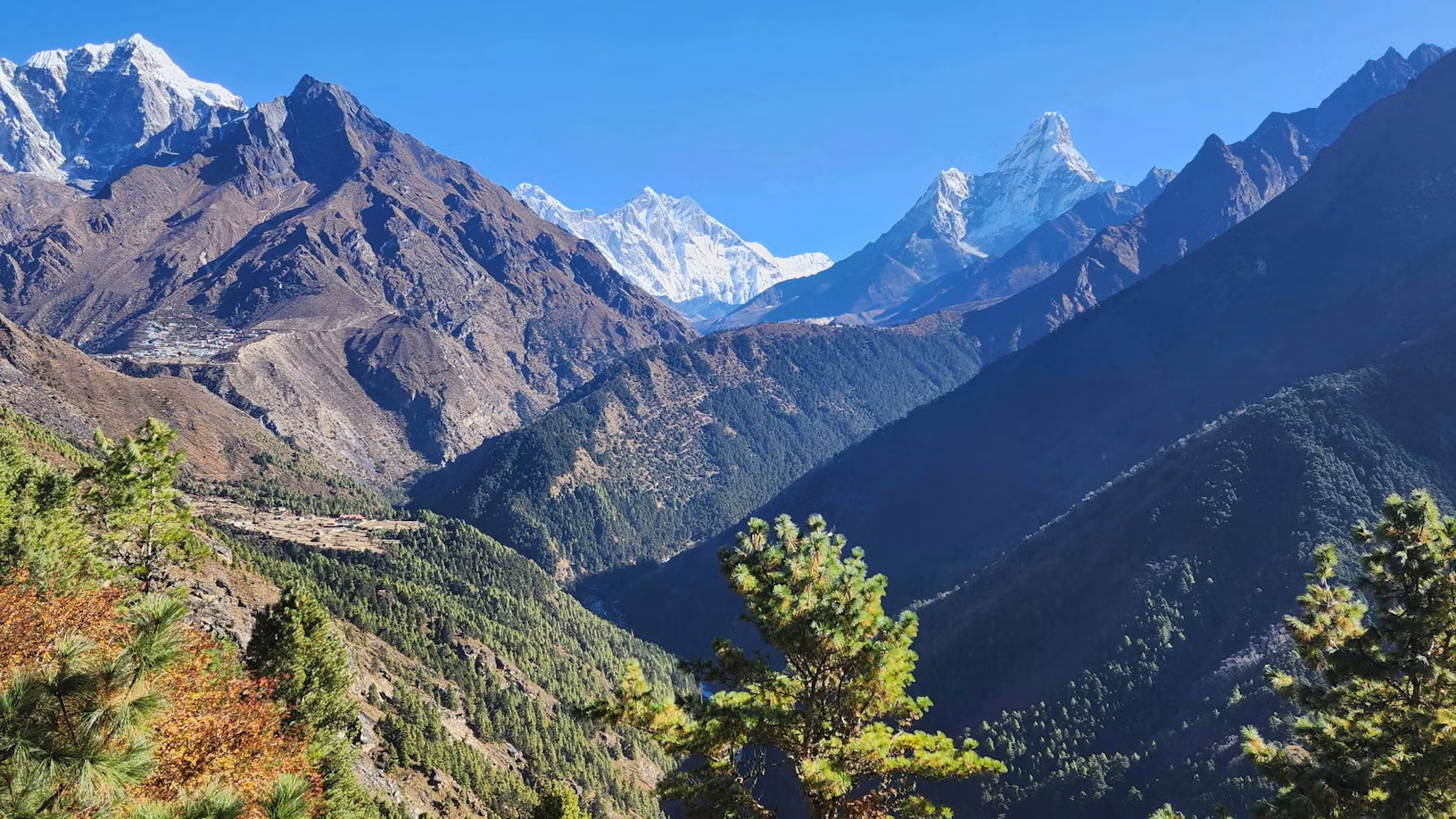
This hike brings us up to a point where we can see the Khumbu peaks clearly, including Everest, Ama Dablam and other mountains in the Himalayas.
We're planning to head back to Namche for lunch while keeping the afternoon open-ended. You can browse through the market, look around the Sherpa Culture Museum or relax in the lodge.
During the trekking, we will be provided breakfast, lunch, and dinner with tea or coffee and fresh fruits. We will stay another night at the Mountain Lodges of Nepal in Namche. Rooms have attached bathrooms, showers, and excellent views. The only downside is that we will be spending more time here.
Mountain Lodge of Nepal, Namche Lodge
Breakfast, Lunch, Dinner
3860m
~9 km
5–6 hours
4 hours
2 hours
We will have our breakfast in Namche before heading towards one of the most scenic parts of the lower Khumbu region of Nepal. The trail initially follows the mountainside, thus giving us open views towards Ama Dablam, Everest, and Nuptse.
After that, we proceed downwards towards the Dudh Koshi/Imja Khola, cross the river, and climb again to reach Tengboche, at approximately 3,870m. Classic Vacations Nepal states the distance to be about 9.6km and 5–6 h of walking time, with a cumulative ascent of around 430m.
We will take lunch on the trail ahead of the final uphill stretch. Tengboche is not like any other stop on the way; here lies the famed Tengboche Monastery, which is among the most significant Buddhist monasteries in the Khumbu region.
We will spend the night at The Himalayan – Luxury Lodges of Everest, as mentioned in your itinerary. After dinner, we can enjoy hot tea or coffee to help us recover after the long day. Above Tengboche, the forest will start thinning out, and the landscape will be distinctly high Himalayan.
The Himalayan, Luxury Lodges of Everest
Breakfast, Lunch, Dinner
3985m
~5 km
3–4 hours
2 hours
1 hour
After breakfast, we will start our trek from Tengboche to Deboche with many ups and downs along the way. We walk below Ama Dablam mountain and notice the change in the landscape as we leave behind the forest and the vegetation of the lower Khumbu.
After crossing the river, we continue into the Sherpas’ village and agricultural land until we reach Pangboche at an altitude of about 3,985 meters in the Imja Khola valley. This day is shorter in duration than the previous one and has a proper sense of purpose, too, as we get prepared for the Ama Dablam Base Camp trek tomorrow and keep gaining some altitude with no hurry.
We will have lunch at a local restaurant or lodge en route and spend the night at Everest Summit Lodge - Pangboche for a night's stay. Dinner is locally sourced and prepared at the lodge based on what food is practically available in the Khumbu, not attempting to meet restaurant standards of any city.
Our accommodation consists of a mountain lodge room rather than a five-star luxurious suite; the key things here are the location, comfort, and accessibility of the route. Early evening concludes our day because the next day we have to climb up towards Ama Dablam Base Camp.
Everest Summit Lodge, Pangboche
Breakfast, Lunch, Dinner
4600m
~8–9 km round trip
5–6 hours
3 hours
2 hours
We will be departing early in the morning after breakfast since today is the day we've set aside for Ama Dablam Base Camp. From Pangboche, we will veer off from the well-established Everest Base Camp trail onto a lesser-known path leading to the foot of Ama Dablam. The ascent through open alpine meadows and yak grazing lands will make way to increasingly rocky terrain.
Here the path will become rough and relatively unused compared to that of the main EBC route; hence, "luxury" cannot be translated as "easy." Ama Dablam Base Camp is thought to be located at around 4,570m altitude, and the distance from Pangboche to the base camp is 7–10km.
We will take a day pack and water with us, while all the other luggage stays at the lodge. At Base Camp, we stop to look at Ama Dablam and the neighboring Khumbu mountains.
To climb Ama Dablam, the history is very well known, since Mike Gill, Barry Bishop, Mike Ward and Wally Romanes made the first ascent on 13 March 1961, under the leadership of Sir Edmund Hillary.
We fly back to Everest Summit Lodge for lunch or late meals, dinner and an additional night in Pangboche.
Everest Summit Lodge, Pangboche
Breakfast, Lunch, Dinner
4410m
~6 km
–5 hours
3 hours
1 hour
Breakfast at Pangboche is followed by the journey eastward and northward through the Imja Valley. As soon as we leave Pangboche, we traverse open land, with dry stone structures and high-altitude grasslands. We ascend gradually on our way to Dingboche at 4,410m, one of the major acclimatization spots along the Everest Base Camp trek.
While the distance trekked today may not be long compared to previous treks, one must keep in mind that the altitude makes all the difference, as we should not rely on just kilometers when determining the success of this trek. Lunch is served either on the way or upon arrival at Dingboche, after which we take residence in Dingboche Inn.
Accommodation is understandably far more rustic and far from the facilities offered in The Soaltee, or in the lower mountain lodges, and to describe the hotel accurately: this is a room to sleep and use of high altitude wash/wc rooms.
Tonight dinner will be taken together in the lodge and be a filling trek-based fare - typically rice, lentils, veggies, pasta, noodles, potatoes, eggs or noodles. Tomorrow is an acclimatization day to adjust to an even thinner altitude.
Dingboche Inn
Breakfast, Lunch, Dinner
5100m
~4–5 km (side hike to Nagarjun Hill)
4–5 hours
3 hours
2 hours
Today starts with breakfast back at the Dingboche Inn, but despite it being a “rest day”, the purpose isn’t the rest in itself. Instead, it’s all about ascending above the dingboche during morning hours so the bodies still feel a higher altitude before we descend again to return to the night at 4410m.
Another popular acclimatisation objective is a Dingboche ascent to nangkartshang peak/ridge, around 5083m, which seems to be described by Classic Vacations Nepal as a Dingboche-to-Dingboche acclimatisation hike, approximately 5.1 km and around 4 hours.
The path goes upwards and over stones, and the air obviously grows thinner with altitude gain, so with slowly movements, pausing when needed, we only turn back, not considering the “top” as a race.
Lunch is back at the lodge for the balance of the day, where you’ll have the chance for a relaxing afternoon for fluids and recovery before the rigors of the coming two high-altitude days. Tonight the meal will be back at the Dingboche Inn.
A very important concept that we hope you’ll gain from today’s hike: even though you may feel strong when standing still on this pass, you may be up around four thousand meters; use that feel for power, but never as an authorization to sprint! The real reward today will have been the discipline of steady-paced breathing and will serve you for our approaching days.
Dingboche Inn
Breakfast, Lunch, Dinner
4910m
~7–8 km
5–6 hours
4 hours
1 hour
We will get up early today for breakfast at the Dingboche Inn because our route will take us into the higher altitudes of the Khumbu. We’ll leave Dingboche heading for Dughla/Thukla, following the valley, then ascend steeply to reach the pass where many memorials are present of Sherpas who have lost their lives.
From here the way gradually becomes stony and barren, with walking along the Khumbu Glacier toward Lobuche at roughly 4,940m.
The distance is about 8- 9 km according to various route calculations, but this doesn't show the amount of effort required. We are climbing approximately 5000m and every incline has to be approached with care and less speed. We have lunch at Thukla or when we arrive, if we arrive too late, and then proceed toward Lobuche.
Our overnight stop is at Oxygen Restaurant & Home - Lobuche (or Himalayan Eco Resort if your allocated lodge is fully booked). To be upfront with this location, it's basic but efficient accommodation: it's basic teahouse trekking at high altitude.
If you’re expecting much more than basic facilities (compared to what you will see in Phakding and Namche), then this stop is probably not for you, and instead the dinner here is quite basic, healthy lodge cooking followed by an early bed - as you’ll really want as much sleep as possible at this altitude.
Oxygen Restaurant & Home, Lobuche or Himalayan Eco Resort
Breakfast, Lunch, Dinner
5364m
12 km
7–8 hours
5 hours
3 hours
After a good breakfast at Lobuche, we will head for the last higher-altitude crossing towards Everest Base Camp. Our route takes us onto the stony moraine of the Khumbu glacier until we make our way to Gorakshep (approx. 5,164m) – our final permanent base of operations with the only lodge in the area.
We will check into Hotel Everest Inn, leave anything we don't use, and have a quick meal or an early dinner and head toward Basecamp, at approx. 5,364m, the trek is rocky and uneven; distances at altitude are never reflected on a map and the small distance from the lodge to camp feels miles away.
At Everest Basecamp, we reach the expedition assembly area at the bottom of the Khumbu Icefall, then we trek back along the way to Gorakshep.
Everest Base Camp itself does not give the best view of the summit of Everest, as they are obstructed by the terrain and Nuptse; the climb to Kala Patthar tomorrow is a better view. We will have dinner back at Everest Inn, and the dining room is heated. There are 55 rooms on 3 floors, double rooms and electric blankets. There is also a wi-fi connection and a Sherpa and Western-style restaurant serving multi-cuisine meals.
Everest Inn Hotel, Gorakshep
Breakfast, Lunch, Dinner
5550m
~3 km hike plus helicopter flight
2–3 hours hike plus 1 hour flight
2 hours
1 hour
We will wake up early, around 4 AM, have a quick breakfast, then commence the Kala Patthar climb in the dark. Of all the short climbs on the trek, this is the hardest; at 5,164m we are already so high, and Kala Patthar is only slightly lower than the summit on the south face of Pumori (which is at 5,643-44m).
It’s not actually a conventional summit, but an excellent viewpoint that allows views into the Everest face at such proximity that they cannot be attained from Base Camp itself. We climb slowly, pausing for photos, but waiting for the sun to hit Everest, Nuptse, Pumori and the other Khumbu peaks before we turn and descend to Gorakshep.
Next we will have a delicious hot breakfast at the lodge and then head out to begin our helicopter transfer back to the capital, Kathmandu. Helicopter timings can be subject to weather, visibility and operating conditions, so the exact time that we depart Kathmandu must be left to when conditions permit rather than giving precise departure times!
The scenery will be a rapid transformation from glaciated and scree-covered land to valleys filled with villages as we zoom across the countryside, landing in Kathmandu and transferring to our hotel in the city once again to enjoy city luxuries including a much-deserved hot shower.
In the evening you will have a chance to have a relax meal and reminisce about your trek from Lukla up to the very base of the ‘Goddess among Mountains’ at Ama Dablam Base Camp, and beyond.
Soaltee Hotel, Club Room, 5 Star Deluxe
Breakfast, Lunch, Dinner
1400m
Airport transfer
30 minutes
None
None
We will keep this morning simple. Following breakfast at the hotel, we note your flight details and organize your private transfer to Tribhuvan International Airport based on your international flight schedule. No final sightseeing is crammed into the final hours as everything is about getting you to the airport stress-free.
Prior to departure, we'll help your clients get ready by reviewing their bags, documents and transport plans with them. Chet Prasad Bhatta still seems to be the man on the ground running operations in Nepal for Classic.
Chet's profile at Classic Vacations Nepal states he is the Managing Director and Mountain Guide/tour leader, and shares a WhatsApp number for him too, and the company itself also manages its Inquiry & reservation Channel in terms of WhatsApp & other methods.
Personalised mountain travel has been at the heart of Classic Vacations Nepal for over 20 years. Currently, their website suggests that they have over 24+ years of experience with over 8,000 happy clients around the globe. We don't see departure as automatically "thank you and goodbye" on the way out; we want to hear how your trek went – both what succeeded and what wasn't so good.
If you consider coming back to the Himalayas again, then Chet and the crew have the experience to recommend the trek that is genuinely suited to your abilities and experience, and will not simply sell you the next trip.
Breakfast
Food is included in our trekking strategy. Your journey includes a large variety menu in hotels of Kathmandu, it gradually changes to lodging, where food will become much warmest, simplest and will be the optimum for at any height.
Breakfast, Lunch & Dinner will be included at trek with tea/coffee and seasonal fruit; the variety provided at lodges may differ as per availability & season.
Starting and finishing at The Soaltee Kathmandu, this is where you will have the best culinary choice on the trip. The restaurant has a Garden Terrace, catering to breakfast, lunch, and dinner. There's the option of sampling Indian, Continental, Oriental and Italian cuisine, available in buffet and à la Carte styles.
For breakfast, the hotel's published menus include options such as:
The menu has a distinctly Nepali taste too, like aloo tama soup, while other advertised choices vary from momo to international sandwiches to salads.
After our helicopter ride to Lukla and hike to Phakding, dinner is more about recuperation and less about choice in the menu of a traditional dining establishment. All-inclusive Mountain Lodges of Nepal’s food plan is inclusive of breakfast, lunch, and supper, along with warm drinks, as well as farm-fresh, timely grown (including the use of its very own organic garden’s bounty by Mountain Lodges of Nepal in its own Phakding lodge), as well as fresh veggies.
By the first trekking day, we usually like something warm, and also something filling in the evening: soup, rice, veg, pasta, eggs, or whatever the lodge staples are – such as potatoes and noodles. The main idea here is to be eating things that have been prepared and cooked at the lodge, instead of imported from Kathmandu as restaurant dishes.
Our food in Namche remains in a full-board lodge system. We need to have an energetic breakfast for the acclimatization trek, and lunch and dinner are for restoring the energy spent during the day.
Our practical choices generally centre around:
We do not push a fancy menu at altitude. We prefer hearty food that is known, warm, easily edible, high on carbohydrate, high on protein, and that helps you keep going.
Luxury dining has always been part of the experience at The Himalayan - Luxury Lodges of Everest. Property owners believe in highlighting luxury dining views of the Himalayas, breakfast views of Mount Everest, and night views at the property.
We will have breakfast there in the morning before heading off from Tengboche, and then we come back later for another hot meal. The setting here is the dining experience itself, where instead of wolfing down a quick meal and rushing off, we have a more comfortable lodge space to sit in and to look at the Himalayas outside.
Here at Everest Summit Lodge in Pangboche, we eat food from the lodge that is designed for trekkers. We have it for breakfast so that we are prepared for the walk of the day, and even more vital, to be fortified for trekking to Ama Dablam Base Camp.
We keep meals practical:
The menu is dependent on availability here in Pangboche, and it’s a side of trekking we like to be truthful about.
Dingboche Inn certainly pays extra attention to food. The lodge tells us that its restaurant and coffee shop serve “freshly made meals (with very carefully developed and balanced menu options served by talented staff in a state-of-the art kitchen and cold storage with stringent food hygiene, while also providing freshly barista-served beverages.
The altitude of 4,400m benefits this as we stay for 2 nights. Breakfast is followed by acclimatisation climbs and return for lunch and dinner later in the evening.
The lodge terms the food its homemade, mountain-style cuisine and does not try to market it as fancy food. It serves the food for what it is - fresh, wholesome food cooked at the village.
By the time we reach Lobuche, a bit of further trekking up to 4940m (16,200ft), our menu is somewhat stripped down and less interesting. Here, food is food, and we mostly focus on stuffing our faces as much as possible, so worrying too much about choices is pointless.
Depending on the confirmed lodge and supplies that day, meals can include:
We don’t commit to a single restaurant menu. Restaurant supplies at these altitudes are always subject to transportation, seasonality and availability at the lodge.
At around 5,180m, in Gorakshep, Hotel Everest Inn boasts the biggest restaurant setup at this stage of the trek. Their restaurants serve continental and Sherpa cuisines in a big heated dining hall.
That matters after your Everest Base Camp trek, too. As you will come back cold and knackered, dining in a heated lounge, with familiar Western dishes and the local Sherpa specialties both on offer, simplifies your evening dramatically.
Throughout the trek, we make no claims of the same sort of food as we can find back in Kathmandu. When we're on our ascent, the focus starts shifting towards local lodge cook-places as well as whatever provisions we have been able to procure in the Khumbu.
Our team encourages you to prioritize:
But there is one lesson we have learned and that we always impart to our trekkers: never skip your dinner even if you feel exhausted. This may sound as if this would lead to more energy, but at altitudes from 4000 to 5000 m, you require sustenance to help your body recover all through the night, especially when our journey begins so early for Everest Base Camp and Kala Patthar.
We carefully select the most luxurious Kathmandu accommodation with the finest, most practical, yet basic mountain lodges available en route. That difference counts. Lower down in Kathmandu, we can provide you with privates rooms with better amenities, dining facilities, etc.
Above 4,000m, we prioritize warm hospitality, friendly, efficient and strategic service, fine quality fare and decent amenities above making a compromise on a mountain teahouse.
We will be spending our first and final two nights at The Soaltee Kathmandu, providing you with true 5-star comfort both before and after the high-altitude trek.
Our room includes the choice of a king or two queen beds, while Club benefits include:
The Soaltee Hotel calls its Kathmandu property luxury five-star, and so this section of the itinerary is where "luxury" does indeed mean city hotel luxury.
Once we fly in by helicopter to Lukla, our first night trek on foot is to Phakding. Mountain Lodges of Nepal's Phakding property is built with trekking in mind. The emphasis in property at Phakding is on a great level of comfort in comparison to the average teahouse.
We can expect:
This is the part where our Luxury comes into play for some real impact on the trail as of day one. Don’t get us wrong, you’re still going to be roughing it somewhat. But we have warmer lodging from which to ‘party’!
Namche is our next mountain-lodge visit and a central one of our trek on account that we spend a whole acclimatisation day here.
The lodge experience gives us:
Make good use of this spare day: climb further up towards the Everest View territory after breakfast and back down to sleep in Namche. That way, the lodge becomes part of the climbing itinerary rather than a mere overnighter.
When we reach Tengboche, we make our stop at The Himalayan | Luxury Lodges on Everest, which is near the renowned monastery at Tengboche. The hotel advertises itself as being all about being a combination of comfort, Himalayan views, and the cultural milieu of the Everest region.
The property's published experiences include:
This position is very important in our journey since Tengboche, one of the most visually alluring points on our trek, includes the monastery and surrounding peaks as a whole and isn't just something to encounter along the way.
We then move on to Pangboche and settle into the Everest Summit Lodge before trekking to the specialized Ama Dablam Base Camp trek.
Available property details show a cozy, small lodge atmosphere: approximately 10 room capacity, restaurant & bar facility, Wi-Fi available in the lodge, as well as showers. In-room amenities provide a desk, clothes rack, bed sheets and slippers.
For us, one of the great benefits is its location: we are in Pangboche when we wake for our trek up to Ama Dablam Base Camp, so, prior to that crucial mountain day, we have no extra transport or relocation logistics required.
Dingboche, at 4,410m, is where we are much more aware of altitude. The accommodation is, consequently, less about five-star polish and more about warmth, rest, and simple comfort.
Dingboche Inn provides trekking groups with private cabins as well as communal dining rooms with their wood-burning stoves, in which you can warm up and rest your weary muscles after spending your day in the cold, dry air at high altitude.
We will stay two nights here. That second night becomes crucial as our acclimatization day has taken us higher up but has returned us to sleep at Dingboche again. The time we allot here in Dingboche as an extra night we can save more than pushing you up to Lobuche.
In Lobuche (Approx. 4,940m), we enter a much steeper, challenging section of the route. Irrespective if you have been allocated Oxygen Restaurant & Home or the Himalayan Eco Resort, please be made aware that rooms here are to be considered mountain-high accommodation, not luxury!
The priority becomes:
At this altitude, we are not able to guarantee the room or bathroom standard as experienced at The Soaltee and lower down the luxury lodges - around 5,000m this would be dishonest.
At Gorakshep (5,180m), we will stay at the Everest Inn, which appears to be one of the better-constructed and larger hotels at this extreme altitude, boasting 55 fully furnished double rooms with wooden interiors, electric bed sheets and views over the Khumbu Glacier and Mount Everest.
The facilities include:
The dining room is particularly vital at this altitude. After the Everest Base Camp trek, we will intend to tuck you somewhere warm where you can eat, drink and recover rather than spend the evening freezing outside.
And again, luxury is different depending on where we ascend. When trekking, we’d have luxurious and deluxe 5-star type resort and the full luxury of a hotel when trekking into Kathmandu luxury hotels. As we trekked to Phakding, Namche and Tengboche, with luxury, what we mean is having good lodging space and lodge warm room facilities, dining experience and added warmth at those high altitudes.
When trekking to Loboche and Gorak Shep, luxury takes the form of strong high mountain lodges, good food & Lodging facility; and a support base with high altitude support services.
That's the honest picture of this trek. It is impossible to afford a 5-star Kathmandu hotel at 5,000 meters. Still, we can ensure we use the most comfortable accommodations available, design the trek properly and make certain your comfort is not at the cost of acclimatization.
We are team of professionals who share a common devotion to the outdoors and are commited to world travel.
Originally from Khumjung- 3, Everest Region, Mr. Pema Chhosang Sherpa is our key climbing guide for major peaks in Everest region, including Island Peak, Lobuche Peak, Kyajo- Ri Peaks and other 7000er climbing in the region.
Mr. Pema is 15 + years...


Autumn, especially October and November, is the first recommendation of Classic Vacations Nepal for the luxury Ama Dablam Base Camp & Everest Base Camp trek. It is simply because the monsoon is over by now, and the visibility is most suitable for high Himalaya peaks by now. Nepal Tourism Board also suggested that October and November are the most post-monsoon and clear months.
This period usually comes best among our trekkers too. We observe that weather with the most stability helps us control our expedition program the most; the less time we have to add the optional Ama Dablam Base camp with main plan for Everest Base Camp and Kala Patthar hike with helicopter provision. We do not take this as an achievement guaranteed for any Expedition.
Our other favorite window for the Everest Base Camp Trek is from March to May. We suggest you go during this period for decent weather and the sight of rhododendron flowers, which bloom at lower altitudes. It has its own feel for those trekkers who love to visit Sagarmatha as expeditions around the biggest mountains begin.
We can also trek during other seasons other than Spring and Autumn, but we choose not to recommend such times. During June-September it is the monsoon period, with about 80% of Nepal's annual rainfall this time, with clouds, rain, slippery paths and less chance of mountain view with helicopter accessibility possible.
Winter poses a different challenge: cold and snow become the restrictive factors in elevations around Lobuche, Gorak Shep, Everest Base Camp and Kala Patthar. Himalayan Rescue Association Nepal also cautions against freak blizzards that can bring heavy snowfall, even in otherwise fine intervals.
Simple lesson from the trail: we would prefer to schedule this trip when the mountains grant us more flexibility, instead of taking a chance on the less expensive date to spend the hike sitting around hoping for good weather.
Our Luxury Ama Dablam Base Camp & Everest Base Camp Trek is considered to be a high-altitude expedition but requires no technical mountaineering or rock climbing experience. The more difficult aspect is not technical climbing, but rather walking for many hours in a row at an increasing altitude while your body continues to adapt to the thin air. We start at Lukla, continue through Namche Bazaar, which is located at an altitude of 3,440m.
Then we head to Tengboche, which is at an altitude of 3,870m, followed by Dingboche, a village at an altitude of approximately 4,410m.
After that is Lobuche, with an altitude of approximately 4,940m, and Gorakshep, a village located at 5,164m, which then takes us to the Everest Base Camp located at approximately 5,364m.
We do not hurry towards the Base camp. We schedule an acclimatization day in Namche and Dingboche with an acclimatization hike above each of our day’s destinations.
In Namche, we head towards the Everest View region, before descending to stay at a low elevation again. In Dingboche, we trek on top ridges around the village before heading back to sleep. The Nepal Tourism Board suggests that even the acclimatization trip towards Namche shouldn’t be hurried.
You should be able to walk uphill and downhill for several hours with daypack and resume your hike when the trail gets rough, uneven and very steep. We recommend building your fitness before Nepal through:
In our team under Chet Prasad Bhatta, we do not take each and every booking just because you walk a long distance at home. We evaluate your preparedness level and your experience before sending you to those above 5000m.
We have learned that simply "moving fastest" does not make the strongest trekker. At altitude, we have you on a steady pace - eating well, drinking a lot and communicating concerns to the guide if you are having issues. Thus, we protect your acclimatization days and don't eliminate them in order to make the trip look less costly by being "quicker."
The trail around Ama Dablam Base Camp, for this specific itinerary, does make things a little harder than doing a direct Everest Base Camp trip, since it puts one extra full day at high elevation prior to heading towards Lobuche and Everest Base Camp. We prefer to provide ample time for the trekker to acclimatize rather than to simply make 5,364 meters seem like just one more number in the trip notes.
Trekkers should also know this is not a holiday with some nature walks; they will be travelling from Lukla with an altitude of over 5000 m (EBc at 5,364 meters with 5,545 m at Kalapathar). Everest trekking from Classic Vacations Nepal.
Classic Vacations Nepal Everest treks, termed as the trek ‘tough high-altitude trekking', have itineraries that include acclimatization days. Our most important rule is simple: we do not rush altitude.
You’ll spend an acclimation day in Namche Bazaar and another in Dingboche – gaining altitude through the day and trekking back to sleep at a lower level. Nepal Tourism Board recommends acclimatising well in Namche – even suggesting you don’t rush it on this day.
We watch for symptoms such as:
With Classic Vacations Nepal, we always say that no matter how fit you are, altitude sickness is different for everyone, so never think that you are the exception!
Our guide checks what your walking rhythm is like, your breathing, what you are willing and able to eat, the volume of energy and your disposition in general over the entire day. We expect that you will inform us immediately when something is wrong, that you won't try to disguise the symptoms to reach base camp.
Classic Vacations Nepal provides a team of fully licensed trekking guides who have completed first aid and altitude acclimatisation courses and have a range of medical equipment with them, including an oximeter and medical kits to support high-altitude excursions.
We need appropriate travel insurance, including medical, helicopter emergency evac and travel cancellation, for your trip with us. Company statement: The following travel insurance cover is therefore mandatory for all our Nepal trekking and mountaineering tours.
This is important because when we leave the settlements behind, the route gets progressively more remote. If a trekker gets seriously ill at altitude, we don't just keep hiking on because the route says to
Operations for the trek and the helicopter can all be directly affected by weather. If the weather (or, for that matter, your own personal health) calls for an alteration in our plans, then it really is a safety requirement before the published schedule. Classic Vacations Nepal very clearly recommends that trekkers always expect changes to their planned itinerary if health and well-being concerns require adjustment.
A lesson we learned from many years in the Himalayas: summiting to Everest Base Camp is just as important as returning safely from it. If someone shows that their body just is not coping at the altitude, we will postpone the day, include further recovery days or evacuation, rather than forcing them forward.
A flight into Lukla is subject to weather conditions. Just because you have a booking does not mean your flight will take off at the stipulated time. Even in the shoulder months of spring and autumn (our favorite trekking seasons), flight cancellations and delays can occur.
Lukla is in a challenging location, and the Nepali Civil Aviation Authority cites rapid weather changes and strong winds as key considerations for running a mountain airstrip. Lukla Airport's runway has a 12% slope, and weather and visibility are key considerations for operating the airport.
We do not simply leave you to figure it out at the airport.
Whenever the planned flight is not operated, we research and proceed with the next available flight and modify the trekking days. Our in-house policy states that the trekkers may need to spend an extra night in Kathmandu due to the cancelled flight to Lukla.
Our approach is straightforward:
In situations where fixed-wing planes are unable to fly yet but it's safe for helicopters to operate, a chartered helicopter may serve you as an alternative means of getting to Lukla. If needed, we can hire a charter helicopter for you at an additional cost based on the size of the group.
This does not mean that a helicopter is going to get you there. If your safety is in danger, the rotors wouldn't be able to help you overcome that danger.
It is best to connect your Lukla return indirectly with some time to spare, since any delay on the mountain can impact the whole sequence of flights.
Thus, we recommend allowing for some time in Kathmandu, especially when it comes to the return from Everest. We do not simply provide you with a 14-day schedule to follow, but look after the real state of weather in the Himalayas.
Age is not the only consideration in determining your eligibility for the Everest Base Camp trek. Trekking history shows that young trekkers aged 12 to 70 years have successfully reached Everest Base Camp.
However, age plays an important role in deciding how much preparation is necessary. In the case of choosing our Luxury Ama Dablam Base Camp & Everest Base Camp Trek, we consider your level of fitness, trekking background and general state of health instead of just asking for your age.
Young hikers can be strong walkers, but being strong does not eliminate the need for acclimatization. We always make sure to take them through all the necessary processes from Lukla to Namche, then to Tengboche, Pangboche, Dingboche, Lobuche, and finally Gorakshep.
We particularly want younger trekkers to understand:
Among many serious trekkers in this category, fitness matters more than the actual age itself, since you don’t have to be a climber or mountain climber, as the EBC route is not an actual climbing route. For example, we advise preparing physically before the trip on the EBC route as people should be at least ready to walk uphill and downhill for hours.
One thing is clear; being young and fit is no guarantee against altitude sickness, as the Himalayan Rescue Association warns that even highly trained people can suffer from this problem.
Solid preparation is more important than one's passport. For those in this age bracket, do try to increase your stamina prior to coming to Nepal and practice walking for several days in a row.
The itinerary is already helping as we have included acclimatization days in Namche and Dingboche. Nepal Tourism Board also recommends that all trekkers spend enough time in the process of acclimatization in and around Namche instead of hurrying up the hills.
We don’t automatically reject any trekkers just because of their age, but we tend to be stricter during the screening process. Classic Vacations Nepal has had trekkers visiting Everest Base Camp in the age group of 70+ years, but this should not be assumed to be a general recommendation for all trekkers in this age group.
For older trekkers, we want a realistic assessment of:
Our experience shows that a slow and consistent approach matters more than trying to demonstrate how young or healthier you are. Himalayan Rescue Association recommends gradual acclimatization and cautions against overexertion, noting that even fit trekkers can be more vulnerable to altitude sickness when they try too hard.
That is why we prepare the itinerary according to acclimatization, not speed. You will go to Ama Dablam Base Camp, Everest Base Camp, and Kala Patthar at over 5,000m height. You should enjoy the trip, not spend the time recovering from too aggressive a pace.
Before we confirm your booking, our team and Chet will check your physical and trekking profile. We would rather advise you that you don’t have enough experience than take your booking because of the urgency to go.
Equipment for Ama Dablam Base Camp and Everest Base Camp Trek
No, we see this as a high-altitude hike and not as an Ama Dablam summit climb. You trek to Ama Dablam Base Camp and Mt. Everest Base Camp; you do not climb any summit. The challenging part of trekking is the altitude, walking for full days, and varying mountain weather. Classic Vacations Nepal rates its similar Everest Base Camp trekking trips as difficult/quite difficult, instead of technical climbs.
With your day set, you walk up from Pangboche all the way to Ama Dablam Base Camp and back down, before moving on towards Dingboche and EBC. Note: we haven't included any shortened acclimatization days (i.e., removing Namche or Dingboche) to cram it down.
Ideally, this trek is suitable for those who are comfortable with walking uphill and downhill and traveling to altitudes of over 5,000m. Classic Vacations Nepal (CVC) advises that their clients should be mentally and physically prepared for an Everest Base Camp trek and should make CVC aware of any pre-existing medical conditions prior to booking.
Certainly, we at Classic Vacations Nepal are more than happy to offer a range of options, including Custom Vacations, Private Tours and Group Departures. Book your trips with us and customize your departure date, travel solo, with family and friends, or even in your own private group.
Absolutely, while there's always an option for a group tour, as a solo traveler, one can opt for private travel. The company also categorizes them separately as solo, small-group, and private travel
We don't keep going up just because the schedule says to do so. Classic Vacations Nepal mentions that any trekker falling sick must disengage from the ascent and be accompanied by an assistant guide as the main party continues upward. We assure that in the event the symptoms are life-threatening, they are "equipped to fly you out by helicopter."
That's right, that's not one of those "nice to know, but definitely not necessary" tips we'd stash somewhere in the footnotes (but we're doing so anyway for good measure), and you're required to have medical, trip cancellation, and helicopter evacuation insurance for all Classic Vacations Nepal EBC trekking holidays.
This plan to start your trek from Lukla via helicopter saves trekking days and gives you more time for the Ama Dablam detour and Everest Base Camp. This inclusion of a helicopter flight within the plan is to save trek days, but not a guarantee that you won't have to worry about weather in the mountains.
Yes. Your itinerary definitely involves Day 5 at Namche, as well as Day 10 at Dingboche. While we advise that it would not be wise to skip these days altogether to shave off days from the trip, Classic Vacations Nepal has guidelines on following a slow approach and altitude adaptation for the EBC trip.
The team at Classic Vacations Nepal features Managing Director Chet Prasad Bhatta, who has more than 23 years of experience in adventure travel, and Pema Chhosang Sherpa of Khumjung in the Everest region, whom Classic Vacations lists as a senior climbing guide for its expeditions of Everest region peaks.
Actually, no! We can't offer any guarantees that we'll all stay well, that the weather or the planes won't be disrupted. Our general terms & conditions already state we may need to adjust the itinerary for health reasons. But we can promise planning and service; we cannot promise any specific outcome.





 250 Reviews
  Tripadvisor