








Full 11-day Kailash Yatra by Helicopter from Kathmandu via Simikot and Nepalgunj
Amazing views from the helicopter ride while flying above Himalayan peaks
Comfortable and quick helicopter transfer by avoiding lengthy overland travel
Tour the sacred Mount Kailash (sacred by Hindu, Buddhist, Jain, and Bon believers)
Sacred Darshan & holy experiences of Lake Manasarovar
Perform pooja, holy rituals, and meditate by Lake Manasarovar
Sightseeing of the most famous Rakshas Tal (Rakshastal Lake)
Complete the 52 km sacred Kailash Parikrama (Kora) in three days
Trek through the celebrated Yamadwar (starting point of Kailash Kora)
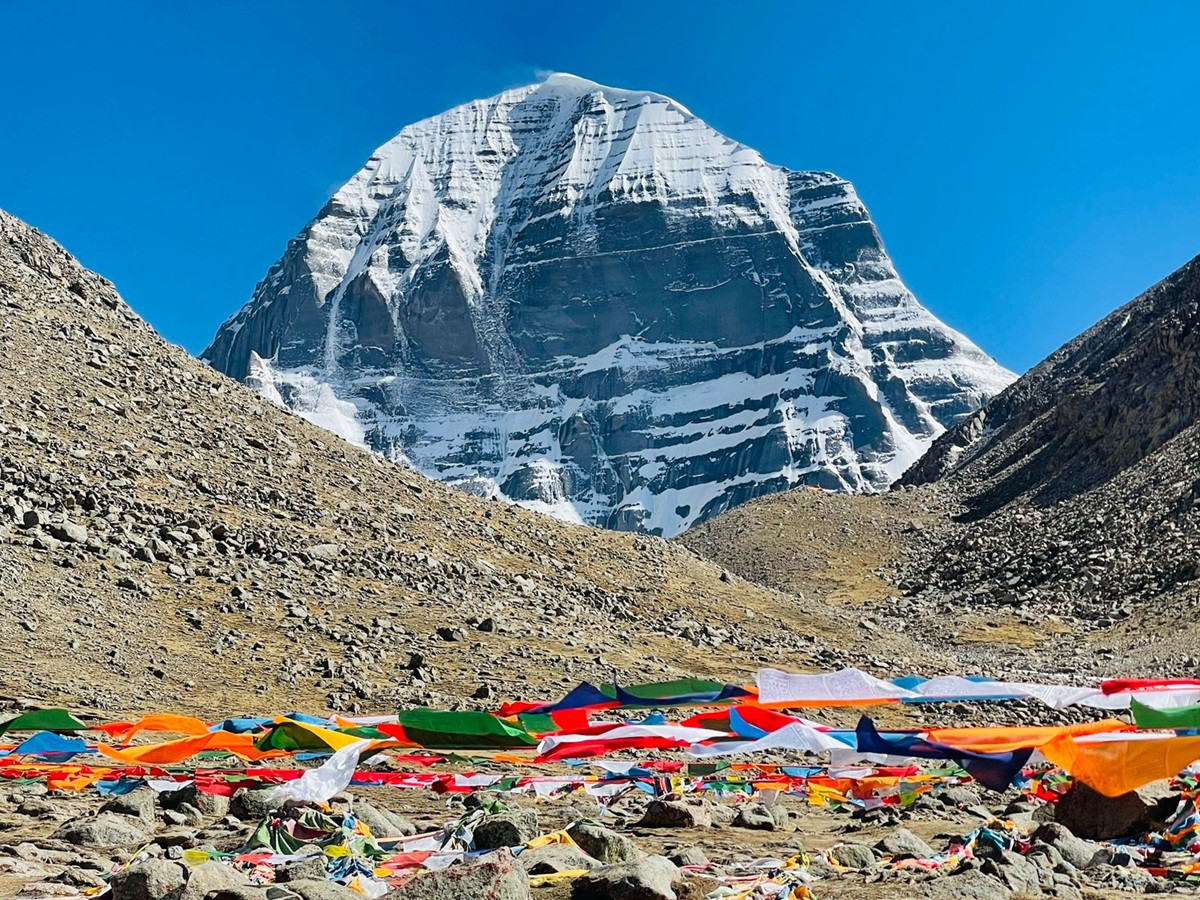
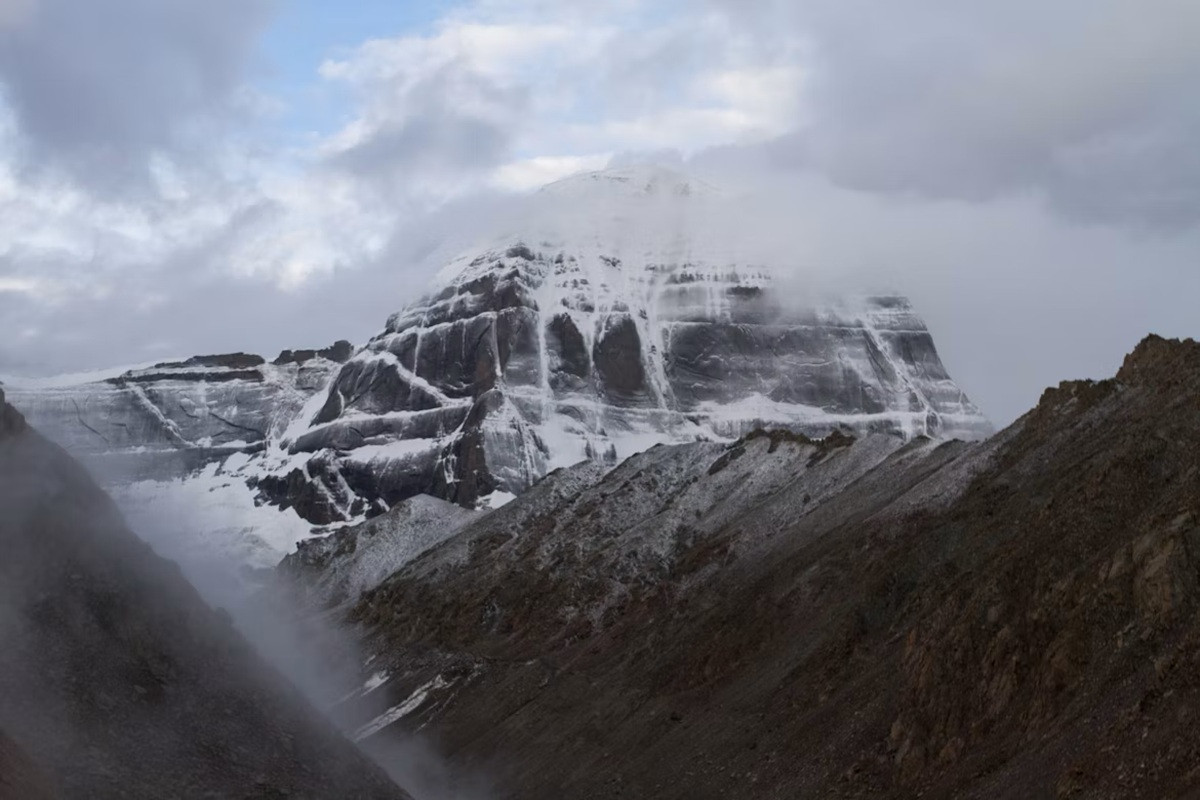
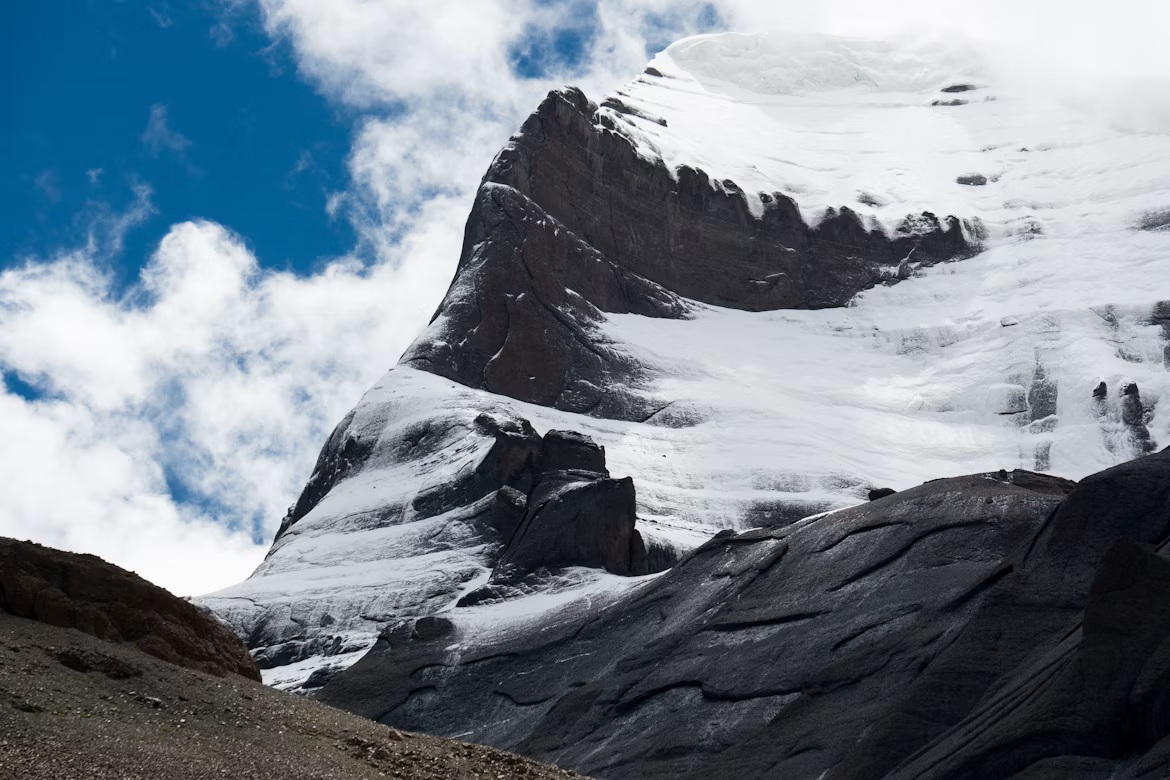
Enjoy breathtaking views of the glorious North Face of Mt. Kailash from Dirapuk
Cross the holy Dolma La Pass (5,630 m) the highest point on the yatra
Visit holy Gauri Kund (visible while crossing the Dolma La)
Dedicated day for acclimatization at Purang (Taklakot) for a safe high-altitude trip
Explore Tibetan culture, ancient monasteries, and distinct landscapes of the Tibetan plateau
Panoramic Himalayan panoramas from helicopter, flights, roads, and trekking paths
All-around professionally managed pilgrimage with excellent guides and full logistical assistance
Cozy accommodations with hotels, guesthouses, and lodges
Perfect helicopter package for families, elder pilgrims, and busy travellers
A balanced itinerary of spirit, thrill, and coziness
A faster, more convenient way to complete the sanctified Kailash Manasarovar Yatra
|
Trip Name |
Kailash Yatra by Helicopter via Simikot 11 Days |
|
Duration |
11 Days / 10 Nights |
|
Destination |
Mount Kailash & Lake Manasarovar, Tibet |
|
Starting Point |
Kathmandu, Nepal |
|
Ending Point |
Kathmandu, Nepal |
|
Route |
Kathmandu Nepalgunj Simikot Hilsa Purang Lake Manasarovar Darchen Mount Kailash |
|
Trip Type |
Spiritual Pilgrimage & Adventure |
|
Transportation |
Domestic Flights, Helicopter, Private Vehicle & Trekking |
|
Helicopter Sector |
Simikot Hilsa Simikot |
|
Maximum Altitude |
5,630 m / 18,471 ft (Dolma La Pass) |
|
Lake Manasarovar Altitude |
4,590 m / 15,060 ft |
|
Mount Kailash Altitude |
6,638 m / 21,778 ft |
|
Kailash Parikrama |
52 km (3 Days) |
|
Difficulty Level |
Moderate to Challenging |
|
Accommodation |
Hotels, Guesthouses & Lodges |
|
Meals |
Breakfast, Lunch & Dinner (Pure Vegetarian Available) |
|
Best Travel Season |
May to September (June–September are the most popular months) |
|
Acclimatization |
1 Full Day in Purang (Taklakot) |
|
Required Permits |
Tibet Travel Permit & Chinese Group Visa |
|
Suitable For |
Pilgrims, Families, Senior Citizens & Small Groups |
|
Group Size |
Fixed Departure & Private Groups Available |
|
Trip Code |
KYH-11D (Optional) |
|
Booking Status |
Bookings Open for 2026, 2027 & 2028 |
|
Major Attractions |
Mount Kailash, Lake Manasarovar, Yamadwar, Dirapuk, Dolma La Pass, Gauri Kund, Zuthulphuk & Rakshas Tal |
|
Fitness Requirement |
Good Physical Health Recommended |
|
Emergency Support |
Oxygen Cylinder, First Aid & Experienced Tour Crew |
|
Customization |
Private, Family & Group Departures Available |
May is when the season for Kailash Yatra kicks off, and an amazing time for an extraordinary Kailash Yatra By Helicopter starting from Kathmandu and visiting Simikot. In May, the weather usually stabilizes, mountain passes open up, and trekkers are able to gain a panoramic view of Mt. Kailash and Lake Manasarovar. Many individuals choose this month to attend the sacred Saga Dawa Festival if it coincides with their dates of visit. Kailash Yatra by Helicopter from Kathmandu booking for 2026, 2027, and 2028 is possible.
|
NRI Group (14 Days) Arrival in Kathmandu |
Indian Group (11 Days) Arrival in Kathmandu |
|
03 May (Sunday) |
06 May (Wednesday) |
|
07 May (Thursday) |
12 May (Tuesday) |
|
13 May (Wednesday) |
18 May (Monday) |
|
19 May (RFM) (Tuesday) |
24 May (RFM) (Sunday) |
|
25 May (Monday) |
30 May (Saturday) |
June is one of the most preferred months to go on a Kailash Yatra by Helicopter from Kathmandu. The weather is most suitable for helicopter flying, the Parikrama around Kailash, and the excursion around Manasarovar Lake. Because the tours in June are most wanted, departures get fully booked very quickly. Early booking is essential.
June Fixed Departure Schedule
|
NRI Group (14 Days) Arrival in Kathmandu |
Indian Group (11 Days) Arrival in Kathmandu |
|
01 June (Monday) |
05 June (Friday) |
|
08 June (Monday) |
11 June (Thursday) |
|
14 June (Sunday) |
17 June (Wednesday) |
|
18 June (RFM) (Thursday) |
23 June (RFM) (Tuesday) |
|
24 June (Wednesday) |
29 June (Monday) |
The month of July marks the peak of the pilgrimage season. Although there is monsoon weather in Nepal, the Kailash Yatra by Helicopter operates when the weather is favorable, and the weather in Tibet is mostly dry. July is a wonderful choice for pilgrims who are looking for regular fixed departures.
July Fixed Departure Schedule
|
NRI Group (14 Days) Arrival in Kathmandu |
Indian Group (11 Days) Arrival in Kathmandu |
|
30 June (Tuesday) |
05 July (Sunday) |
|
06 July (Monday) |
11 July (Saturday) |
|
13 July (Monday) |
17 July (Friday) |
|
19 July (RFM) (Sunday) |
22 July (RFM) (Wednesday) |
|
23 July (Thursday) |
28 July (Tuesday) |
August is still considered a part of the Kailash Yatra season, and the Kailash Yatra by Helicopter from Kathmandu via Simikot runs on its regular schedule. The greenery of the Himalayas around is striking; Lake Manasarovar looks beautiful and offers a profound spiritual journey by helicopter.
August Fixed Departure Schedule
|
NRI Group (14 Days) Arrival in Kathmandu |
Indian Group (11 Days) Arrival in Kathmandu |
|
29 July (Wednesday) |
03 August (Monday) |
|
04 August (Tuesday) |
09 August (Sunday) |
|
10 August (Monday) |
15 August (Saturday) |
|
17 August (RFM) (Monday) |
21 August (RFM) (Friday) |
|
24 August (Monday) |
27 August (Thursday) |
September is hands down the best month for a Kailash Yatra by Helicopter from Kathmandu. As the monsoon has already passed, the skies are crystal clear, the temperature is very moderate, and the walking conditions for the Kailash Kora are at their best. September is highly recommended for photography enthusiasts, the devout, and first-time visitors.
September Fixed Departure Schedule
|
NRI Group (14 Days) Arrival in Kathmandu |
Indian Group (11 Days) Arrival in Kathmandu |
|
30 August (Sunday) |
02 September (Wednesday) |
|
03 September (Thursday) |
08 September (Tuesday) |
|
09 September (Wednesday) |
14 September (Monday) |
The helicopter travel option to Kailash from Simikot and back is an ideal choice for any pilgrim wanting to do the sacred Kailash pilgrimage in the shortest amount of time, while also being able to complete this journey with the greatest degree of comfort and the least amount of travel fatigue possible. As compared to conducting the same trip overland, the helicopter option offers many advantages.
The Kailash Helicopter Trip will save you time as you will be able to complete the pilgrimage in 11 days without having to spend several additional days completing the long overland drive to Kailash.
As there will be less road travel involved with helicopter travel, you can now transfer between Simikot and Hilsa via helicopter, so you will have less time spent driving through the mountains on rough roads (the trip to Kailash from Hilsa to Shishapangma is very rough driving), so you will have a more relaxed experience of getting to the place where most of your pilgrimage will occur.
Helicopter travel to Kailash is an excellent option for families, seniors, NRIs, and travelers with limited vacation time (less than two weeks) to be able to complete their pilgrimage in an easier manner than they could use overland transport.
Flying by helicopter to and from Kailash will give you an opportunity to see the Himalayas from an entirely different point of view than what you would experience while driving through the mountains.
Spending less time on long drives helps pilgrims conserve energy for the sacred 52 km Kailash Parikrama, the most important part of the journey.
When you fly to & from Kailash, you will conserve energy to complete the 52 km (3-hour) Kailash Parikrama, which is the highlight of the entire pilgrimage.
The helicopter travel option to Kailash will provide you with a well-planned itinerary that includes an acclimatization day at Purang, experienced guides, well-organized logistics, and the safest and easiest way to accomplish your goals for this pilgrimage.
Regular departures take place throughout the season; booking is now open for 2026, 2027 & 2028, so planning your date is straightforward.
The fastest and most comfortable way to travel for the Kailash Yatra to the holy land of the abode of Lord Shiva, Mount Kailash, and Lake Manasarovar is the Kailash Yatra by Helicopter via Simikot. This trip is for those who don’t wish to undertake long road travel but wish to accomplish the complete Kailash Parikrama through a combination of domestic flights, short overland travel, and a scenic helicopter journey.
Your Yatra commences from the holy city of Kathmandu. After final preparations, you are driven to the airport for a domestic flight to Nepalgunj. Nepalgunj is the gateway to the far western part of Nepal.
Your journey continues with a domestic flight from Nepalgunj to Simikot and onward helicopter flight to Hilsa with outstanding views of the Himalayan vistas. At the border town between Nepal and Tibet, you drive towards Purang (Taklakot) for acclimatization.
You will then travel to the holy Lake Manasarovar, from where you will visit to witness the glory of the holiest mountain in the world, “Mount Kailash,” and take a tour of Lake Manasarovar, from where you’ll then move to Darchen, the base of the Kailash pilgrimage. This will include views of the holy mountain and panoramic views of the vast Tibetan Plateau.
From Yamadwar, you will embark on the arduous three-day Kailash Parikrama from Yamadwar, which continues through the base camp of Kailash - Dirapuk, crossing the holy and challenging Dolma La Pass (5,630m) to the most auspicious place of Zuthulphuk and finally returning to Darchen. After concluding the holy pilgrimage to Mt. Kailash, you retrace your journey back to Purang, Hilsa, Simikot, Nepalgunj, and eventually to Kathmandu.
More than just a mountain to a few million pilgrims worldwide. To all these believers across the globe, Mount Kailash is one of the most holy places of spirituality. It is considered the permanent dwelling place of Lord Shiva and Goddess Parvati, where Shiva rests in eternal meditation. Hindus see it as Lord Shiva’s home, Buddhists worship it as the abode of Demchok (Chakrasamvara), Jains see it as the location where Rishabhdev, their first Tirthankara, attained moksha or salvation, and Bön followers consider it the navel of the universe.
No one has ever been able to climb it out of respect for its holiness.
Instead, devotees walk around Mount Kailash on the 52 km Kailash Parikrama (Kora), ascending from approximately 4,810 m to 5,630 m, to complete the holy pilgrimage. Devotees believe walking around it cleanses them, provides them with a deep sense of inner peace, and brings them salvation from all the negative effects of bad karma from past births.
Key spiritual belief
Lord Shiva's permanent dwelling and Goddess Parvati's abode.
It is the most holy pilgrimage site for Hindus, Buddhists, Jains, and the adherents of the Bön religion.
A holy circular path (Kora or Parikrama) is circumambulated for redemption.
It’s the earthly center for deep meditation, enlightenment, and salvation.
A highly holy, naturally pure, and high-altitude lake, Lake Manasarovar is believed to have originated from the mind of Lord Brahma. Manasarovar, or “the Mind Lake,” is one of the most sacred pilgrimage sites for all four faiths: Hinduism, Jainism, Buddhism, and Bön. According to legend, taking one holy bath in this sacred lake or even performing puja on its shores has the ability to wash away all the sins accumulated throughout an individual's life. It’s even thought to bring spiritual strength. A visit to this lake is an indispensable part of every Kailash Kora or pilgrimage, where pilgrims can meditate by the shores of the lake and fill containers with holy water as sacred offerings.
Holy significance in brief
Believed to have originated from the mind of Lord Brahma.
Taking a holy dip or performing pujas here washes away the sins of individuals.
One of the holiest spots revered by Hindus, Jains, Buddhists, and followers of the Bön religion.
A place for prayer, meditation, thought, contemplation and self-reflection. It is one place which is visited by one and all undertaking the Kailash Yatra.
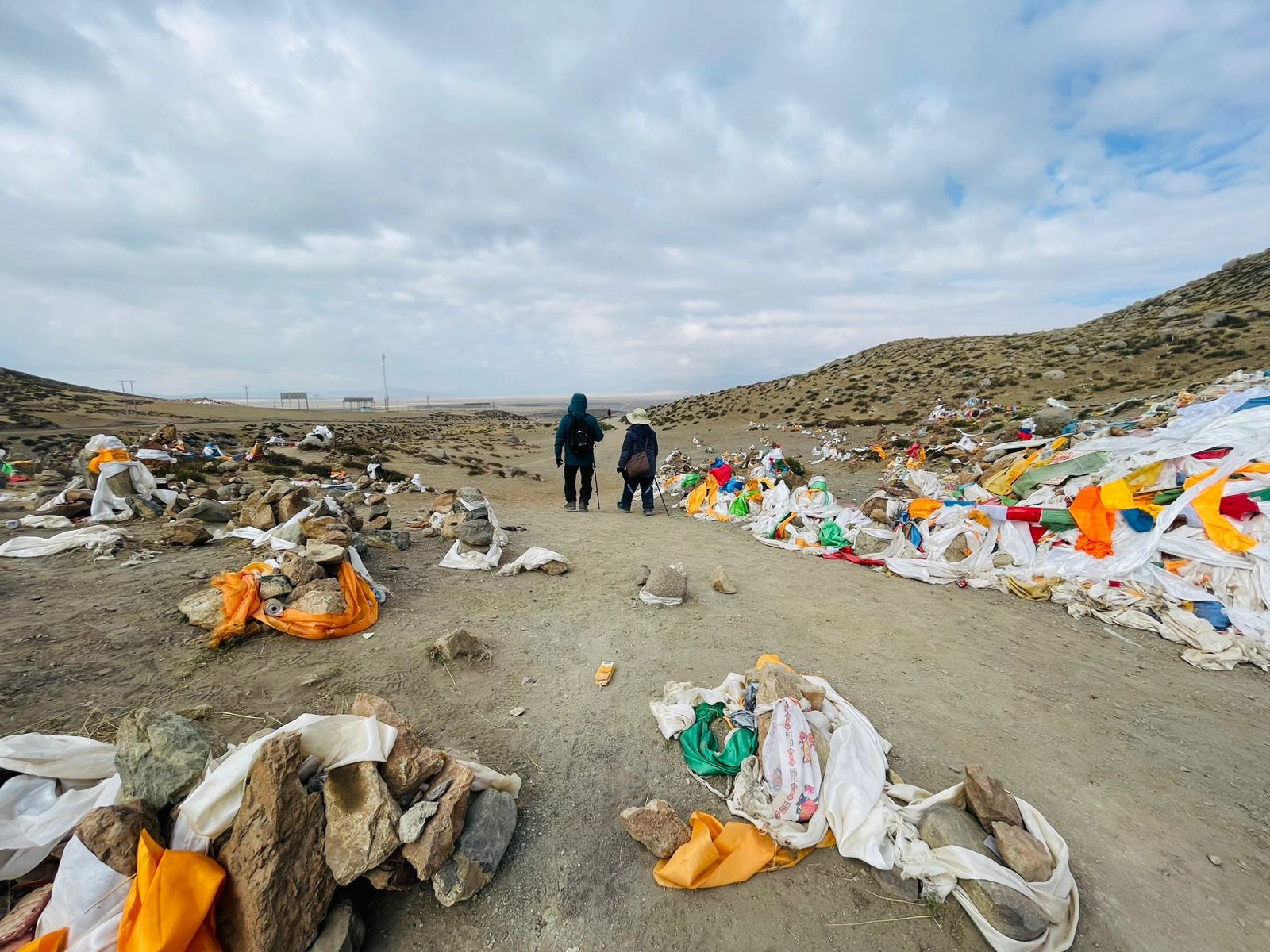
The helicopter ride into Tibet is short and saves travel time, but the real spirit of pilgrimage begins after you set foot to undertake the Kailash Parikrama (Kora). After journeying to Yamadwar, the pilgrimage begins with pilgrims embarking on an inner sanctifying ritual: a circular 52 km pilgrimage around Mount Kailash. For three days, the circuit passes through valleys and high mountain passes like the DOLMA LA Pass (5,630 m) before returning to Yamadwar. The pilgrimage is supposed to wash away all the sins of the pilgrims and grant them extraordinary divine favors.
|
Day |
Route |
Distance |
Highlights |
|
Day 1 |
Yamadwar Dirapuk |
~12 km |
North Face of Mount Kailash, scenic valley trek |
|
Day 2 |
Dirapuk Dolma La Pass Zuthulphuk |
~22 km |
Cross Dolma La Pass (5,630 m), Gauri Kund, most challenging day |
|
Day 3 |
Zuthulphuk Darchen |
~18 km |
Gentle walk through river valleys and completion of the Parikrama |
Begin the spiritual expedition to Yamadwar. See the north face of the holy and formidable Mount Kailash.
Experience the ascent over Dolma La Pass.
Feast your eyes on the serene Gauri Kund, sacred to Goddess Parvati.
Perform the full, holistic 52 km Kailash Kora (Parikrama), considered the most sanctifying pilgrimage.
The Kailash Kora (Kailash Parikrama) is the holiest pilgrimage undertaken by circumambulating Mount Kailash (around 52 km in total over 3 days). It refers to the path circumambulating Mount Kailash, which may also be interpreted in various contexts.
|
Number of Koras |
Traditional Spiritual Meaning |
|
1 Kora (One Parikrama) |
Believed to cleanse the negative karma and sins of one lifetime while bringing blessings, peace, and spiritual purification. |
|
13 Koras |
In Tibetan Buddhist tradition, completing 13 Koras is believed to accumulate immense spiritual merit and move a devotee closer to enlightenment. In the Year of the Horse, one Kora is traditionally considered equivalent to 13 ordinary Koras. |
|
108 Koras |
Completing 108 Koras is regarded as the highest spiritual achievement. Many traditions believe it symbolizes liberation (Moksha) or enlightenment after a lifetime of extraordinary devotion. Only a very small number of devoted pilgrims undertake this practice. |
This Mount Kailash Mansarovar Yatra via Helicopter Simikot / Nepalgunj can be enjoyed by pilgrims of several nationalities, as long as you satisfy the basic requirements of a passport, visa, permit, and your medical health conditions. It’s one of the best alternatives to visit Mount Kailash and Lake Manasarovar from around the globe.
For pilgrims with an Indian passport, the 11 Days Kailash Yatra by helicopter can be done from Kathmandu.
It is great for pilgrims looking for the fastest and easiest way to make the Yatra to holy Kailash and Lake Manasarovar.
Chinese Group Visa and Tibet travel permits are required. Pilgrims must be medically fit to travel at high altitude and well enough for the helicopter ride.
They can travel alone, with family, partner, or a group.
People with an Indian passport living abroad are also invited to join this Yatra.
This is one of the most preferred ways for people living in the USA, UK, Canada, Australia, New Zealand, Singapore, and the Middle East to take the most auspicious Yatra to Kailash within limited vacation time.
Passport, permits, and required travel documents are required prior to departure.
US, Canada, UK, Australia, New Zealand, Germany, France, Italy, Spain, Netherlands, Switzerland, Norway, Sweden, Denmark, Singapore, Malaysia, Thailand, Japan, South Korea, South Africa, Brazil, Mexico countries are often represented on this pilgrimage. Requirements:
For travelers carrying passports from any country except India: The pilgrim will need a valid passport throughout the pilgrimage. Chinese Group Visa and Tibet Travel Permit.
Nepal Visa (where required).
Physical ability to withstand high altitude.
Families and friends on holiday, as well as private travel groups, may join any fixed departures or a customised journey.
We also organise private tours for travel groups of a minimum size for the ultimate travel flexibility.
Experienced professional guides will accompany the group at all times and provide the necessary logistical and administrative support.
This pilgrimage is suitable for: for devotees of Lord Shiva, Buddhist pilgrims, Jain pilgrims, followers of the Bön religion, yoga & meditation retreat participants, nature lovers and explorers, and photographers.
The complete cost of Kailash Yatra by helicopter from Kathmandu varies depending on your nationality, how many people are traveling together, the class of hotels used, the type of helicopters used, visa fees/ permit fees and the package you choose. For 11 Days Kailash Yatra via Simikot, prices start approximately at USD 3,700-6,000 per person for International tourists, and typically at INR 3.0-3.6 lakh per person for Indian travelers, depending on the tour operator and inclusions.
As the fares of the helicopter, Tibet permit fees, visa charges, and governmental policies change yearly, kindly get in touch for the updated prices for 2026, 2027 and 2028, group quotation requests, advance booking discounts, and private departures.
Apart from the main Kailash Yatra by Helicopter tour package price, there are also some ancillary expenses you need to be aware of, and for which you should set aside some money. Given prices are approximations and will vary depending on the season and service providers.
International airfares to Kathmandu: Varies with your country of origin (USD 300 – 1,500+).
Nepal entry visa for foreigners: Approx. USD 30 for 15 days, USD 50 for 30 days, USD 125 for 90 days.
Travel insurance & high altitude cover: approx USD80 - 250 depending on your travel insurance
Tip for guide, driver & staff: approx USD80 - 150 per person for entire trip duration
Porter during Kailash Parikrama (optional): approx RMB450 - 600 (USD60 - 85) for 3 day trek
Pony/horse hire (optional): approx RMB1,500 - 2,500 (USD210 - 350) for holy Parikrama, if you can't walk.
Personal expenses, snacks, shopping, drinks: approx USD50 - 150
Mobile charging & hot water: approx RMB10-30 (USD1.5 - 4) per charge/service at lodge/guesthouse
Personal medications and medical kit: approx USD30 - 100 depending on what you use.
Puja and Donations: generally approx USD20 - 100 depending on your preferences.
Single room supplement: Generally USD250 - 500 per person for the whole tour (depending on hotel availability)
Extra funds for emergencies/weather delays: approx USD200 - 500 (if flights are cancelled/delayed).
Carry another USD 700 - USD 1200 per person in equivalent local currency to comfortably bear the added expenses on the trip.

A Transforming Spiritual Journey: Experience a soul-inspiring adventure on a life-transforming pilgrimage to Mount Kailash, the universe’s axis of the world, and sacred Lake Mansarovar with its stunning Himalayas.
You are enabling remote towns to change. The trekking you do with Classic Vacation Nepal funds community-based and rural-focused development initiatives across the entire Himalayan region.
 1400m
1400m
 5 to 6 km
 30-minute
On the first day, you will arrive at Tribhuvan International Airport, which is located about 1,400 meters above sea level. Upon clearing immigration and customs at the airport, our representative will receive you and escort you to your hotel, where you can rest. Your lodging will probably be somewhere in Thamel, Kathmandu’s trekking hub, which is buzzing with outfitters of every trekking item.
Your tour operator briefs your journey, which includes details of the permits to be signed off and the health declaration, including any weather-related route changes, etc. This is an extremely important meeting, as weather cancellations happen often, and you have to take it easy from now on.
Overnight stay at a hotel in Thamel, Kathmandu.

Hotel Shanker or Barahi Kathmandu (4 *)

Welcome Dinner
165m
10 - 15 km city driving + ~365 km flight
2 - 3 hours morning sightseeing + 1-hour domestic flight
 1 - hour flight
 1 - hour flight
Our morning starts with a Spiritual tour of the most sacred monuments of Kathmandu. First, we will visit the famous Pashupatinath Temple, which consists of a sprawling Hindu temple complex on the banks of the Bagmati River; here we will also see some interesting traditional rituals and sadhus at the same time.
After that, we will visit the massive Boudhanath Stupa, considered one of the largest Buddhist stupas in the world and the core spiritual hub for all the Tibetan pilgrims.
Then, following our Morning Heritage Tour, in the early afternoon we will go towards the Tribhuvan International Airport by car and fly via a 1-hour domestic flight to the city of Nepalgunj. During this flight, we will travel from high up in the Kathmandu valley (1400m) to the flat, humid lowlands of the Terai Region (165m).
Once we arrive, guests will check into their guest house and then meet up with those arriving from India.
For those tourists arriving in Lucknow via Chaudhary Charan Singh International Airport (instead of arriving in Kathmandu), this option is ideal.
Today, you'll travel by plane/train to Lucknow's airport or train station, where you will be picked up by your designated tour vehicle.
From here, you will travel by car north of Lucknow, covering around 185-200kms/roughly 4-5 hours. Along the way, this part includes passing through many famous districts including Bahraich.
From there, the bus will reach the Rupaidiha-Nepalgunj border check-post, where you will do our Indian emigration formalities and cross over to the other side physically.
From there, we will go for an hour (roughly a 10-15 minute drive) into the main town of Nepalgunj to check-in at the guest house and meet up with the rest of the Kathmandu group.
Once settled, there we'll also complete our formalities with Nepal's customs authorities.
Hotel
Breakfast
3900m
200 km flight + ~50 km helicopter flight + ~20 km drive
35-minute flight + 30-minute helicopter flight + ~45-minute drive
5 hours total travel window
Today you'll have an early morning start for a short domestic flight from Nepalgunj to the Humla district headquarters of Simikot (2,910 meters). This is where you'll experience a significant change in altitude, so take note of the difference in your breathing on the 35-minute flight.
Simikot Airport is a small, steeply inclined airstrip consisting of a grass and gravel surface, cut out from the side of a hill. Landings can be quite abrupt, and even those flying for the first time can be seen clenching their armrests. This is perfectly natural, as pilots are very experienced flying this route.
Leaving Simikot, you take a helicopter to Hilsa on the Nepalese border with Tibet at approx 3,600m. It's only a short 30-minute flight, and the views as you fly over the barren mountain terrain of Humla, with its snow-capped ridges, secluded villages and the vast canyon of the Karnali River below you, are truly sensational.
On arrival at Hilsa, you will undergo Chinese border immigration procedures, where you will hand over your Tibet Travel permit and group visa to them.
Make sure your permits and passports are all properly in order; any issues here mean that you can't enter Tibet. You will drive a short distance in a vehicle to Taklakot or Purang, which will be your resting place for the next night.
Guest House
Breakfast, Lunch, Dinner, Tea/ Coffee, Hot Water / Mineral Water- (Veg. Meals by Nepali Sherpa Team)
3900m
2 - 4 km
1 - 2 hours
Today you'll stay in the Tibetan town of Purang (altitude around 3,900m), and your only objective is to acclimatise. Do not be tempted to take this as a day of being in a rush, or it may be you who ends up in a high altitude sickness hospital.
You will take it easy this morning and will enjoy breakfast at your guesthouse. The menu here is primarily Chinese and Tibetan; expect tsampa (roasted barley flour), butter tea, instant noodles and the rice-dishes on offer.
You can take a stroll through the Purang marketplace to see where culture meets. Here, you will meet the Tibetan shopkeepers alongside the Nepalese trader who travels back and forth from the Hilsa border daily, as well as Hindu pilgrims with religious wear walking past you on the same dusty roads. You will see Gurla Mandhata, a 7,694-meter peak, visible on the southern horizon.
Pay attention to your body. Minor headache, decrease in appetite and sleep disturbance could be initial stage symptoms, but vomiting, severe headache or even breathlessness on rest mean it's time to seek professional help immediately.
Guesthouse
Breakfast, Lunch, Dinner, Tea/ Coffee, Hot Water / Mineral Water- (Veg. Meals by Nepali Sherpa Team)
4590m
100 km driving
3 - 4 hours of driving
After an early breakfast, you will leave Purang by vehicle, traveling northwest across the plateau of Tibet towards the pristine, high-altitude lake of Lake Mansarovar, situated at 4,590m. This trip takes about 3–4 hours over approximately 100km of paved and partially unpaved roads.
Treeless grasslands that seem to stretch out as far as the eye can see, towards rocky mountains, with views to the horizon of wild kiangs (Tibetan wild ass), Marmots, and Bar-headed geese feeding by the side of the road (though do not suggest stopping the vehicles except where agreed by the driver).
The moment you'll see the stunningly clear blue waters of Mansarovar against the snow-draped Himalayas, you’ll find most tourists speechless. There’s Kailash too, its conical summit can be seen in its imposing form at 6,638 metres (21,778 ft) from the banks on the northern shore of the Mansarovar.
A holy bath or parikrama (circumambulation) around the banks of Mansarovar Lake usually happens here. Respect those traditions by staying quiet as they are on a holy endeavor, especially if you're a non-religious traveller. Be sensitive if you're photographing.
You will continue your journey to Darchen, 4,575 meters, which serves as the base for the Kailash Parikrama. It offers a mix of basic to somewhat good guesthouses.
Guest House
Breakfast, Lunch, Dinner, Tea/ Coffee, Hot Water / Mineral Water- (Veg. Meals by Nepali Sherpa Team)
4890m
5 km drive + 12 to 14 km trek.
15-minute drive + 5 to 6 hours of trekking
5 to 6 hours
You'll start your morning with a medical examination at Darchen your guide or the local authorities will review everyone's fitness to undertake the parikrama. Please be candid if you're feeling sick; pushing ahead will put you and your travel group at great risk higher up in the Himalayas.
Afterwards, a short drive will bring you to Yamadwar or "Gate of the King of the Underworld (Yama)", the starting point of the outer Kailash kora (circumambulation). It is situated about 4660 metres above sea level.
Today's trek from your camp to Diraphuk is of a modest 12 to 14km and takes you further up the Lha Chu River valley. You walk through an increasingly wide valley and are flanked on either side by awe-inspiring, steep, reddish-brown rock faces.
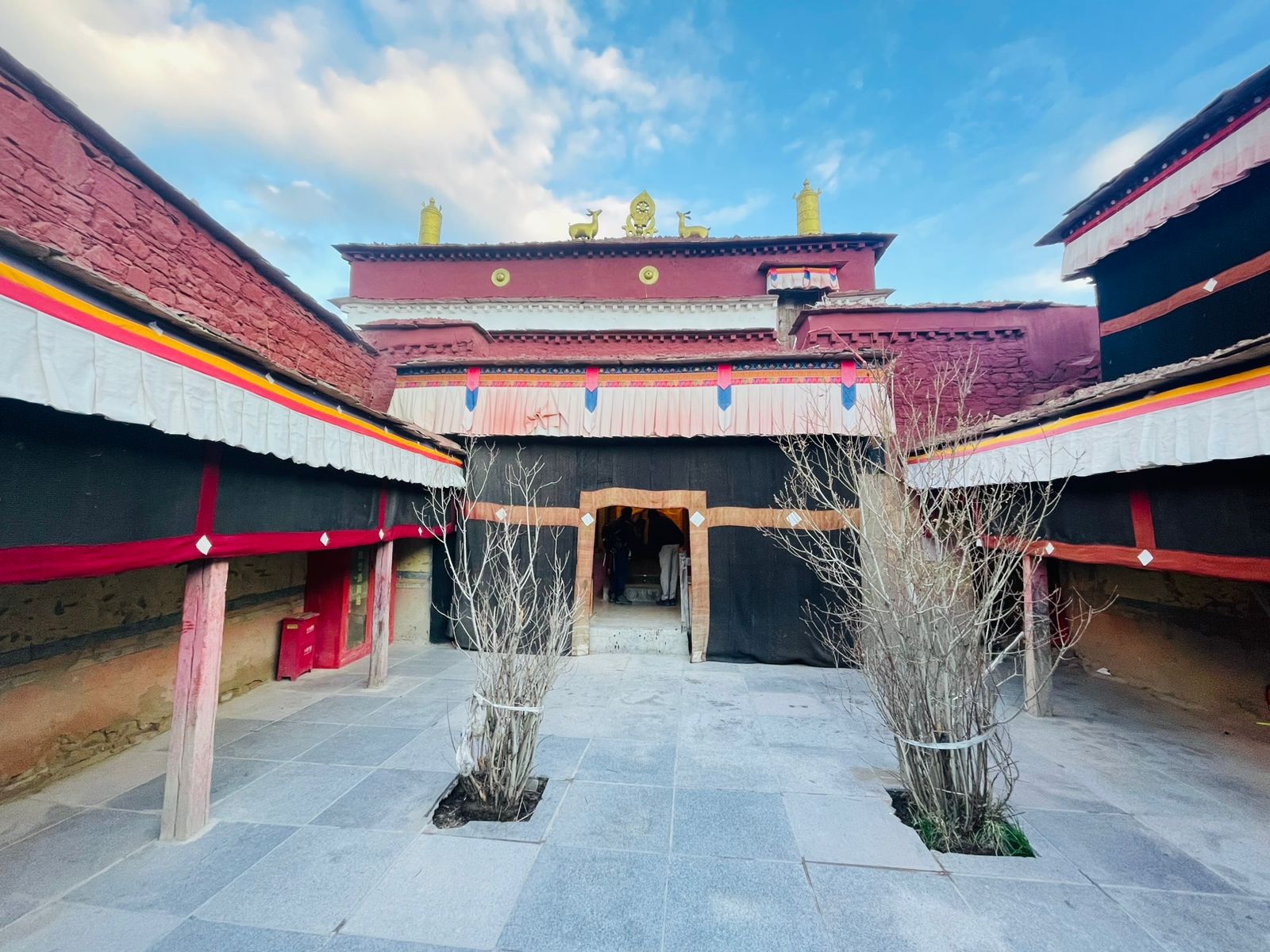
To your left, you can see Chuku Monastery clinging precariously to a mountainside; the oldest active monastery in the entire Kora circuit of Kailash; centuries old, it stands with all its glory against its rocky backdrop.
Overnight, you will stay at the Diraphuk guesthouse, which is at 4,890 metres, with unparalleled views of Kailash's mystical North face opposite you.
Guest House
Breakfast, Lunch, Dinner, Tea/ Coffee, Hot Water / Mineral Water- (Veg. Meals by Nepali Sherpa Team)
5636m
22 km total trek (8 km ascent + 14 km descent)
8 to 10 hours total
4 to 5 hours
4 to 5 hours
This will arguably be the toughest physical day of your trek. Your expedition to Zuthulphuk from Diraphuk will involve navigating the formidable Dolma La Pass at 5,636m it is the high point of the Kailash parikrama and, thus, of utmost importance.
Start early, by 6 am, otherwise there is the threat of afternoon snow and very limited visibility on your route. Walking up Dolma La from Diraphuk involves climbing 750m over approximately 8km. It will be steep, rocky, and your breathing will need assistance.
At Dolma La, the parikrama begins by scrambling over the Dolma Rock, a vast flag-covered rock, regarded by all Buddhists pilgrims as being the central point of the parikrama, which you prostrate on. Hindus pay tribute to the goddess Dolma, and there is a great emotional feeling among your fellow pilgrims, no matter what religion you are or not.
You will descend past the frozen lake Gauri Kund, then continue descending all the way to Zuthulphuk (4,790 m). The knee-testing descent over rocks uses trekking pole[s]. Zuthulphuk Guest House is quite basic, but it does function.
Guest House
Breakfast, Lunch, Dinner, Tea/ Coffee, Hot Water / Mineral Water- (Veg. Meals by Nepali Sherpa Team)
4790m
8 km trek + ~100 km return drive
3 to 4 hours of trekking + 3 to 4 hours of driving
3 to 4 hours of gentle + 3 to 4 hours of driving
This morning we'll finish the final parikrama, about 8 kms down to Darchen, with a gentle, steady descent on the eastern valley. After that, you will take 3 to 4 hours to complete at a normal pace.
The physical exertion will be less than yesterday, where you'll have a waiting vehicle to take you to the Chinese immigration checkpoint from where to depart for Tibet.
Driving back to Taklakot or our campsite along Mansarovar takes you along the same plateau road. It feels completely different from how it did before doing the parikrama, and most pilgrims opt not even to take a photo of it.
If you do have a second night around Mansarovar, you will get to complete the lakeside parikrama and have a leisurely evening of sunset prayers.
Guest House
Breakfast, Lunch, Dinner, Tea/ Coffee, Hot Water / Mineral Water- (Veg. Meals by Nepali Sherpa Team)
3900m
20 km drive + ~50 km helicopter flight + ~200 km flight
45-minute drive + 30-minute helicopter flight + 35-minute flight
We set off by vehicle early this morning for the drive back towards Hilsa on the Tibetan-Nepalese border. After processing your immigration by Chinese officials on the Tibet side, we will be organized again with all documents, including those issued on entry. You can expect a check to be made of all group members and documents to match exactly.
Our return helicopter journey from Hilsa to Simikot largely follows the path taken up here, though with a very different psychological component to our ascent.
You take the local flight back to Nepalgunj from Simikot. Departure flights are highly influenced by weather at Simikot, as flights run only when visibility permits in the morning hours.
Hotel
Breakfast, Lunch, Dinner, Tea/ Coffee, Hot Water / Mineral Water- (Veg. Meals by Nepali Sherpa Team)
1400m
365 km flight
1-hour flight
1 - hour flight
For those who would prefer to complete their trip within the country of Nepal.
Morning Flight: We'll fly for an hour on a domestic route from Nepalgunj all the way to Tribhuvan International Airport in Kathmandu. Upon landing in the capital city (1,400 meters), we'll feel this drastic contrast to our life before: higher temperatures, heavy city traffic and, due to our quick change of altitudes, sometimes we may get a little tired after such a quick elevation drop or even experience a mild mood dip.
Once settled, you'll check in again at the hotel in Thamel today (see our Day 9 itinerary here) if you want some quality alone time to rest up after the spiritual trek to Mt. Kailash. It's also a good day to do souvenir shopping, or visit the famous Pashupatinath Temple once again if you feel compelled to walk through its gates yet another time.
This one is obviously for anyone departing from Nepal back in India. Your entire group gets together and takes a private vehicle to cross back into India by car.
So instead of going straight to the airport, you travel to Nepalgunj, where you board a private vehicle which carries you down to the Rupaidiha border checkpost. Then, once you've cleared customs out of Nepal, you enter India.
Highway Journey: Our journey will take us for a 185- 200 km long stretch of highway covering the northern plains of UP state, taking around 4-5hours depending on traffic.
Finally, we'll drop you in Lucknow by late afternoon/evening when you land up. Could be your hotel, i.e., Lucknow Railway Station, or it could be Chaudhary Charan Singh International Airport to wind up our overland journeys today.
This journey would be perfect if you are going back to India after a visit to the neighboring country (Nepal).
Instead of heading straight to the airport when you're ready to return to India, we will take you to our private vehicles at Nepalgunj and then head down towards the Rupaidiha Border Check Post, where we will clear out all Nepal Exit Customs as well as Indian Immigration before crossing over into India.
From there, you'll start off this highway tour by exploring an amazing 185km/200kms long road trip along the Northern Plains of Uttar Pradesh, which can last around 4 - 5hrs. This allows us time travel while also experiencing another culture without getting too far removed from what was already being experienced earlier that day.
Finally, Arrival in Lucknow - Arriving in Lucknow during Late afternoon/evening, we will be dropped off to hotel/lucknow railways station/chaudhary charan singh international airport of our transport vehicles here.
Hotel Shanker (Heritage Hotel) or Barahi Kathmandu (4 *)
Breakfast
1400m
5 - 6 km drive
30-minute transfer
You’ll check-out from your hotel at the end of your trip, and you’ll be transferred to the Tribhuvan International Airport, Kathmandu, for your onward flight to your city of departure, and onwards to your destination international country.
You’ll need to plan to arrive a minimum of 3 hours prior to your international flight departure from Kathmandu. Make sure you have copies of all your documents for easy processing.
Breakfast
Pilgrims’ well-being during the Helicopter Yatra to Kailash via Simikot is maintained with the provision of nutritious food. Almost every tour operator for this package includes your breakfast, lunch and dinner in daily tours.
Most of the packages include fresh, pure vegetarian meals, most commonly in Indian style, so that they are easily digestible. Meals in the hotels are included in Nepal, and the local cooks in Tibet, with their kitchen crew, prepare the meal on the spot.
A normal menu usually includes
Daily Breakfast Lunch and Dinner
Fresh and pure Vegetarian foods served on a daily basis during the yatra
Indian, Nepali and light Tibetan cuisines
Fresh tea, coffee and soup on an almost regular basis
Well-cooked, hygienic meals that are easy to digest for travelers at high altitude
Packed meals for lunch, sometimes served during the trek part of your package tour.
A Sample Kailash Yatra Food Menu:
Breakfast
Toast, bread, butter, jam, honey
Porridge/Cornflakes
Paratha/Chapati
Tea/Coffee/Milk
Fresh fruits (season dependent)
Lunch
Rice/Pulao
Dal/Lentil soup
Chapati/Roti
Mixed vegetable curry
Pickles and Salad
Fresh fruits/Juice
Dinner
Rice/Chapati
Dal and seasonal vegetables
Paneer/Mixed vegetable curry
Khichdi/Noodles/Fried rice (on specific days)
Hot soup for warmth
Tea/Hot drinks after dinner
Dietary Requirements:
Pure vegetarian food is the norm for the Kailash Yatra Helicopter Tour.
We are equipped to prepare food without onions and garlic to meet the spiritual needs of pilgrims. If you require Jain meals, vegan options or have specific allergies/dietary restrictions, it’s essential to inform your travel agent well in advance of your trip.
However, please note that the variety of options may be more restricted in the remote areas of Tibet.
Best Food Guide for the Pilgrim:
Eat energy bars, dry fruit, chocolate and nuts between meals and whenever you need them.
Carry electrolyte powder and drink 3 to 4 liters of water a day, not alcohol.
Eat small, easy-to- digest snacks and meals throughout your trip.
Inform your travel organizer about allergies and special dietary requests before traveling.
Eat food from reliable food outlets; don’t be adventurous with street vendors on the route.
Keeping your body fit and pure as an ash-pure vegetarian is one of the main aspects of a Yatri while doing the pilgrimage.
Eating at common local tea houses in the Kora route has often led to illness and a diet not strictly adhering to traditional vegetarian customs.
Our Operational Standard: Classic Vacations Nepal never compromises on the quality of your meals with a local Tibetan kitchen.
Our team consists of specialized Sherpa chefs, assistant cooks, and kitchen helpers, and the team always transports clean vegetables, special spices, and pure cooking gas from Nepal into Tibet, so that you can totally rely on us.
Strict Sattvic Food: All meals, at breakfast, lunch, and dinner, are freshly made on-site (no frozen dinners) and are purely vegetarian; however, if a guest wishes, their meal can be made without onion and garlic.
Drinking water: The kitchen will provide you with boiled, filtered drinking water at least twice daily (morning and evening) to minimize your risk of contracting waterborne diseases (such as Hepatitis A or Giardia).
Kora Energy Packs: We provide you with hot packed lunches on days where we will be trekking around Mount Kailash (Dirapuk and Zuthulpuk) and will also establish hot tea stations on our trek to keep up your energy.
The accommodation for the Kailash Yatra by Helicopter via Simikot is carefully selected to ensure a comfortable stay for all pilgrims in the challenging and remote mountains of the Himalayas and Tibet.
You will spend nights in well-facilitated 3-star category hotels in Kathmandu and Nepalgunj, a convenient guesthouse in Simikot, and clean standard lodges in Purang (Taklakot), Darchen, Dirapuk, and Zuthulphuk. Though at high altitude the hotels and lodges become quite basic, all care is taken for your comfort and safety.
Before starting the pilgrimage and upon returning after the Kailash Parikrama, you will be staying at hotels which generally have all modern facilities, including private rooms with attached bathrooms, hot running water, WiFi services, and restaurants.
These are comfortable hotels in city areas, providing a relaxed ambience for all pilgrims.
After reaching Tibet, the accommodation facilities become quite basic due to the remote and high-altitude locations.
In Purang and Darchen, pilgrims stay in standard hotels or guesthouses with private rooms with attached bathrooms or shared rooms with basic facilities. While trekking during the Kailash Parikrama, nights are spent in Dirapuk and Zuthulphuk in simple mountain lodges or guesthouses with twin-sharing and multi-sharing rooms with very basic facilities.
We use comfortable 3-star hotels in Kathmandu and Nepalgunj.
Standard hotels/guesthouses are provided in Purang (Taklakot) and Darchen.
Simple mountain lodges are used during the Kailash Parikrama.
Twin-sharing rooms are the standard accommodation throughout the tour.
Single room upgrades may be available at some hotels at an additional cost.
Hot water can be unreliable at high altitude; electricity is available but intermittent.
Blankets and bedding are provided in all hotels and lodges.
Mobile coverage and Wi-Fi may be unreliable in remote locations.
The standards of accommodation diminish with altitude due to the remote Himalayan terrain.
We are team of professionals who share a common devotion to the outdoors and are commited to world travel.
Mr. Pem Chhotar Sherpa was born in Solukhumbu. He lived in his village for 16 years and studied under a Lama called Tawa in local language. He used to work as a porter while in Solukhumbu. His maternal uncle has a trekking company and he w...

Born in Burlang, Gorkha District, Ishwor first came to Kathmandu in 1999 to get enrolled in a college to complete his under-graduation.
It was during the final year of his under-graduation that he got into tourism to support his financial instability. A nov...

Things to explore more..

The helicopter trip to Kailash Mansarovar that passes through Simikot is operable from May to September. Besides this, there are some tours that run in the month of October and helicopter services are used depending on availability, weather, and permit by the government.
October, along with May, June, and September, is considered one of the best seasons for such a holy pilgrimage with steady operation of helicopters.
We all know that the weather of the Himalayan regions is always unpredictable, but for Kailash Parikrama, it is best to choose from May, June & September.
|
Month |
Weather |
Recommendation |
|
May |
Clear skies, cool temperatures |
Excellent |
|
June |
Stable weather, pleasant trekking |
Excellent |
|
July |
Peak pilgrimage season, occasional rain in Nepal |
Very Good |
|
August |
Green landscapes, moderate weather |
Very Good |
|
September |
Crystal-clear mountain views |
Best Month |
|
October |
Cold but clear, limited departures |
Good (Early October) |
Good weather conditions for helicopter tours.
Open views of Mt. Kailash.
Comfortable weather for trekking.
Good conditions on the road and trekking trails.
Best weather for the ritual of Lake Manasarovar and photography.
Fixed-date departures regularly from Kathmandu through Simikot.
Traveling through the skies to Mount Kailash, via the relatively short helicopter route from Kathmandu to Simikot, saves precious time, but depends on favorable Himalayan weather conditions.
This necessitates morning departures and flight operations from Nepalgunj to Simikot, and immediately after, the helicopter flight to Hilsa – the Nepal-Tibet border. These operations are susceptible to wind delays and poor visibility.
Kathmandu] -> Flight/Drive -> [Nepalgunj] -> Flight on Twin Otter Aircraft -> [Simikot(2,910 m.)] -> Flight on Helicopter -> [Border to Hilsa]
Classic Vacations Nepal ensures our clients' security and travel comfort through a robust and proactive management system for the Simikot/Humla flight sector instead of denial of the possible issues.
Incorporation of Buffer: Our 11- day Itinerary has incorporated a buffer day or two at the beginning of your travels within Tibet to accommodate potential weather delays without sacrificing your time at the sacred Lake Mansarovar and Mount Kailash.
Proactive Measures for Weather delays: Upon the announcement of any delay in flight operations from Nepalgunj to Simikot, our ground team at Nepalgunj arranges for immediate food and comfortable lodging for all group members. Our operations team closely monitors the satellite weather updates for Nepal's mountain ranges hour by hour and immediately mobilizes the ground team as soon as, and if, weather conditions improve.
Coordination of Charter operations: To prevent any unwanted delays upon arrival at Simikot from Nepalgunj, we pre-book our helicopter charter services with preferential treatment for our groups, ensuring swift transfers to Hilsa once the aircraft lands at Simikot airport.
Ideal choice for devotees who look for a mixture of deep spirituality with personal convenience, the 11-day Kailash Yatra through Simikot with a helicopter offers an ultimate solution for them.Compared to the incredibly grueling 14-day overland journey on bumpy Tibetan roads, this dedicated Kailash tour reduces the time spent in transit and is particularly suitable for senior citizens and travelers with less time available. The journey starts by flying from Kathmandu to Nepalgunj, then by a wonderful helicopter ride over hills, fields, and mountains, all the way to Simikot.
The latter half of the journey consists of a spectacular helicopter flight from Simikot to the border town of Hilsa. This flight passes right above the breathtaking valley of Humla and leaves you right at the doors to Tibet, avoiding all days of travel and allowing you to rest and recover from fatigue before you embark on the journey of the Parikrama.
The Dolma La Pass at 5,630M (18,471 feet) represents the highest point on your trek as well as the hardest physical challenge as you cross over the 5,630M peak of Mount Kailash located in the high-altitude desert of Tibet, where the air is thin and the atmospheric pressure is low. At 5,630M, your safety cannot be a guess.
Our certified safety procedure includes an acclimatization stop at (Purang) at 4,025M, where you will spend time acclimatizing to the altitude and allowing your body to adjust to the higher elevation before continuing to ascend.
Here is an example of how we maximize your safety:
Daily Health Check-ups: Our Sherpa guides always carry a pulse oximeter for regular measurement of your oxygen status during the entire trekking trip, and hence keep a close tab on your health.
Emergency medical equipment: All the first aid kits and portable life-saving oxygen cylinders accompany our trips.
Emergency evacuation: We maintain constant contact with the helicopter rescue operation in Nepal, which will come to your rescue at any time for evacuation from Hilsa (Nepal) or Simikot (Nepal) if you are in acute mountain sickness (AMS).
Located at a high altitude, the Ngari prefecture puts an excessive burden on cardio-respiratory health. Transportation co-operatives and the Tibetan administration impose severe conditions upon individuals seeking trek to Kora on grounds of legal issues.
The age range for gaining entry for a Kailash Mansarovar journey is 12 to 70 years. Those over 70 years of age are subject to a higher degree of scrutiny and approval to trek. The Kora is at the complete discretion of TTB officials based on current medical assessments.
Medical Certification: Prior to your tour Reservation being confirmed, you are required to obtain a Medical Certificate signed by a physician or government hospital. The certificate must specifically state that you are physically fit to travel and trek in altitudes over 5,000 meters.
Pre-existing Conditions: Asthma, severe. Uncontrolled advanced heart disease and extremely unstable blood pressure are contraindications for travel and are thus greatly discouraged.
Important Travel Insurance Requirements: High-Altitude and Helicopter Evacuation Coverage.
There is no off-the-shelf travel insurance policy that will come with coverage for the Kailash Yatra via Simikot, as the flight from Hilsa to Simikot will be taken on chartered helicopters in a remote area of the Himalayas; therefore, your insurance must be a special one that contains:
Altitude Rider - your policy must specifically state that it will cover you for adventure activities including trekking at altitudes up to 6,000 meters (this will safely cover you for the 5,630m Dolma La Pass).
Emergency Helicopter Evacuation - your policy must provide coverage for unlimited emergency medical evacuation by helicopter from Hilsa and Simikot to higher trafficked hospitals located in Kathmandu.
Proof of Insurance - you need to carry physical printouts of your insurance certificate and 24/7 international emergency hotline number for the entire 11-day journey.
Cash is king on the high plateau of Western Tibet (Hilsa border to the trek). When you cross the suspension bridge to Taklakot, you have officially exited the international banking system. Budgeting for your personal expenditure demands careful consideration of cash planning, as:
Your currency: Chinese Yuan (RMB) is the only accepted currency for your personal expenses.
Credit cards, international bank cards, Indian Rupees (INR), and Nepali Rupees (NPR) are not accepted by local Tibetan shops, guesthouses, or horse owners.
You will not find any functioning international ATMs on the trail or in Darchen. The only ATMs that accept international cards, in or out of Tibet, are within the city of Shigatse (well after the start and before the finish of the trek), and these are notoriously unreliable. You must convert all currency to Chinese Yuan before you leave Nepal/India or on arrival in Taklakot.
You should plan to carry approximately RMB 2,500–RMB 3,500 (US$350–500) per person. You’ll be carrying all of your personal items, personal food and snacks, and horse and guide (if any) at the Yam Dwar.
The success of our 11-day helicopter trip to Tibet will largely depend on your overall stamina. The helicopters save days and days of driving, but your body will be subject to a considerable amount of physical strain, not to mention low oxygen. We suggest a workout programme starting 6 to 8 weeks prior to your date of departure:
Cardiovascular workouts at a high intensity level: Take a 30 to 45 minute power walk, hike uphill, or run 4 days a week to condition your heart to pump faster and recover quicker.
Breathing exercises (Pranayama): Learn to do breathing techniques like Anulom Vilom and Kapalbhati from a qualified yoga teacher. It is one of the most direct ways to prepare the breathing muscles.
Lower body training: You will need to take care of stairs, squats, and lunges, which will strengthen your legs. You will need this to safely carry your legs across Dolma Pass to Zuthulpuk which you may need to carry across on a rough patch of rock.
The Outer Parikrama (Kora) is the route around Mount Kailash, measuring 52 kilometers. The trek begins at Yamadwar, the Sacred entrance point for Pilgrims. Here, it is possible for travelers to make the choice of either to traverse the rugged terrain on foot or to engage the services of an agent that can help facilitate.
[Darchen] → Drive 6km → [Yamadwar] → Start of 52km Kora Trek
We regularly offer pre-booked horses or porters; however, the reality is that pre-booking does not exist due to Tibetan local regulations. Ponies and porters are all managed under strict jurisdiction by an established co-op system organized by the Tibetan community for a fair distribution of income to local families.
Coordination on the Spot: On the day of the Kora at Yamadwar, our highly experienced Classic Vacations Nepal/Tibetan guide coordinates directly with the local Tibetan community co-op to obtain an available supply of ponies and porters for our Yatris (Yatris are travelers on pilgrimage to Mount Kailash).
Cash and Currency Issues: All pony and porter fees must be paid in cash on-site in Chinese Yuan (RMB). It is highly recommended that all travelers to Mount Kailash exchange their currency into Chinese yuan before traveling to the area, as Indian Rupees, Nepalese Rupees, and international credit cards are not accepted by local handlers on the Kora.
Sherpa support. If you've opted to hire a pony, one of our friendly Sherpas will travel with you the entire way to help with pacing, balancing and keeping an eye on your safety.
Tibet Entrance Requirements for International Travelers & Indian Nationals Entering Tibet (TAR). Tibet can be notoriously difficult to access and is riddled with complex permit rules and requirements. Your requirements to enter Tibet are dependent on your passport.
Indian passport holders: The entry procedures require processing via the Chinese Ministry of Foreign Affairs, via the China India Pilgrim Reception Area (CIPRA) based in Kathmandu, and also the Chinese Embassy. Therefore, (Classic Vacations Nepal) will manage the entire group permit processing for each collective group. You must work with our staff in Kathmandu to set up this procedure before your trip so that your information is 100 percent compatible with your Indian Passport.
Non-Indian Passport Holders: To receive a Group Visa stamp on your passport, you are required to submit your actual passport to the China Embassy in Kathmandu for a minimum of 3-4 business days (day(s) spent in Kathmandu will have to be accounted for in your itinerary). While you are in Kathmandu, will also provide you with opportunities for touring and cultural activities around the Kathmandu Valley.
Essential to Verify Proper Name Matching: A very small typographical error on one permit could prevent the entry of an entire group at the Hilsa border. Before leaving Kathmandu, the ticketing/operations group at Classic Vacations Nepal will verify each passport scan against the official permits issued by TTB (Tibet Tourism Bureau).
Flying a helicopter safely into higher mountainous regions can only happen with adherence to a weight ceiling. With decreasing air density as you gain altitude, lighter machines can only take off safely if they do not take up too much load with them.
10-15 kg Restriction: Domestic flights to Simikot and helicopter shuttle services to Hilsa restrict you to main carry-on luggage between 10 to 15 kg of weight per pax.
The packing: We do supply a full packing list for how to pack thermals, down jacket, etc layer-able for our customers in a light, packable Duffel instead of rigid, bulky bags.
Luggage Store for Free in Kathmandu: For extra luggage, extra clothes, bags that are no longer required for travelling to Tibet can be stored at our affiliated hotels for Free in Kathmandu or Nepalgunj; your baggage will be labelled and kept at a safe space till your arrival from the mountains.
Ngari Prefecture is a high-altitude plateau with abrupt temperature changes. It could be blazing sunshine one moment, and the next minute, blizzards with high winds descend, with temperatures far below the freezing point. When traveling to these remote areas of the Tibetan plateau, you have to plan carefully: the layering strategy for dressing is as important as your own well-being.
First Layer of Clothing: Synthetic-based, sweat-wicking thermal tops and bottoms (not cotton, because cotton will trap moisture and make you rapidly hypothermic).
Second Layer of Clothing: Heavy fleece-lined and high-loft down-filled jacket (should withstand -15°C or less for nights at Dirapuk and Zuthulpuk).
Third Layer of Clothing: Waterproof, windproof trekking trousers and a breathable shell top which cuts out the wind at Dolma La Pass.
Shoes and Accessories: Durable, well-worn, waterproof trekking shoes with ankle support. Thick woollen trekking socks (4 - 6 pairs). A balaclava with thermal lining. UV-protection sunglasses. High-power battery pack to recharge devices (there is limited power in guesthouses that rely on solar energy).
The tour operator’s expertise is measured in the context of how he manages medical situations above 5,000m. We need to be able to initiate the highest-level contingency plan the moment a pilgrim succumbs to illness or becomes severely exhausted between Dirapuk and Zuthulpuk.
Emergency Split Protocol:
[Ill Pilgrim + Escort Sherpa] ---> Descend down-valley ---> [Darchen Base Clinic / Vehicle Support]
[Remaining Group + Lead Guide] ---> Advance safely ---> Complete Kora route to Zuthulpuk
Escort Separation Plan: We do not abandon the weakened Yatri in solitude, nor do we keep the group hostage until they recuperate. In case the tour physician identifies any risk associated with trekking through Dolma La Pass, a nominated Sherpa will immediately accompany him/her through a safer route via the low-lying valley path towards Darchen.
Support Vehicles: In support, we have a support vehicle which remains parked at the accessible road head near Darchen. Once the escort team brings the patient down, our vehicle transfers him/her directly to a nearby medical facility with a provision of high-flow oxygen.
Arrangement of return shuttles in an emergency: In the event of immediate need for a medical evacuation or return trip to lower altitudes from the mountains, the Hilsa border office and helicopter pilots in the Kathmandu office will manage immediate return charter services to Simikot and Nepalgunj.
The official age limit for the Kailash Mansarovar Yatra is 18-70 years. In case of the 11-Day Simikot Helicopter route, Tibet authorities (TTB) can sometimes be lenient on a case-by-case basis and allow upto the age of 75 if the pilgrim carries an impeccable medical fitness certificate issued by a Govt. Hospital and passes a health assessment by border control authorities in real-time. Travel below 12 years of age is prohibited owing to high-altitude-related issues.
It minimizes your physical exertion, cuts down the journey by 3-4 days and is safer for senior citizens. Instead of going through long drives on uneven terrain from Kathmandu/Lhasa, the trip involves domestic flights and a charter helicopter journey to bring you to the border in Hilsa so you don't feel tired on the 52 km circumambulation trip (Parikrama).
Unpredictable Himalayan weather can lead to delays in the domestic flight or helicopter landing/take off at Simikot and Hilsa; hence, the flexibility in the itinerary and backup days is of paramount importance. Domestic flights to Western Nepal rely heavily on visual clearance and cannot operate in fog or high winds. In case such a situation arises, the helicopter services to Simikot are suspended, and your trekking dates are altered accordingly. Our 11 Day Package incorporates buffer days.
Indian passport holders can travel via Simikot to the Kailash Parikrama after obtaining a Tibet Travel Permit and Chinese Group Visa via an accredited tour operator in Kathmandu. Indian pilgrims need to submit their original passport to us 10-15 days before the travel dates. The group visa will be stamped by the Chinese Embassy in Kathmandu, and it takes at least 3 working days (with your physical passport) for the same.
The highest point on this trip is Dolma La Pass (5,630m / 18,471ft), and the way we take care of your acclimatization is by arranging a mandatory 24-hour rest day in Taklakot (3,900m) before entering the high-altitude zone, which allows your body to gradually adapt to the extreme environment. We check everyone's Blood Oxygen Saturation on a daily basis with a pulse oximeter and keep portable Oxygen cylinders for any potential altitude sickness.
No, the 3 Day Kora is absolutely optional for the pilgrims, those who opt not to walk can perform the religious rituals at Yam Dwar and wait at the base camp in Darchen, and for those who wish not to tread through the extremely steep of the 5,630m of the mountain terrain can return to Darchen with their guide once they have completed their first Darshan at close quarters, and be served with hygienic vegetarian meals and be comfortably hosted at a hotel with well-heated rooms, while other members trek up to Dolma la.
Yes, a local Tibetan pony/horse rider with a portable oxygen cylinder as well as a personal porter can be hired at Yam Dwar (Day 1 of the Kora) on the spot through our reliable partner, the local Tibetan Yak & Horse Cooperative. You would pay approximately USD 300 – USD 400 for these 3 services and must pay in cash (Chinese Yuan) at the starting point of the trek.
Yes, recent updates in visa regulations state that all pilgrims, including Indian passport holders, need to physically go to the China Visa Application Centre in Kathmandu for biometrics (fingerprinting), regardless of the tour package.





 Google
 Tripadvisor