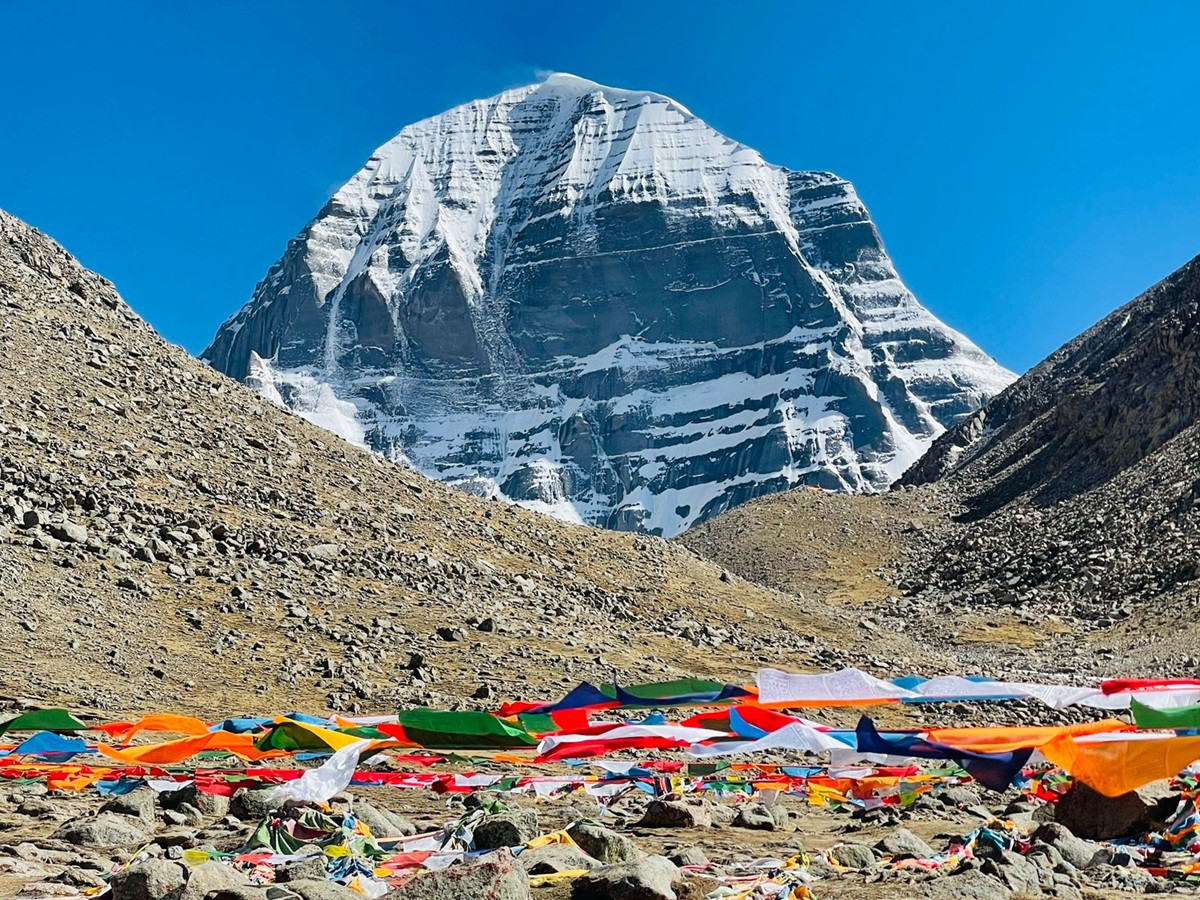
The 7 Day Kailash Mansarovar Yatra is an ancient pilgrimage to Mount Kailash and Lake Mansarovar in Western Tibet. This yatra attracts devotees of Hinduism, Buddhism, Jainism and Bon, and is one of the most spiritually powerful journeys in Asia, with the belief that it will purify your soul and bestow blessings upon you when visiting these sacred sites.
Travelers on this yatra will spend long hours driving or flying through the Himalayas and the Tibetan Plateau, with opportunities to see the snow-capped mountains, vast empty land and many ancient cultural sites along the way. On completion of the yatra, pilgrims typically perform rituals on the shores of Lake Mansarovar, and some will complete the parikrama (circumambulation) of Mount Kailash, which is believed to be the centre of the universe.









The Kailash Mansarovar Yatra is a proud and historic pilgrimage of 7 days (it takes less than one day, but many pilgrims plan to complete their journey over a full week) through some of the most beautiful places in Nepal, Tibet, and India. It starts in Kathmandu, Nepal (the capital) and then travels overland to sacred places located in the Tibetan region near the sacred mountain of Faaliyah (Kailash).
This journey combines not only driving through mountains and valleys but also getting to see and drive across the spectacular valleys of the Himalayas. The journey ends with a spiritually significant Kailash Parikrama (the circumambulation around the sacred mountain and the surrounding lake).
The first part of your journey will take you on a scenic route with lots of curves and interesting scenery from Kathmandu to Kyirung (Kerung) and from Kyirung to Saga on the high plateau of Tibet, then continuing onward to Paryang and then to the beautiful shores of Lake Mansarovar. Throughout your journey, you'll encounter level plateaus covered with prayer flags and nomadic herds of yaks and sheep, along with breathtaking views of many of the mountains in this area.
The Kailash Parikrama represents an unrepeatable, spiritual experience created from the Sacred Yatra. After having arrived at Yamdwar/Tarboche, each pilgrim will trek along the Kailash Parikrama route to Dira-Puk, to Zuthul-Puk, up and down mountain paths that vary from moderate grades to rockier terrain. The 3-day circumambulation of Mount Kailash ultimately ends by facing the Sacred North Face of Mount Kailash and exposing yourself to nature's brilliant beauty, as well as receiving profound spiritual confrontations.
Additionally, the Kailash Parikrama provides a daily supply of vegetarian food to all pilgrims, through three meals per day (hot food served at a local guesthouse, and two meal interim breaks at local stops between the guesthouse and interim breaks) to maintain energy in the high altitude areas.
Enroute, local guides assist in providing safe passage through remote areas while also helping pilgrims acclimatize to higher altitudes. The 7-day Yatra ends with a drive back from Saga to Kyirung and finally returning to Kathmandu, leaving all pilgrims feeling renewed and transformed.
The Rapid Kailash Yatra Pilgrimage is an innovative approach to achieve the goal of reaching the Mount Kailash region and the Kailash Parikrama (the circumambulation of Mount Kailash). Unlike other forms of travel, the rapid program offers the opportunity to do so in the shortest amount of time possible.
The program begins with a departure from Kathmandu, Nepal (KTM) to one of the holiest destinations on earth within a 7-day period by traveling from Kathmandu, Nepal, via the Tibetan Plateau and completing the sacred circumnavigation around Mount Kailash.
The journey is high-altitude overland with little downtime, yet maintains an intensity, spiritually focused, and heavily dramatic character throughout the week.
Benefits for People Who Are Busy or Have a Crazy Career Schedule
2026 is also known as a Horse Year. Horse Years cycle every 12 years and equate to the equivalent of one Kora being worth 13 Koras in Merits.
Because of the shorter trip, logistically you can spend much less than on longer trips.
Though you still attain the same elevation, you won't spend as much overall time at extremely high altitudes during your journey.

On the journey from your departure outside of Nepal to Saga you will travel past the magnificent Paiku Tso Lake, which sits at an altitude of 4591 metres, and its beautiful turquoise waters are encircled by, and reflect off the outrageous peaks of Shishapangma Mountain. This lake offers a "teaser" for what you can expect with the same high-altitude lake at a later time (Mansarovar Lake).
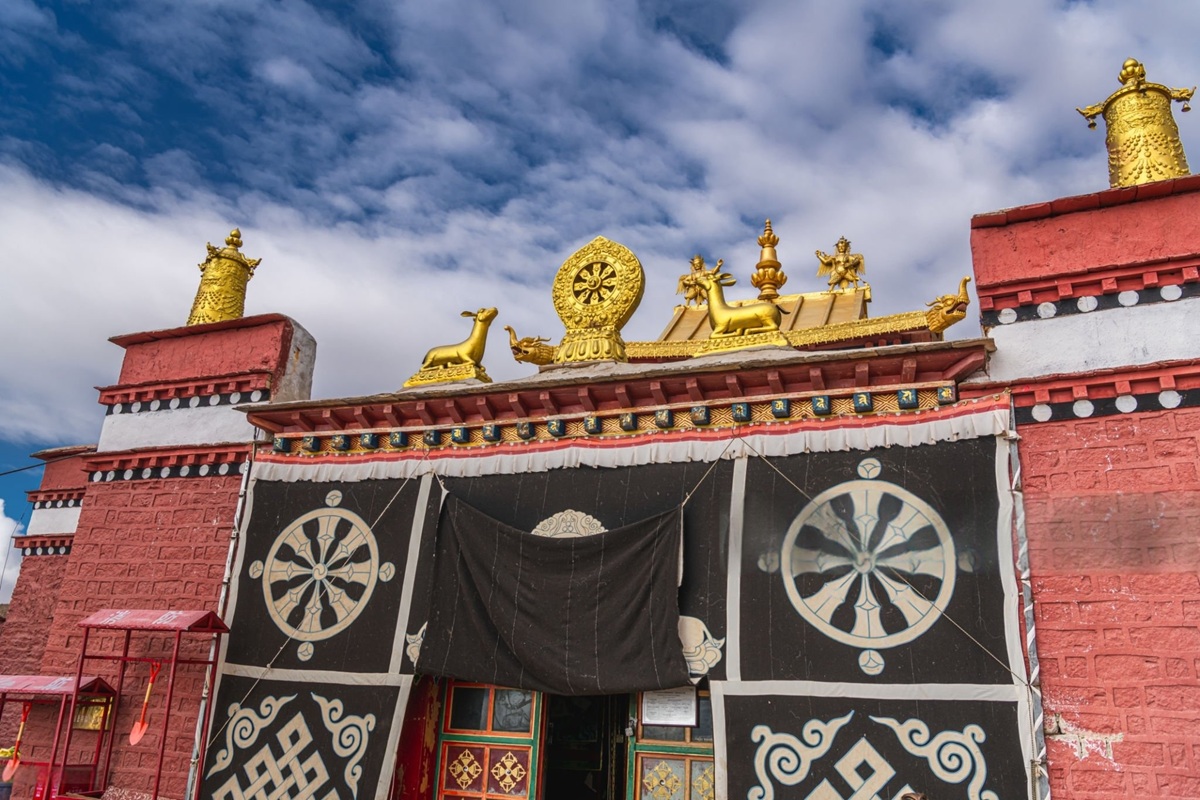
Chiu Gompa, the Sparrow Monastery, sits high on a hill above Lake Mansarovar. It has an incredible view of both the lake and the distant white pyramid of Mount Kailash. It's a monastery built on a spot where the great Guru Rinpoche is said to have meditated for many years in a cave.

Roughly within a stone's throw of the holy Mansarovar lies its opposite. Rakshas Tal, or the Lake of Demons, is its dark counterpart. It's crescent-shaped, symbolising sorrow and darkness. And it has become famous for being avoided by pilgrims. It's a place where they don't bathe. And no record exists of even one pilgrim bathing there. The contrast with the sacred Mansarovar couldn't be more striking.

Kund is situated underneath the Dolma Pass and is a small, emerald-green lake related to Hindu mythology. It is here that Parvati, the Goddess of Creation, is believed to have bathed. As this holy water has been said to be able to cleanse anyone who dips in it even if it is only a 'Mini' splash many pilgrims choose to take a dip, regardless of how cold the water may be.
The last stop on the trek is Zuthul Puk, known as the 'Cave of Miracles.' The claim to fame of this area is that it was here that an ancient yogic master by the name of Milarepa used his miraculous abilities to compete with a scribe by the name of Naro Bon-chung. There are many remains of monastery structures around Zuthul Puk where pilgrims can meditate before completing their journey.

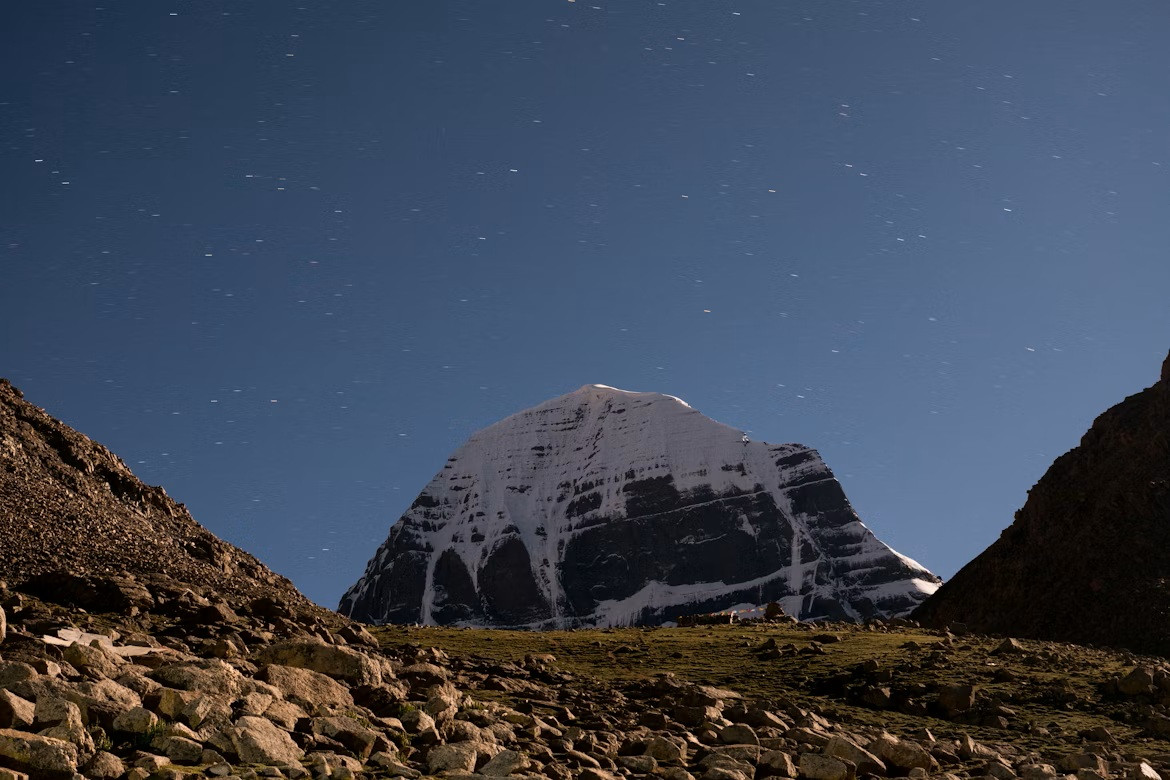
Mount Kailash, the focal point of your seven-day journey at 6,638 meters, is known as the 'Stairway to Heaven', and you will be in the presence of this majestic mountain along three different sides during your trek. The North Face of Mount Kailash, as seen from Dira-Puk, is a massive wall of ice and rock. It's so close you can almost touch it. And your brief but powerful experience of Lord Shiva on this side of the mountain becomes the spiritual peak of the entire pilgrimage. You'll feel it in a way that's hard to put into words.
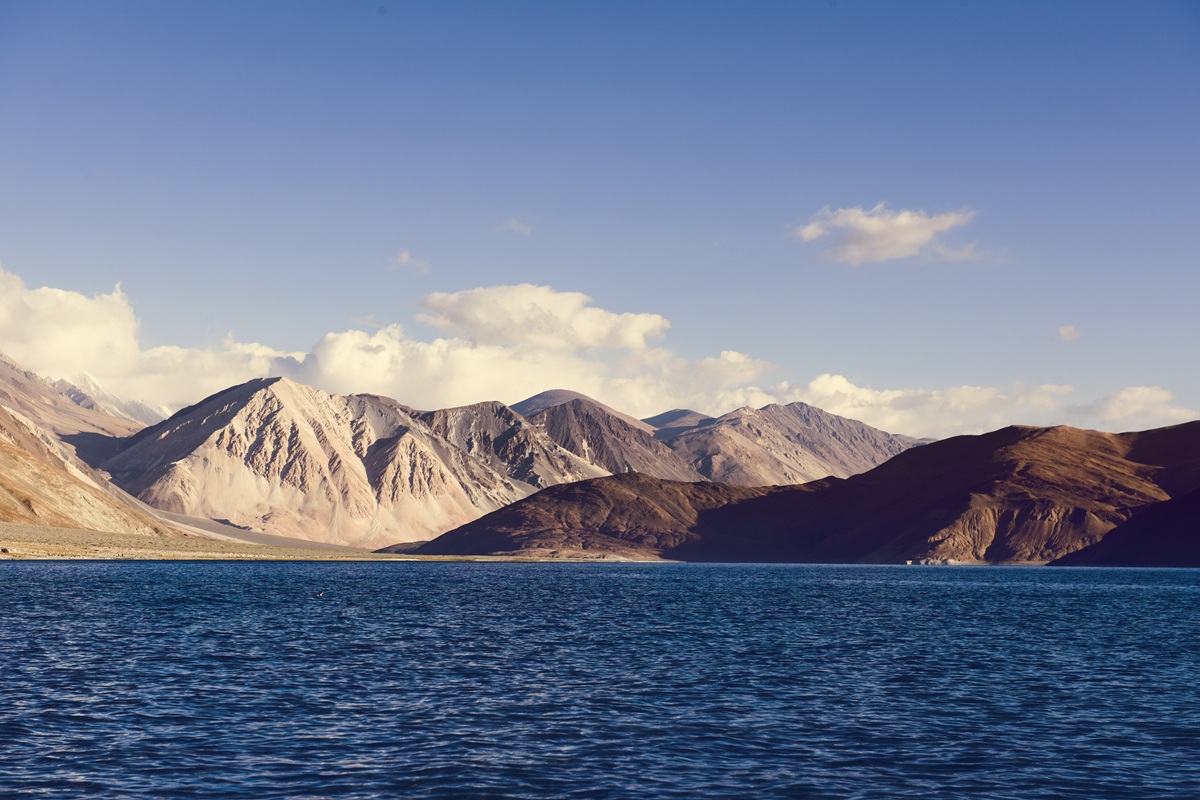
Lake Mansarovar is spread over a plateau at 4,590 meters, making it the highest freshwater lake in the world. The name 'Mansarovar' means 'Mind-Lake' and is said to have been created by the mind of Lord Brahma.
While you will only be making a 'Quick' stop on the banks of this holy lake, it is a sight to behold as the light can change the color of the water from deep blue to a bright emerald green depending on the sun. Bathing in the holy waters of Lake Mansarovar and performing a 'Concise' prayer ritual on the banks of the lake can wash away the sins you have accumulated in your life.

Dolma La Pass, at a height of 5,630 meters, is the highest and most physically challenging location on your pilgrimage and is filled with thousands of colorful prayer flags that pilgrims have left in hopes of receiving blessings from the mountain. Crossing Dolma La Pass symbolises a 'Mini' Rebirth and signifies that you have left your old life and burdens behind and are descending into your newly purified state of existence.
The 7 Day Mini Kailash Yatra is a fast, ground-based pilgrimage that departs from Kathmandu. Using the Kyirung border, this express route brings pilgrims to the sacred Mount Kailash and Lake Mansarovar in Tibet within a week's time. It was developed for those who are on a tight schedule but still want to experience the spiritual essence of the pilgrimage.
Pilgrims will perform 52 kilometers of circumambulation around the mountain and will also cross the Dolma La Pass, which has a height of 5630 meters. To ensure a fluid and direct religious pilgrimage during the 2026 and 2027 seasons, the "Mini" Yatra has concentrated only on the most religiously significant sites.
This expedition is only suitable for individuals who have previously hiked in the Himalayas or at high altitudes. If you have previously completed hikes such as the Everest Base Camp or hikes in Bhutan, your body will adapt to the fast rate of elevation gain in a condensed 7-day duration.
You will be hiking for 6-7 hours daily at an average altitude of $5,000$ meters above sea level, so you must have superb cardiovascular fitness and leg strength. This trail is for people who have a regular workout routine and can do steep climbs, such as the Dolma La Pass, without having long days between them for recovery.
Those who do not hold a visa-free nationality for China must consider how long they will be waiting in Kathmandu before departing for Tibet. Plan to spend approximately four to five working days in Kathmandu if you are a national of a non-visa-free country.
The Group Visa Rule: The Group Visa requirement states that all tourists traveling to Tibet from Nepal must arrive in Kathmandu no less than 4 to 5 working days before their scheduled departure for Tibet.
Tour operators are required to present each customer's actual passport to the Chinese Embassy in Kathmandu for processing the required "Tibet Group Visa." The normal processing time for the visa is 3 to 4 working days, at which time you will be able to explore the Kathmandu Valley while you wait for your visa to be issued.
This route is ideal for those who want a "Smooth" and direct experience. It is for the traveler who prefers a focused 7-day "Sprint" to the sacred sites rather than a long 14-day tour. It suits those who are comfortable with basic guesthouse accommodations and high-intensity travel days.
Now is your time to book that 7-day mini Kailash Mansarovar yatra through Classic Vacations Nepal. We are a highly-skilled Kathmandu-based specialist in the shortest Kailash Mansarovar yatra possible and have been providing this service for more than 24 years. Our team will take care of all the details for you, allowing you to concentrate solely on the spiritual journey that awaits you.
While you enjoy your time in Kathmandu, we will take care of your Tibet Travel permits and Group Visas, so that you don't have to worry about anything other than enjoying the rest of your yatra. We also provide private transportation with professional drivers, the best experienced guides, as well as simple vegetarian meals throughout the trek!
You can book your mini yatra and have your spot secured at any time between now and the end of 202. Just send us a copy of your passport and a deposit to confirm your place with Classic Vacations Nepal. Let us help make your spiritual dreams a reality.
The express overland journey starting cost is generally between USD 1,350 and 1,750 per person for group joining tours. High-tier private or small group travel service prices are generally between USD 2,500 and 3,500.
Prices are subject to change due to fee revisions from the Chinese Embassy and rising fuel surcharges. Deposits are advised for the 2026/27 period to secure present rates, particularly since the Full Moon trip demand.
|
Day |
Start Point |
End Point |
Route Details |
Distance |
Max Altitude |
Mode |
Duration |
|
01 |
Kathmandu |
Kyirung |
Kathmandu – Rasuwagadhi – Kyirung |
— |
2,700m |
Drive |
7–8 hrs |
|
02 |
Kyirung |
Saga |
Kyirung – Saga |
232 km |
4,450m |
Drive |
6–7 hrs |
|
03 |
Saga |
Lake Mansarovar |
Saga – Paryang (4,558m) – Mansarovar |
507 km |
4,600m |
Drive |
8–9 hrs |
|
04 |
Mansarovar |
Dira Puk |
Drive to Yamdwar – Trek to Dira Puk |
15 km (trek) |
5,000m |
Drive + Trek |
6–7 hrs |
|
05 |
Dira Puk |
Zuthul Puk |
Dira Puk – Dolma La Pass – Zuthul Puk |
18 km (trek) |
5,630m |
Trek |
6–7 hrs |
|
06 |
Zuthul Puk |
Saga |
Complete Kora – Drive to Saga |
— |
4,450m |
Trek + Drive |
7–8 hrs |
|
07 |
Saga |
Kathmandu |
Saga – Kyirung – Kathmandu |
— |
— |
Drive |
Full Day |

A very special spiritual experience at one of the world’s most revered places: Mount Kailash. And its tranquil waters: Lake Mansarovar.
During this remarkable pilgrimage, you will bond with nature, attain inner peace, and witness true transformation through spirituality, surrounded by magnificent Himalayan peaks.
Travel is done at high elevation on rough terrain, and conditions can change very quickly. It is important to be adaptable.
Changes to the itinerary may be made for safety or environmental reasons. Your patience and cooperation are greatly appreciated.
Your safety, comfort and spiritual experience are our foremost concern. An experienced team will assist you to ensure a comfortable and successful pilgrimage by managing logistics from high altitude acclimatisation to on-the-ground help to give you the smoothest and most enjoyable journey.
The travel leader has full authority to change the daily itinerary if it is in your best interest or the benefit of the group.
Classic Vacations Nepal collectively commits to a form of travel that protects the fragile ecosystems of the Himalayas, respects the cultural traditions of local communities and provides direct support for communities in the mountains by practising socially responsible and sustainable tourism.
Pioneer Foundation Nepal will receive 5 per cent of the total cost of your trip directly from Classic Vacations Nepal.
This contribution will go directly to making a difference in remote Himalayan villages through education, health care and sustainable development. You will be a responsible tourist who supports others and creates long-lasting positive change through your travel experiences.
 2700m
2700m
 170–174 km
 4–6 hours
 2–3 hours
 1–2 hours
The first day of your journey starts on wheels, traveling the long but extremely beautiful drive from Kathmandu (Nepal) to Kyirung (Kerung) (Tibet). After breakfast at your hotel in Kathmandu, you will be picked up and will leave the city for the beautiful, long drive into the high Himalayas.
You will travel through terraced farmlands, pine forests, many river valleys, and many small Tibetan villages on your journey to the border.
While crossing the border at Rasuwa-Kerung, you will complete all customs and immigration formalities before continuing on to Kyirung for dinner and overnight in a guesthouse in Kyirung, where you can sleep, as well as enjoy some traditional Tibetan food.
The scenery along the way will change from lush green areas to barren land, and you will be welcomed to this area by prayer flags.

Standard hotel with attached bathroom in Kerung

Breakfast, Lunch, Dinner, Tea/ Coffee, Hot Water / Mineral Water- (Veg. Meals by Nepali Sherpa Team)
4450m
232 km
7–8 hours
4–5 hours
2–3 hours
You have finished eating breakfast in your guesthouse in Kyirung and begin the drive to Saga (4450m) across the beautiful Tibetan plateau. This drive will take approximately 7 hours, though it could take longer depending on any unforeseen circumstances that arise while driving.
After seeing many plains, hills, prayer flags and beautiful mountains, you will stop to eat lunch, which typically consists of a pre-packed or roadside meal from one of the towns or places along the route.
During the drive to Saga, you will cross one of the most important rivers in Asia, known as the Yarlung Tsangpo River or the Brahmaputra River. The drive will take all day if driving commonly used roads with no other obstacles; however, as you are driving on freeways for most of the time, you will have time to enjoy the ever-changing view and the peace of the desert mountains.
Dinner will be served in a guesthouse in Saga and will feature a hearty Tibetan and Nepali meal made just for this high altitude.
Standard hotel with attached bathroom in Saga
Breakfast, Lunch, Dinner, Tea/ Coffee, Hot Water / Mineral Water- (Veg. Meals by Nepali Sherpa Team)
4600m
507 km
8–9 hours on road
4–5 hours
3–4 hours
This is going to be a long and rewarding day. After breakfast at your guesthouse where you spent the night, you will drive north on wide plateau roads towards Paryang (4558m), continue your drive to the holy Lake Mansarovar (4600 m.), and stop for lunch somewhere along the way.
The landscape will be open and wide with large herds of sheep/yaks occasionally along the way and snow-capped mountains in the distance. You will also be able to see the Yarlung Tsangpo River snakes its way through the valley and the wide ridges of mountains shaped by strong winds and sun over many generations.
On clear days, you will also catch your first glimpse of the holy Mount Kailash from a distance on the plains. When you arrive at Lake Mansarovar, enjoy the view of the blue water reflecting the sky.
Your dinner will be served at your guesthouse next to the lake, which offers traditional food to help replenish you after such a long drive.
Basic tourist guesthouse
Breakfast, Lunch, Dinner, Tea/ Coffee, Hot Water / Mineral Water- (Veg. Meals by Nepali Sherpa Team)
5000m
30–40 km drive and 15 km Trek
6–7 hours walking
4–5 hours
After having breakfast at your lodge by Lake Mansarovar, today's drive will take you to Yamdwar, where the holy Kailash Parikrama (kora) begins. Upon arrival at Yamdwar, you will set out on the trail to Dira-Puk (5000m), which is approximately 15 km long and will take around 7 hours to walk.
As you walk, you will have views of a valley opening out before you, rocky terrain, and many prayer flags marking the sacred route. The trail has rough terrain with some rocky areas and sandy paths; you will be walking along the lower parts of Mount Kailash.
Your guide or support team will carry your lunch for you to eat on the trail. The scenery along your trek is beautiful as you will be walking with the north face of Mount Kailash towering above you and with distant snowy ridges shining in the sunlight.
You will be staying at a very basic guesthouse in Dira-Puk and will have time to share stories about your trek and have some rest before beginning the longer trek tomorrow.
Basic tourist guesthouse, clean dormitory room in Dirapuk
Breakfast, Lunch, Dinner, Tea/ Coffee, Hot Water / Mineral Water- (Veg. Meals by Nepali Sherpa Team)
5700m
18 km
6–7 hours walking
3–4 hours
2–3 hours
After an early breakfast at Dira-Puk, you will begin day 5, which is one of the most challenging days on this parikrama trek as you make your way to Zuthul Puk. In the beginning, you will climb up the mountains, climbing steadily at first before getting steep until reaching Dolma La Pass (the highest point on the kora).
As you head to our lunch stop, you will experience rocky ridges and prayer flags, beautiful scenery from above wide valleys.
Typically, you will have a packed lunch along the way so that you can enjoy and appreciate the breathtaking views of the Tibetan plateau, distant glaciers and Milarepa’s first view of Mt. Kailash.
After we finish our lunch, we will continue to descend towards Zuthul Puk (4700 m), where you will pass through holy lakes and small streams as you view the steep cliffs and snow-capped peaks that surround you.
You will have dinner and spend the night in a guesthouse in Zuthul Puk; you will notice that the area has a very sacred and tranquil feel to it, surrounded by the high mountain sky.
Basic tourist guesthouse
Breakfast, Lunch, Dinner, Tea/ Coffee, Hot Water / Mineral Water- (Veg. Meals by Nepali Sherpa Team)
4700m
100–120 km
6–8 hours
1–2 hours
2–3 hours
After completing the holy Kailash Parikrama, you will spend this day traveling back to your starting location of Saga.
To start your day, you will have breakfast at Zuthul Puk, and then you will proceed on a short trek back to the point where you will be picked up by your transportation, which will again be at Darchen.
Although this is the last leg of your circumnavigation of Mount Kailash, you will still be able to view the mountain very closely and get a good view of the valley you have been walking through for the past three days.
Once you reach the Darchen area where your vehicle will meet you, you will begin the long drive back to Saga, passing through the vast open plains and the barren hills of Tibet. Along your entire route, you will see many different ranges of light/shadow on the driving route with the Tibetan yaks grazing in the windswept meadows and the colorful prayer flags flying from the top of the distant ridgelines.
The final drive of this day will take you to your accommodations for the night, where you will enjoy a nice warm dinner followed by a restful sleep after your long and very rewarding journey filled with both the physical challenge of walking and the spiritual rewards of being on this sacred Kailash Parikrama.
Standard hotel with attached bathroom in Saga
Breakfast, Lunch, Dinner, Tea/ Coffee, Hot Water / Mineral Water- (Veg. Meals by Nepali Sherpa Team)
4450m
400–410 km
5–6 hours
6–8 total hours
After breakfast in Saga, your overland journey back commences with the drive to Kyirung (Kerung).
The trail back is the same as the prior journey through the wide-open Tibetan Plateau through rivers, high plains, and small settlements.
During the trail, you will stop at either small local cafes for lunch or picnic-style. Once you reach Kyirung, you will cross the China-Nepal border to continue your long road journey back to Kathmandu.
You will travel through the foothills of the Himalayas with beautiful green valleys while descending in elevation.
For dinner, most people eat in a roadside restaurant on the way to Kathmandu.
When you arrive in Kathmandu later that evening, you will complete your journey from the high Tibetan plateau back to the vibrant city, having taken with you memories of the holy mountain and lake that you saw along your way.
Breakfast, Lunch, Dinner, Tea/ Coffee, Hot Water / Mineral Water- (Veg. Meals by Nepali Sherpa Team)
As high-energy, pure vegetarian meals will support your body's needs at such a high elevation, the 7-day Express Pilgrimage will primarily consist of these.
On the overland journey from Kathmandu to Kyirung and Saga, you will have access to local Tibetan and Nepali restaurants that provide you with hot soups, rice, lentils and vegetables.
After you begin your trek in Yamdwar, the group's professional cooking staff will join you on the trek to allow for meals that are fresh, consist of complex carbohydrates (provides energy), and will be easily digestible (including porridge, pasta and steamed vegetables) and not very filling to reduce the risk of developing altitude sickness while allowing your body to have an abundance of carbohydrates for the 52 km circuit.
To cross the Dolma La Pass safely and smoothly (5,630 m), one of the most important factors is staying hydrated; therefore, it is recommended that you drink a minimum of 4 to 5 litres of water per day so that your body can deliver oxygen efficiently through your blood supply.
Your support crew will provide you with unlimited quantities of boiled water; this is the safest source of drinking water and for brushing your teeth at Dira-Puk and Zuthul Puk remote guest houses.
Bottled mineral water may be purchased in Saga and Darchen, but carrying a reusable thermos is a good investment because it will enable you to maintain the temperature of your water during your freezing morning walks.
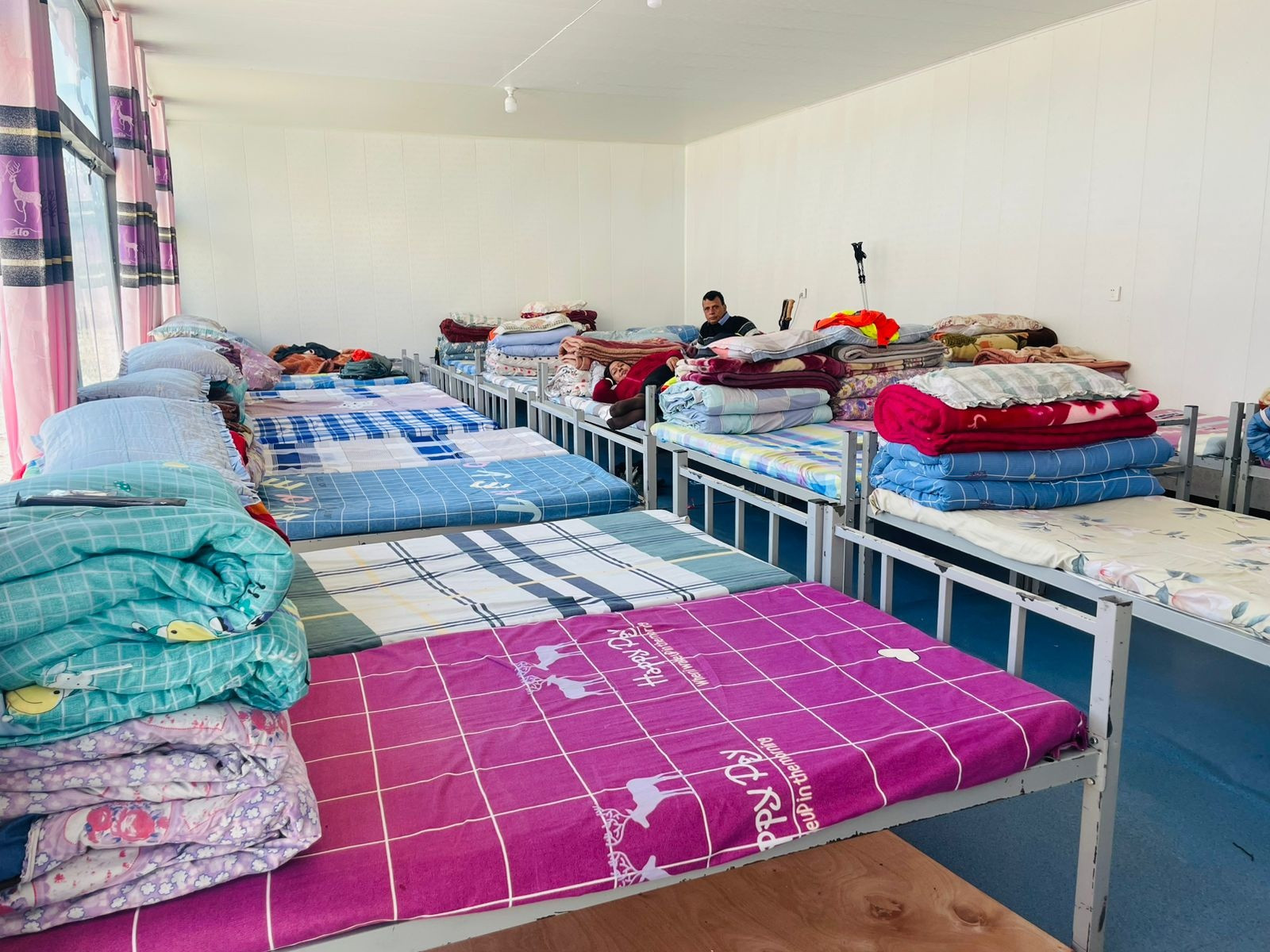
Kailash Accommodation
Kyirung functions as the starting point for both trekkers and vehicle access to Mt Kailash, thus has a range of good quality hotels for tourists with hot water and/or bathrooms en-suite; this will be your most comfortable place along the Tibetan side of the border.
A small town, Saga has both guesthouses and hotels (there are some 3-star options, including Saga Hotel & Grand Hotel) with hot and cold water and an en suite bathroom; the rooms here either have hot water or use electric blankets to protect against the cold of the night.
Services and accommodation in this area can be rather limited. Accommodations will be in a guesthouse with a basic dormitory-style room and will likely include a dry toilet or a drop toilet, with no running water.
Darchen is now the base for the Kora trek at the base of Mt Kailash after having undergone a vast amount of improvements over the last couple of years since the time the original tour with this itinerary was written. On arrival in Darchen, guests will likely find themselves accommodated in a more standard hotel (Hotel Himalaya) with en-suite bathroom, but access to hot water may be limited to designated hours.
Located right at the base of the North Face, you will find government-run guesthouses. These accommodations will contain only a small number of ways to protect yourself against the cold, with no connecting plumbing, so they provide only a place to get shelter from the elements.
Similar to Dira-Puk, accommodation achieves basic "Short" needs, as all you will want is an adequate amount of shelter from the elements after completing the extremely strenuous crossing of Dolma La Pass.
We are team of professionals who share a common devotion to the outdoors and are commited to world travel.
Mr. Pem Chhotar Sherpa was born in Solukhumbu. He lived in his village for 16 years and studied under a Lama called Tawa in local language. He used to work as a porter while in Solukhumbu. His maternal uncle has a trekking company and he w...

Mr. Lok Bhatta is one of our best and professional guide in the company. He has been guiding with us from last 12 years. He have trekked over to our major trekking region of- Everest Region, Annapurna Region, Mustang Region, Manalsu Region, Langtang Region etc. He is...

Originally from Khumjung- 3, Everest Region, Mr. Pema Chhosang Sherpa is our key climbing guide for major peaks in Everest region, including Island Peak, Lobuche Peak, Kyajo- Ri Peaks and other 7000er climbing in the region.
Mr. Pema is 15 + years...


This is the "Quick" period for the clearest views of the mountains. As the winter snow melts off, the Dolma La Pass is now open.
While technically this is the time of the monsoon in lower elevations (the Himalayas) and in Nepal, the area surrounding Kailash is in a rain shadow.
This is generally considered the "absolute best" time to take a 7-day express trip.
There are many people who wish to attend Lake Mansarovar at the time of the full moon. As such, people need to confirm the full moon date before they make a reservation (3-4 days) to find a perfect time to depart in order to arrive on the date of the full moon. Here are the full moons for 2026.
You are required to have comprehensive travel insurance for the 7-day Kailash Mansarovar yatra. Standard travel insurance doesn't cover any activities over 3,000 m and that's something most travellers overlook. The Dolma La Pass sits at 5,630 m. It's a trek that won't be covered by this type of insurance. It's simply over 3,000 m. So you'll need a travel insurance policy that explicitly covers trekking to a height of 6,000 m.
Your plan must also have emergency helicopter evacuation coverage. At Mount Kailash, a helicopter rescue can't occur in Chinese airspace. You'll need to be transported to Kyirung or Hilsa on the Nepali-Tibetan border and airlifted from there to a hospital in Kathmandu so on a trip this remote, that coverage isn't optional.
If you don't have this type of coverage, the cost of emergency rescue will be between $5,000 and $10,000. You'll have to cover that entirely on your own. You must also submit a copy of your insurance to your tour operator for proof of coverage. It's required before you can obtain a permit to travel to Kailash Mansarovar. This ensures you have full safety and financial protection.
Many pilgrims on the 3-day Parikrama find the altitude of the Dolma La Pass (5,630 m) too much to carry a heavy backpack or to walk the entire distance.
Making sure you have a connection from the Roof of the World requires some very specific local arrangements.
Because you're travelling rapidly at this time along your "mini" route, you'll require extra fuel (snacks) that aren't in the meal plan.
For pilgrims looking for the opportunity to partake in this sacred Yatra journey through Nepal, special documents are needed as these four sacred sites are located in the Tibet Autonomous Region of China. A separate Chinese Group Visa does not have to be obtained from your home country, but is needed for entry to the region.
This Group Visa is a separate paper you receive in Kathmandu through the Chinese Embassy with assistance from your tour operator, and will be issued for the use of each member of your group on the same dates, regardless of where you are located. In addition to your group visa, there are other permits your travel agent will need to arrange:
You can take your valid passport (6-month minimum) with photographs and supporting documents to a travel agency in Kathmandu three to five days before the departure date.
Be Completely Prepared for the Shortest Kailash Mansarovar Yatra
The Kailash Mansarovar Yatra takes place at altitudes above 4,500m. At such higher elevations, the air contains less oxygen than at sea level. So this can lead to an increased risk of developing Acute Mountain Sickness (AMS). You'll also find yourself feeling breathless, and that's completely normal at heights like these.
To help alleviate these conditions when you experience them while walking long distances or crossing high passes (like the Dolma La Pass), many tour operators will carry portable oxygen tanks and masks for emergency purposes.
The guides will be trained to monitor your health and assist you with any needed oxygen, as well as carry basic first-aid kits for altitude-related problems. Regular checks of your oxygen saturation will enable them to identify any potential problems early.
In the case of severe AMS or if you require emergency medical care, your tour operator will arrange for an ambulance service on land or by helicopter to take you to the closest hospital equipped or to a lower elevation with better access to medical care.
Because there are not many medical facilities located along the route to Kailash Mansarovar, it is very important and required that everyone has travel insurance that covers both emergency medical treatment and evacuation should something go wrong.
Although a 7-day Kailash Mansarovar Yatra is feasible, first-time pilgrims have very few options with major limitations to consider. The majority of limited 6-night/7-day Tours advertised as reaching Lake Mansarovar or the Mt. The Kailash area will not include the full Kailash Parikrama (circumambulation) around Mt. Kailash. Instead, they will often use flights and/or helicopter tours to shorten travel time and focus on the religious darshan rather than doing the full pilgrimage.
The traditional and spiritually complete Kailash Yatra, which includes crossing high passes, completing the 3-day Kailash Parikrama, and visiting the various sacred sites around both the mountain and the lake, will last from 10-14 days when traveling from Kathmandu. This extended itinerary will allow for time to acclimatize to the high elevations, travel between Nepal and Tibet, acquire permits, and prepare for the physically demanding trek.
A first-time pilgrim will most likely find that a 7-day plan feels rushed, because of the very limited time available to acclimatize to the altitude and will not include the full kora around Mt. Kailash. Most experienced tour operators will recommend a minimum of 10 days in order to ensure the safety, spiritual fulfillment, and cultural experience of each pilgrim.
Kailash Mansarovar and other elevated locations will be at altitudes greater than 4,500 m, where there is a significant decrease in Oxygen and an increased risk of developing AMS. The 7-Day Fast-Track Itinerary still requires that you take the time to acclimatize your body to the thin air and lower oxygen levels to ensure your safety.
The 7-day trip schedule may be very tight; however, take the time to rest and gradually increase your elevation whenever possible, such as every one to two days, and reduce any elevation gains to ensure that you stay within the "Climb high, Sleep low" rule by climbing during the day and sleeping at a lower elevation at night, which enables your body to acclimatize.
Keep hydrated daily (3-4 L per day) and eat a light, yet energy-packed diet to assist yourself with acclimatization. Alcohol should be avoided, and caffeine should be limited; both of these will exacerbate dehydration and symptoms associated with altitude.
Be familiar with the symptoms of altitude sickness, such as a debilitating headache, nausea, or lightheadedness. If these signs do appear, stop climbing and rest; if they don't, descend to a lower altitude to recover.
Speak to your doctor about possibly taking preventative medication (like Diamox) to help with the acclimatization process. Medication can be helpful, but remember that prescription drugs should be taken in conjunction with pace and rest.
Kailash Mansarovar Yatra is very rewarding, but physically and psychologically it is also very demanding due to the high mountain elevations and rugged terrain you will face. As a pilgrim, you'll climb quite rapidly from very low elevations into places like Darchen and Lake Mansarovar, which are over ~4,600m in elevation, the highest point being at Dolma La ~5,630m, where oxygen levels are much lower, and the increased risk for altitude sickness becomes much greater.
At this elevation, performing simple tasks can be extremely challenging (e.g., walking or breathing) and will result in such things as headaches, fatigue, nausea and dizziness unless you have properly acclimatized yourself.
In addition to being at such an elevation, the rocky and uneven nature of the terrain and, therefore, the distance you must walk each day (particularly during the Kailash Parikrama) will further challenge your endurance and stamina.
Your trip to the holy Mount Kailash (6,638m) is a spiritually significant pilgrimage around the globe; therefore, we want to make sure you are as prepared as possible and have everything you need for this adventure. You will be provided with the following complimentary gifts once registered for your tour: duffle bag, backpacking bag, warming beanie, sling bag, down jacket, and completion certificate.
Packing tips: Use layering for clothing so that you can adapt to various temperatures; they range from +12°C to -5°C.
Yes, you could choose to fly up to Kailash Mansarovar; the helicopter-assisted yatra option is a popular way for those who want comfort and wish to visit Kailash Mansarovar in just one week. The helicopter option is especially good for senior citizens, novices at trekking and busy professionals.
The helicopter package will fly you over major portions of your route, which will allow you to reduce the physical stress of reaching Kailash and provide you with the opportunity to pay your respects to Mount Kailash and take a holy bath in Lake Mansarovar.
Helicopter seats are limited and fill quickly, especially from May through September (peak season). Book your helicopter ride to Kailash Mansarovar NOW as Limited seats available for 2026.
Yes, a Kailash Mansarovar Yatra in 7 days is doable. It's notably possible using the 10-minute helicopter option or an overland itinerary planned strategically from Nepal. The classic overland trips are generally longer, running 10 to 15 or more days.
But special fast-track packages charge a premium to help you race through the spiritual highlights. These include Mount Kailash, Lake Mansarovar and the Kailash Parikrama while minimizing travel time.
Such fast itineraries do require solid fitness, reasonable acclimatization planning and reliable logistics support.
The quickest way to reach Kailash Mansarovar is a helicopter option from Nepal, for example from Simikot, or via a drive-helix combination that slashes overall travel time considerably. Overland routes through Kerung or Nathula take longer to reach. But they offer a more gradual altitude acclimatization and are favored for those who prefer a better balance between spiritual journey and comfort.
There are certain caveats for senior citizens who can take up the Kailash Mansarovar Yatra. Pilgrims above 60 years are often not allowed to do the full Kailash Parikrama by the authorities due to physical and altitude difficulties. Many choose the helicopter route, influenced by this or the overland Mansarovar Lake darshan without 3-day trekking. Elderly pilgrims are also advised to be medically cleared, in good fitness shape and have appropriate acclimatization support. You'll want to plan this part carefully.
Basic services also depend on where you are. In remote areas like Derapuk or Zuthulpuk, toilet facilities may be poor or non-existent. Accommodation there is typically basic guest houses or tents. Along other routes, the lodgings are even better near key stops like Darchen and Saga.
No international mobile networks typically work reliably within Tibet. Some Chinese SIM cards or international roaming plans can be used. Wi-Fi may also be available in some places. But service is limited, so don't rely on staying connected throughout the journey.
The overnight Parikrama is the three-day circumambulation and many pilgrims don't do this. If you don't wish to continue, you may remain in Darchen while your group proceeds. Some operators will also return you from intermediate points at an extra charge.
At least 3 to 6 months in advance is highly recommended to make a reservation. There is always a very specific number of permits they can issue each year and these are processed as you book early. So along with accommodation, all your spots in groups will be secure.
The price varies depending on route, means of transport and services. Overland tours through Nepal are generally cheaper than helicopter routes. Costs also depend on accommodation quality, group size and any added extras such as private transfers or oxygen support.
There is no official age limit for the entire pilgrimage. But most authorities advise hikers over 60 years of age to exercise caution, particularly for those undertaking the Parikrama, given its physical effort. Elderly pilgrims usually do the pilgrimage only to Lake Mansarovar or take a shorter mode of travel. Tourism season starts from May through to about October.
Public toilet facilities are limited in the Yatra. In the back of beyond, you will want to have your own toilet paper, sanitiser, wet wipes and little garbage bags for hygiene and comfort.







 82 Reviews
  115 Reviews
  210 Trips Reviews