
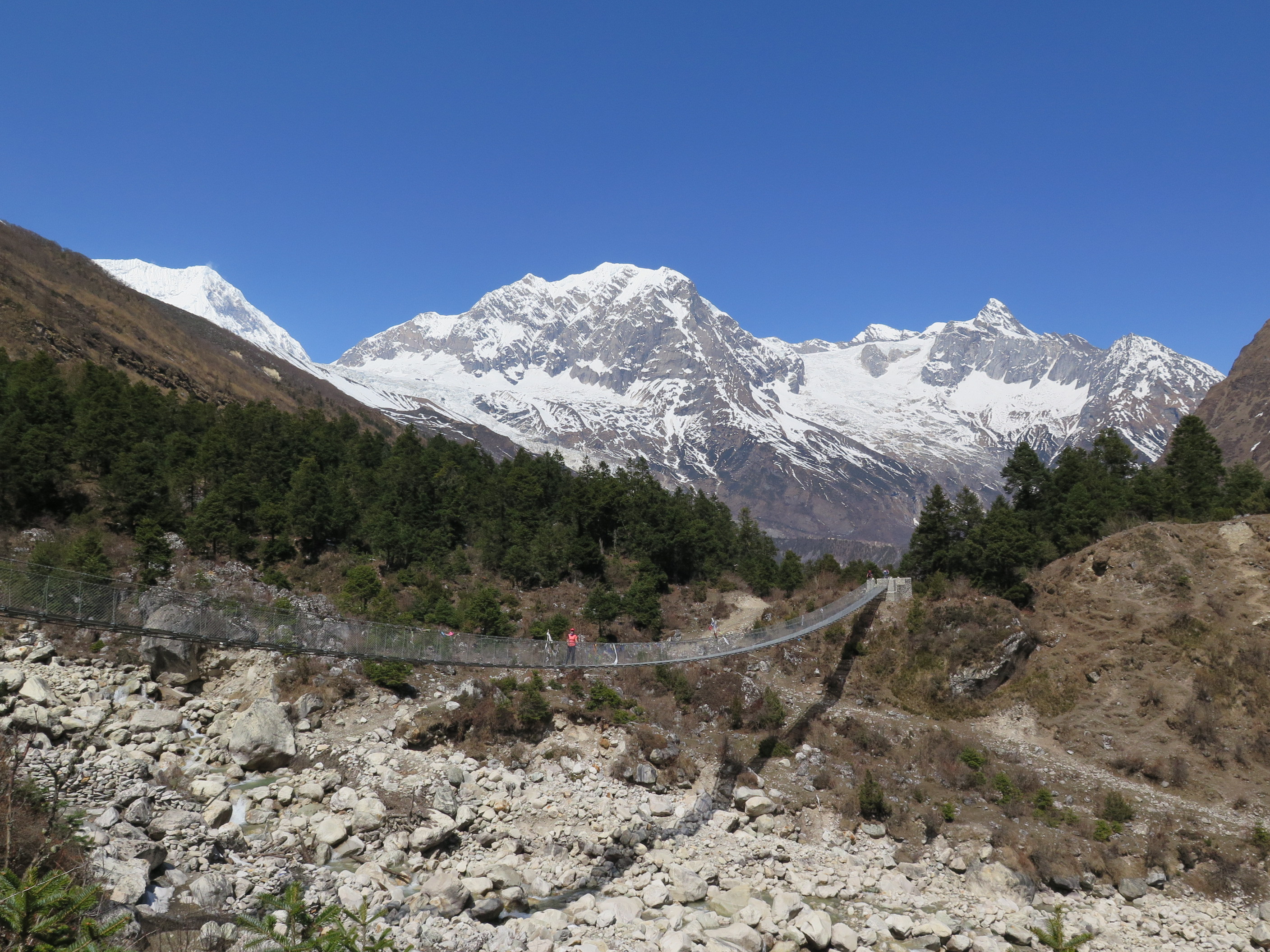









The Manaslu Circuit trek offers the amazing ethnic and scenic diversity, still relatively un-trekked; the lush rice paddies and traditional villages of Nepal's 'Middle Hills'. This Manaslu trek led us to high Himalayan passes, purely Tibetan villages, spectacular snow-peak panoramas and wonderful campsites. The trekking around Manaslu has long been a restricted area due to the close proximity of the Tibetan border and is now open, but only for organized groups. The trek is geographically spectacular and culturally fascinating. The inhabitants of the upper Buri Gandaki, a region known as Nupri ('the western mountains'), are direct descendants of Tibetan immigrants. Their speech, dress and customs are almost exclusively Tibetan. Gurung, Magar, Chhetri and Tamang are the other inhabitants living on this trekking region
From the top of this pass you are rewarded with a stunning panorama looking towards Himlung Himal (7,126m/23,379ft), Manaslu & the Annapurna peaks, with the peaks of Ganesh Himal (7,406m/24,298ft) rounding off the east. The descent passes are through the alpine meadows of Bimtang to join the renowned Annapurna Circuit at Thonje. Tillman first surveyed this region in 1950 on his reconnaissance of Annapurna.
Elevation & Climate in Manaslu Trek
Altitude rises from 600m from sea level to the summit of Mt. Manaslu at 8163m, the eighth highest mountain in the world. This trek has six climatic zones- Tropical, Subtropical, Temperature, Sub-alpine, Alpine & Arctic. At this trek, the extreme climate variations will be within 100 kms, from Gorkha, Arughat to Larke La Pass at 5160m, in elevation and topography
How Fit do I have to be to trek in Manaslu Circuit Trek?
This trek is a moderately challenging trek. You have to be in good health and excellent physical condition to plan this trek. Even if you do not have any prior trekking experience in mountain or in altitude, but being healthy and fit with training prior to this trek, you will be qualified to plan this trek. Mental health and strong determination are equally important for trekking in Himalayas in Nepal like Manaslu Circuit Trek

Pleased acknowledge that you are joining us for the adventure trip in remote Himalayan region, where weather conditions, health and fitness of the member or unexpected natural disaster can compel us to change the itinerary and if so, you have to understand it but we would try our best to keep the suggested itinerary as per the original schedule.
Your safety and satisfaction of the trip is our prime concern while travelling with us and we ensure you our best team, logistics, professional services to make sure that you would have an amazing trip of lifetime with us. Also note that our trip leader deserved the final decision if the trip has to amend, change the route or cancel due to the extreme conditions for the safety precaution. However, he will try his best to ensure that the trip runs as according to the stated plan but be prepared for flexibility if necessary.
Responsible Travel:
Classic Vacations Nepal is committed to Responsible Travel and true sustainability. It was a commitment formed when the company was established, and today, in the face of a multitude of threats to the environment, our commitment is stronger than ever. We aim to ensure that our destinations retain their natural character and cultural diversity for future generations as it is. This vision can only be achieved with the support of all of our travelers and our team effort.
We encourage our customers to be sensitive when it comes to photography and dress code, urging travelers to respect difference, privacy, and modesty. We also consider the effects of tourism on our destinations and promote responsible travel on our trips. We care for the proper wages and proper working conditions for our porters and mountain guides who work with us for our entire trips.
In addition, Classic Vacations Nepal is also working to support rural Himalayan community with coordination with Pioneer Foundation Nepal- www.pfnepal.org, which is non- profitable organization that carries social projects in rural mountains/ Himalayan community in Gorkha, which is one of the rural communities in the country.
At Classic Vacations Nepal, we contribute 5% of your trek cost to social welfare projects in the local community as part of our Corporate Social Responsibility. Learn more about our CSR initiatives at the link below- https://classicvacationsnepal.com/about-us
 1300m
1300m
 N/A
N/A
 N/A
N/A
Upon your arrival at Tribhuvan International Airport, you will be met by your guide and transferred to your hotel. This is a free day for you to rest and recover from your flight, with time to explore the bustling streets of Kathmandu if desired. In the evening, you will meet with your guide for a briefing about the trek, where you'll go over the itinerary and make sure all your documents and permits are in order. This is also a great time to ask any last-minute questions.

Hotel Shanker- Heritage Hotel Or Hotel Barahi Kathmandu (4 star)

Welcome Dinner
890m
157 km
9-10 hours
After an early breakfast, you’ll begin your drive from Kathmandu to Machha Khola, the starting point of the trek. The drive takes approximately 9 to 10 hours and covers a distance of around 157 kilometers. As you travel, the road winds its way through small towns and villages, offering beautiful views of the Trishuli River and surrounding countryside. The road becomes rougher as you enter the more rural areas, but the journey is rewarding, with spectacular views of the Himalayas in the distance. Upon arrival, you will stay in Machha Khola for the night.
Sunny Lodge Or Similar (Room with attached bathroom/ Hot Shower/ Electric Blanket or Heater)
Breakfast, Lunch, Dinner, Tea / Coffee & Seasonal Fruits
1410m
13.5 km
7-8 hours
Today marks the first day of your trek. From Machha Khola, the trail follows the river and gradually ascends through forests of rhododendron and pine. You’ll cross a few suspension bridges and pass through small villages, including Khorla Bensi. As you continue along the trail, you’ll pass several scenic spots with views of the surrounding mountains and rivers. The trek takes around 7 to 8 hours, and by the end of the day, you’ll reach Jagat, a small village located at 1,410 meters, where you will stay overnight.
Sunny Lodge Or Similar (Room with attached bathroom/ Hot Shower/ Electric Blanket or Heater)
Breakfast, Lunch, Dinner, Tea / Coffee & Seasonal Fruits
1800m
20 km
7-8 hours
Today, you’ll trek through a more remote part of the Manaslu Circuit. The trail continues to rise through lush forests, crossing numerous streams and small settlements.As you approach the village of Dyang, you’ll begin to notice the influence of Tibetan culture in the local architecture and lifestyle. The trek is about 7 to 8 hours, covering a distance of 20 kilometers. Dyang is a charming village, and as you reach the village at 1,800 meters, you’ll be surrounded by beautiful mountain views, making it a perfect place to rest for the night.
Sunny Lodge Or Similar (Room with attached bathroom/ Hot Shower/ Electric Blanket or Heater)
Breakfast, Lunch, Dinner, Tea / Coffee & Seasonal Fruits
2660m
19 km
7-8 hours
The trek today continues through forests, with a gradual ascent as you approach the village of Namrung. The terrain becomes steeper, and you’ll pass several villages that showcase Tibetan culture, with stone-built houses and fields of barley and potatoes. The trail offers spectacular views of the surrounding peaks, including Manaslu in the distance. By the time you reach Namrung, located at 2,660 meters, you will have trekked approximately 19 kilometers in 7 to 8 hours. Namrung is a larger village with a thriving community, and it serves as a perfect spot for the night.
Sunny Lodge Or Similar (Room with attached bathroom/ Hot Shower/ Electric Blanket or Heater)
Breakfast, Lunch, Dinner, Tea / Coffee & Seasonal Fruits
3500m
18 km
7-8 hours
Today’s trek is a steady climb that takes you higher into the mountains. The scenery becomes more dramatic, with views of snow-capped peaks and alpine meadows. As you continue towards Shyala, you’ll pass through small settlements and alpine forests. At 3,500 meters, Shyala is a tranquil village offering incredible views of Manaslu and the surrounding mountains. The trek takes around 7 to 8 hours, covering a distance of 18 kilometers. The altitude begins to affect your breathing, so it’s important to take your time and acclimatize properly.
Sunny Lodge Or Similar (Room with attached bathroom/ Hot Shower/ Electric Blanket or Heater)
Breakfast, Lunch, Dinner, Tea / Coffee & Seasonal Fruits
3585m
17km
6-7 hours
The monastery sits on a beautiful plateau and offers a peaceful atmosphere, along with breathtaking views of Manaslu and surrounding peaks. After spending some time at the monastery, you will continue on the trail to Samagaon, which will take around 6 to 7 hours to cover 17 kilometers. Samagaon is a large Tibetan-influenced village located at an altitude of 3,585 meters, and it is one of the main acclimatization points on the trek.
Sunny Lodge Or Similar (Room with attached bathroom/ Hot Shower/ Electric Blanket or Heater)
Breakfast, Lunch, Dinner, Tea / Coffee & Seasonal Fruits
4800m
13.5 km
5-6 hours
This day is dedicated to acclimatization, as you are now at higher altitudes. You will take a short hike up to Manaslu Base Camp, which sits at 4,800 meters. The hike offers stunning views of the surrounding glaciers and peaks, including Manaslu. The hike is relatively short, but the altitude will make it a challenging day. The round-trip journey takes about 5 to 6 hours, covering a distance of approximately 13.5 kilometers. After visiting the base camp, you’ll return to Samagaon for the night to rest and recover.
Sunny Lodge Or Similar (Room with attached bathroom/ Hot Shower/ Electric Blanket or Heater)
Breakfast, Lunch, Dinner, Tea / Coffee & Seasonal Fruits
3860m
5 km
4-5 hours
After a restful night in Samagaon, you’ll begin your trek to Samdo, which is only 5 kilometers away. The trail ascends gradually, and you’ll start to notice the harsher landscape as you leave the last settlements behind. Samdo, located at 3,860 meters, is a small Tibetan village and marks the final settlement before crossing the Larkya La Pass. This short trek takes around 4 to 5 hours, allowing you plenty of time to rest and acclimatize at the higher elevation.
Sunny Lodge Or Similar (Room with attached bathroom/ Hot Shower/ Electric Blanket or Heater)
Breakfast, Lunch, Dinner, Tea / Coffee & Seasonal Fruits
4460m
6 km
4-5 hours
Today, you will trek to Dharmasala, also known as Larkya La Phedi, which is located at 4,460 meters. The trek is 6 kilometers long and takes approximately 4 to 5 hours. The route is quite rugged, with a steady climb through alpine meadows and rocky terrain. Dharmasala is a small camp used by trekkers as the base for crossing the Larkya La Pass. Once you arrive, you can rest and prepare for the challenging day ahead.
Sunny Lodge Or Similar (Room with attached bathroom/ Hot Shower/ Electric Blanket or Heater)
Breakfast, Lunch, Dinner, Tea / Coffee & Seasonal Fruits
5106m
16km
8-9hours
Today is the most challenging day of the trek as you will cross Larkya La Pass, the highest point of the trek at 5,106 meters. The ascent to the pass is steep and demanding, but the views from the top are nothing short of spectacular, with panoramic views of Manaslu, Himlung Himal, and other surrounding peaks. After crossing the pass, you’ll begin your descent to Bhimthang, a small village located at 3,790 meters. The descent is long, and the entire trek today will take about 8 to 9 hours, covering a distance of 16 kilometers.
Sunny Lodge Or Similar (Room with attached bathroom/ Hot Shower/ Electric Blanket or Heater)
Breakfast, Lunch, Dinner, Tea / Coffee & Seasonal Fruits
2300m
13km
4hours
After a long and challenging day yesterday, today’s trek is shorter and more relaxed. You’ll trek from Bhimthang to Tilje, a small village at 2,300 meters, which takes about 4 hours and covers 13 kilometers. The descent takes you through lush forests and past small villages. Upon reaching Tilje, you’ll take a jeep or bus to Besisahar, which takes around 3 hours. Once in Besisahar, you can relax and enjoy the comforts of the town.
Sunny Lodge Or Similar (Room with attached bathroom/ Hot Shower/ Electric Blanket or Heater)
Breakfast, Lunch, Dinner, Tea / Coffee & Seasonal Fruits
1365m
175 km
7-8 hours
From Besisahar, you will take a local bus back to Kathmandu or Pokhara. The drive takes approximately 7 to 8 hours, covering 175 kilometers. You’ll pass through terraced fields, rural villages, and enjoy scenic views of the surrounding hills and rivers as you make your way back to the city. Upon arrival in Kathmandu or Pokhara, you can rest and enjoy the evening.
Sunny Lodge Or Similar (Room with attached bathroom/ Hot Shower/ Electric Blanket or Heater)
Breakfast, Lunch, Dinner, Tea / Coffee & Seasonal Fruits
N/A
N/A
N/A
On the final day of your trip, depending on your flight schedule, you will be transferred to Tribhuvan International Airport for your international departure. This marks the end of your incredible journey on the Manaslu Circuit Trek, filled with unforgettable views and experiences.
Sunny Lodge Or Similar (Room with attached bathroom/ Hot Shower/ Electric Blanket or Heater)
Breakfast, Lunch, Dinner, Tea / Coffee & Seasonal Fruits
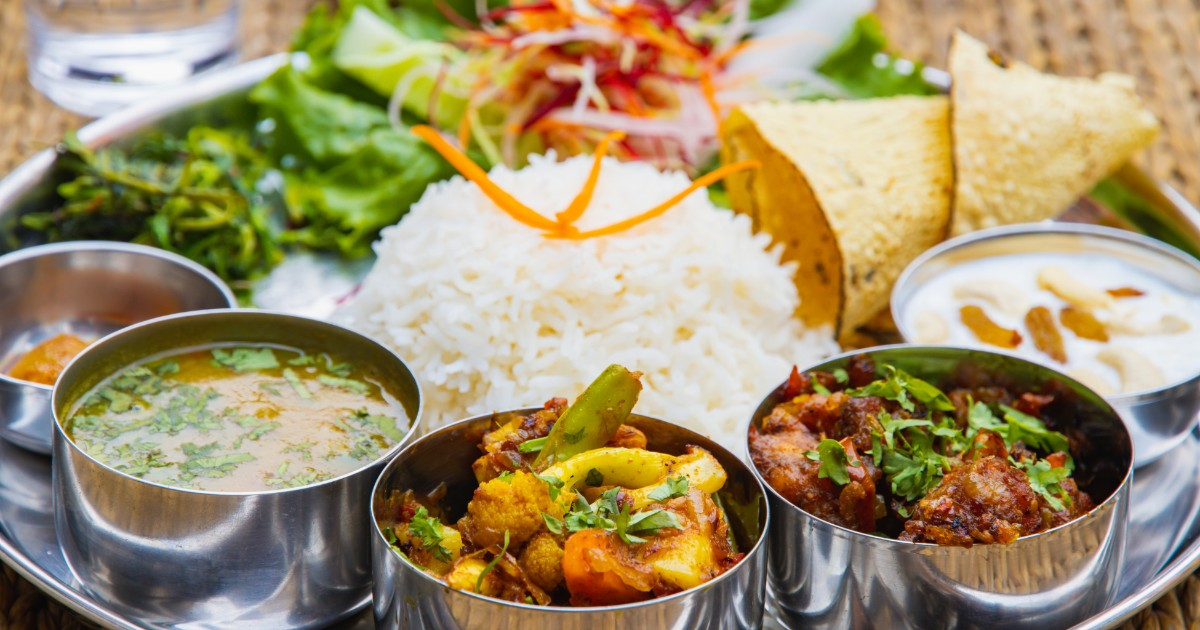
Nepali Authentic food
Your meals during your stay in Kathmandu will be on a bed & breakfast plan. We will host a welcome dinner and a farewell dinner in Kathmandu. Any additional meals during your time in the city will be at your own expense.
During the Manaslu Circuit Trek, all your meals are included as part of our package. You will be provided with breakfast, lunch, and dinner each day, along with tea or coffee during the trekking days. Meals will be served at local teahouses along the route and prepared by trained local cooks. We prioritize hygiene and freshness to ensure your meals are safe and nourishing. Additionally, we offer seasonal fruits every day throughout the trek to help keep you energized.
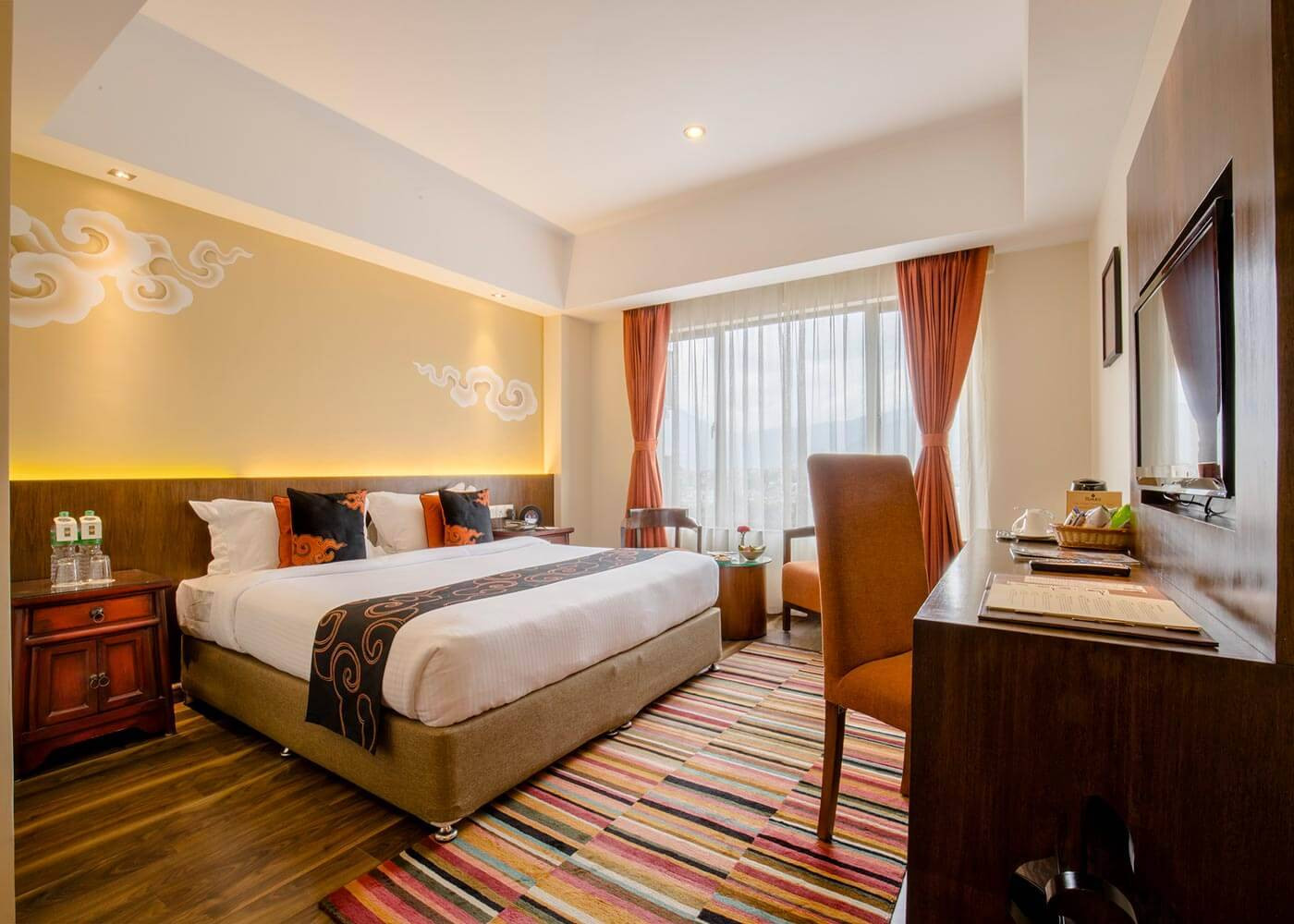
Hotel during trek
For the Manaslu Circuit Trek, we use 4-star deluxe hotels in Kathmandu such as Hotel Shanker – Heritage Hotel, Hotel Barahi Kathmandu, or other hotels of similar standard to ensure your stay is comfortable and relaxing before and after your trek.
During the trek, you will be staying in locally-owned mountain lodges and guesthouses that provide a warm and authentic experience. These accommodations are basic but clean and comfortable. Please note that the Manaslu region is more remote, so facilities are simpler compared to more developed trekking regions. Most lodges offer shared bathrooms, and while hot showers may be available in some villages, they may be limited or at an extra cost in others. We always choose the best available lodges to ensure a pleasant and safe stay along the route.
We are team of professionals who share a common devotion to the outdoors and are commited to world travel.
Mr. Pem Chhotar Sherpa was born in Solukhumbu. He lived in his village for 16 years and studied under a Lama called Tawa in local language. He used to work as a porter while in Solukhumbu. His maternal uncle has a trekking company and he w...

Born in Burlang, Gorkha District, Ishwor first came to Kathmandu in 1999 to get enrolled in a college to complete his under-graduation.
It was during the final year of his under-graduation that he got into tourism to support his financial instability. A nov...

Here, we have announced the confirmed departure dates for this trek. Please select the dates that suit you best. If these dates do not align with your travel plans, please contact us with your preferred date, and we would be delighted to arrange a private trip for you and your group according to your requested schedule.
If you are traveling solo or would like to join our group departure, kindly book your trip on the announced dates so that we can include you in our existing group for this trip

Advice to Novice Travelers:
If you are one of those outdoor devotees then tour and trekking in Nepal should be at the top of your bucket list. If you are new to the Himalayas then you might be wondering how it is like trekking/ tour under those majestic white Himalayas and what are the things to be considered before preparing for trekking in Nepal. Here are some basic guidelines (tips) that you should consider to make your adventure in Nepal a lot easier and enjoyable.
Passport & Nepal Visa Information:
You must have a valid passport, which should remain valid for at least six months beyond your planned stay in Nepal. Nepal visas can be easily obtained on arrival at Kathmandu International Airport or any other entry point that you are entering to Nepal.
Alternatively, you can also apply for a Nepal visa in advance through a Nepalese consulate or embassy abroad. For convenience, you can fill out the Nepal Visa form online, here is the link- https://nepaliport.immigration.gov.np/
Travel Insurance & Vaccination:
Travel Insurance is a must for undertaking any tours, treks and mountaineering activities in Nepal with us. Your travel insurance should cover for medical expenses, helicopter evacuation and trip cancellation during your trip days in Nepal. In addition, your travel insurance should also cover for flight delayed, checked in baggage lost, Passport lost etc.
Traveling to Nepal, Covid-19, Hepatitis A, Hepatitis B, Japanese Encephalitis, Malaria, Rabies, Typhoid, Dengue, Yellow Fever vaccine are highly recommended.
Health & Medical Condition:
You should be in good health and mentally fit to plan any tours, trekking and mountaineering with Classic Vacations Nepal. If you have any pre-medical condition, or disability, you should let us know prior to your trip booking with us. We deserve not to take you on our trip if your medical condition is extremely poor or the trip does not suit your disability.
For pre-medical conditions or any disability person, we may request you to provide us with your doctor's advice and certificate certifying that you are fit for your trip to be booked with us.
Children in the Trip:
Children below 16 years should be accompanied by their parent or guardian to take part in any trips with Classic Vacations Nepal. So, children below 16 years are not allowed to join our tours without a parent or guardian.
Packing Guidelines:
It is important to pack the right clothing and equipment for your safe adventure trip in Nepal. Please prepare to pack the right clothing for a safe and pleasant trip. What you need to pack mostly depends on the different seasons you travel, and how high you go. You will be walking from low valleys to high valleys, so it is important to have enough layers to use it at appropriate weather conditions and altitudes.
Here we have a reference for packing to your adventure travel with us, which should be very helpful.
Head Gear: Sun Cap/Hat Beanie/ Woolen Hat or Fleece Hat, Neck Gaiter or Buff or Balaclava
Hand Gear: Liner Gloves, Wind Stopper Fleece Gloves
Foot Wear: Regular Hiking Socks, Heavy Socks, Sports Sandals, Hiking Shoes, Hiking Boots, Snow Gaiters (Optional), Micro Spikes (Optional)
Inner Wear: Under Wear, Sports Bras (Female)
Clothing: Lightweight Thermal Layer Top & Bottom, Midweight Thermal Layer Top & Bottom, Hiking Pants, Thermal Trousers/ Pant or Fleece Trouser or Pant, Synthetic Insulated Pant or Gore Tex Pant, T- Shirts (Short Sleeved), Long-Sleeve Shirts, Fleece Jacket, Gore Tex Jacket or Synthetic Insulated Jacket, Down Jacket
Travel Gear: Day Pack, Pack Cover, Waterproof Stuff Sacks, Water Bottles, Trekking Poles, Pocket Swiss Knife, Small Padlocks
Medical & Personal: Sun Glasses, Headlamp with spare bulb, Spare Batteries, Sun Cream, Lip Guard, Moisturizer/ Lotion, Zip-loc Bags, Earplugs, Water Purification Tablets,
Toiletry Kit: Toilet Paper, Wet Tissue, Toothpaste, Tooth Brush, Soap, Towel, Garbage Bag etc.
Others: Book(s) & Camera, Power Banks, Extra Batteries for Camera etc.
First-Aid: First Aid Kits including Diamox & Oximeter
Accessories: Nail Cutter, Umbrella/RainCoat, Hot Water Bag, Pee Bottle & Pee funnel for women (optional), Tenacious Tape Repair Kits
Book with Local Agency:
Locals know it all, they are well updated to the current situation, trekking routes, and they are far more reasonable than international agencies. Local agencies are far more flexible when it comes to dates, rates and customization than international agencies.
Know About Altitude Sickness:
Before any trek, you should consult with your health professional for the relevant immunizations and information regarding medication and altitude. The key in our experience is to allow plenty of time for your body to adjust to the altitude – you can't rush the mountains – and we abide by the climber's maxim – "climb high and sleep low”. We especially encourage those travelers from areas of low sea level to always have a little more time up their sleeve so they can allow for extra rest days if needed. Trekking in Nepal means you are walking above 2500 meters, resulting in a high chance of suffering from altitude sickness no matter how fit you are. The altitude sickness mostly occurs above 2400m (8000 feet) and most people can ascend to this altitude without difficulty. However, it is hard to tell who will be affected by Altitude sickness because everyone reacts to altitude differently.
Symptoms of Altitude Sickness, Headache, Nausea and dizziness, Shortness of breath, Loss of appetite, Fatigue, Difficulty in sleeping, Lack of body coordination. The most effective way to cure altitude sickness is to stay alert for its symptoms, and if you or any member of your trekking group suffers from it descend to lower elevations as quickly as possible.
Treatment: Diamox (Acetazolamide):
Diamox (Acetazolamide) allows you to breathe faster so that you metabolize more oxygen, thereby minimizing the symptoms caused by poor oxygenation. Contact your physician for a prescription. Since Diamox is a sulfonamide drug, people who are allergic to sulfa drugs should not take Diamox. Diamox has also been known to cause severe allergic reactions to people with no previous history of Diamox or sulfa allergies.
Walk at your own Pace: Walk slow and steady, rather than having to walk faster and stop frequently. Stop when you want to, sit back and relax, catch some breath, feast your eyes with the panorama, and take plenty of photographs. There are no rewards for those who reach or complete the trek first. By being slow and steady, you keep your heartbeat fairly constant, use less energy and cover more distance. There are also a couple of rest days which are included in the itinerary, to get acclimatized to high altitude, before going any further up. So, do not rush, the Himalayas are there and aren’t going anywhere.
Know About Nepal:
Before heading to Nepal, learn and get to know about Nepal. Do little homework about the culture and lifestyle, a bit of geography and history. It will surely come in handy and even help you overcome some of the cultural shock you (tourist/travelers) may face in Nepal. Also learn some basic local phrases to get you through Nepal.
A simple Hi/ Namaste or Thank You with a smile will definitely break the cultural barrier with the locals and help you get through loads of difficulties.
Drink Fluids/ Water:
You tend to get dehydrated quickly when trekking in high altitude. So, drink plenty of fluids and water during your treks in Nepal to keep yourself hydrated.
Note: Fluid does not mean beer or any other alcoholic beverages.
Listen to your Guide:
Our every trip will be accompanied by the most experienced local guides and support team. Please trust your guides. Our team ensures that every aspect of your trip runs smoothly once you depart for your desired tour, trekking and/or climbing destination. Tell your problems to your guide, don’t hide them. Your trekking guide should be aware of these risks and will always be looking out for your safety and wellbeing.
What Other Travelers Has to Say About Us:
You may be interested in knowing more about our company services, and our guides and our professionally guided trips, and if so, you are welcome ! Here is the link of Tripadvisor where our guests have shared their trip experiences with us, please kindly view at-
More Information:
Are you not satisfied with information provided here or are you still willing to more information about the trip, please feel very free to contact us at [email protected] or WhatsApp at +977 9851040806.
Thank you ! Happy Holidays !!!
The Manaslu Circuit is a moderate to challenging trek. It involves long walking days, steep ascents and descents, and high altitudes (up to 5,160 meters at Larkya La Pass). Prior trekking experience is helpful but not mandatory if you're physically fit and well-prepared.
Yes. The Manaslu region is a restricted area, and you are legally required to trek with a licensed guide and a group of at least two trekkers to obtain the special permit.
You’ll need the following:
Restricted Area Permit (RAP)
Manaslu Conservation Area Permit (MCAP)
Annapurna Conservation Area Permit (ACAP)
Tsum Valley Entry Permit (if included in your route)
Accommodation is in teahouses or guesthouses, which are basic but clean and comfortable. You’ll have twin-sharing rooms. Attached bathrooms and hot showers may be available in select locations but are limited.
Yes, since the trek reaches over 5,000 meters, altitude sickness is a concern. Our itinerary includes gradual acclimatization, and our guides carry altitude medication and an oximeter to monitor your condition.






 Google
 Tripadvisor